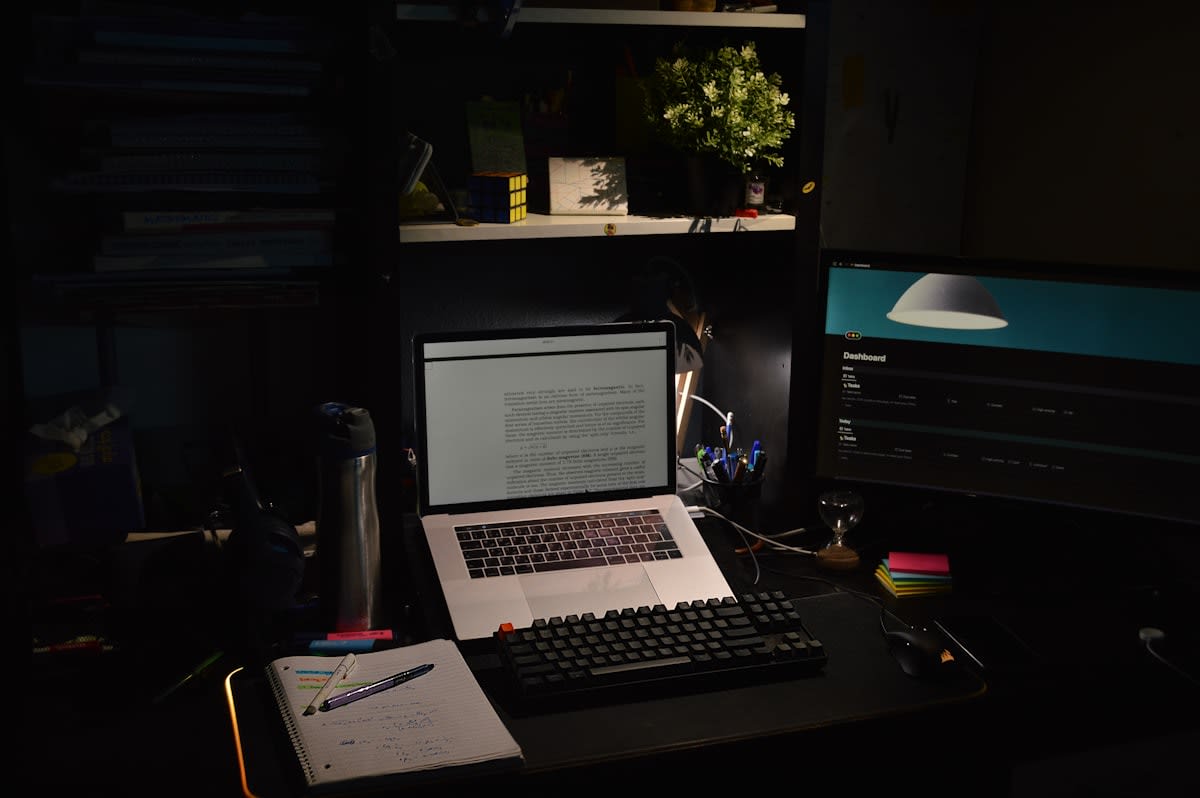
Most people treat habit change as a moral failing or a lack of discipline. They wake up on Monday morning promising to stop scrolling through social media or eating processed sugar, relying entirely on a mental muscle called willpower. Here is the cold truth: willpower is a depletable resource. When you are tired, stressed, or hungry, your prefrontal cortex loses the battle against the basal ganglia, and you revert to the path of least resistance. Why fight a war of attrition against your own brain when you can simply change the battlefield?
Enter the Friction Audit. In behavioral science, friction is any obstacle—physical, digital, or psychological—that stands between you and an action. By strategically adding friction to bad habits and removing it from good ones, you shift the default setting of your life. You stop trying to 'be stronger' and start making the wrong choices difficult and the right choices effortless. This is not about motivation; it is about choice architecture.
Prerequisites: What You Will Need
- A physical notebook or a dedicated digital document for mapping triggers.
- A timer (to track the 'time-to-action' for specific habits).
- A 'friction-free' zone (a space in your home or office where you have total control over the layout).
- The willingness to admit that your current environment is actively training you to fail.
Before you begin, you must accept a fundamental premise: your environment is a silent coach. If you keep a bowl of candy on your desk in a Sao Paulo office or a television facing your bed in a London apartment, you are essentially coaching yourself to snack and procrastinate. You cannot expect a different outcome while maintaining the same scenery.

The Step-by-Step Friction Audit
The goal of this process is to move from a state of 'active resistance' to 'passive adherence.' We achieve this by manipulating the distance and the effort required to execute a behavior.
- Map the Trigger Path: Spend three days logging every instance of the bad habit. Note the exact location, the time, and the immediate preceding action. For example, if you check your phone the moment you wake up, the trigger is the phone being on your nightstand. (Source: Behavioral Economics, 2017).
- Calculate the Current Friction: Measure how many seconds it takes to start the bad habit. If your phone is next to your pillow, the friction is near zero. If you have to stand up and walk across the room, the friction increases. The goal is to identify where the 'path of least resistance' currently leads.
- Implement the 20-Second Rule: Increase the friction of the bad habit by at least 20 seconds. This is a critical threshold in behavioral psychology. Move the phone to another room, put the junk food in a high, opaque bin in the garage, or uninstall the app so you have to log in via a browser every time. According to researchers in the field of habit formation, increasing the startup cost of a behavior significantly reduces its frequency (Source: BJ Fogg, 2019).
- Clear the Path for the Positive: Identify the good habit you want to replace the bad one with. Now, subtract all friction. If you want to read more, place the book on your pillow in the morning. If you want to exercise, lay out your clothes and shoes the night before. Make the 'good' choice the path of least resistance.
- The Environment Stress Test: Once the changes are made, observe your behavior for one week. Do you find new 'workarounds' to bypass the friction? If you moved the phone but started checking your laptop instead, you have identified a secondary friction point that needs auditing.
Does this sound too simple? It is. The brilliance of environmental design is that it removes the need for a decision. When the decision is already made by the layout of the room, you save your mental energy for the work that actually matters. Why spend your morning fighting the urge to check email when the laptop is physically locked in a drawer until 10 AM?
"The most effective way to change behavior is not to change the person, but to change the context in which the behavior occurs. When the environment changes, the default choice changes."— Richard Thaler, Nobel Laureate in Economics and Co-author of Nudge
Consider the global application of this. In Tokyo, urban planners use 'friction' to manage pedestrian flow—narrowing certain walkways to slow people down or widening others to accelerate them. You are essentially becoming the urban planner of your own life. You are directing the traffic of your impulses.
The Practitioner's Perspective: The Willpower Fallacy
In my years of implementing these systems for high-performance teams, I have seen a recurring debate: 'Does this make people weak by removing the need for discipline?' Some practitioners argue that we should train the 'willpower muscle' through exposure. I disagree. In the real world, the most successful people are not those with the most willpower, but those who have designed lives where they don't need it. I have seen CEOs who can lead a Fortune 500 company but cannot stop eating cookies if they are on the desk. The debate isn't about strength; it's about efficiency. Why use a sledgehammer to open a door that you could just unlock with a key?

The real friction often happens in the digital realm. We are currently living in an era of 'zero-friction' design. Apps are engineered to remove every possible barrier to consumption—infinite scroll, auto-play, one-click purchasing. To fight this, you must manually re-introduce friction. Greyscale mode on your phone is a classic example. By removing the dopamine-triggering colors, you increase the psychological friction of using the device, making it less rewarding and thus easier to put down.
Common Pitfalls to Avoid
Many people fail the Friction Audit because they try to re-engineer their entire life in a single weekend. This leads to 'environmental shock,' where the sudden lack of familiar comforts creates a stress response that actually triggers the bad habit more intensely.
- The All-at-Once Trap: Trying to fix five habits simultaneously. Focus on one high-impact friction point per week.
- Ignoring the Rebound Effect: If you make a habit too difficult too quickly, you may experience an intense craving 'rebound.' Gradually increase friction rather than creating an impassable wall.
- The Digital Blindspot: Focusing only on physical space while leaving your digital environment (notifications, bookmarks, home screen) in a high-friction-for-good/low-friction-for-bad state.
- Failure to Iterate: Assuming the first layout is perfect. Your brain is an adaptation machine; it will eventually find a way to make the bad habit easy again. You must audit your environment monthly.
Pro Tip: The Trigger Map
The most critical part of the audit is the 'Trigger Map.' Without knowing exactly what precedes the action, you are just guessing where to put the friction. If you don't know that your 3 PM slump is triggered by a specific notification on your desktop, moving your chair won't stop you from browsing the web.
Fact-Check & Accuracy Note
Key claims regarding the '20-Second Rule' and 'Choice Architecture' are sourced from the foundational principles of Behavioral Economics and the work of BJ Fogg (Stanford Behavior Model). The concept of 'Default Bias' is a well-documented phenomenon in behavioral science, noting that individuals are significantly more likely to stick with a pre-set option than to actively change it.