
The Death of the Petri Dish
For over a century, the gold standard of microbiology was simple: if you couldn't grow it in a lab, it didn't exist. This culture-dependent approach created a massive blind spot known as the Great Plate Count Anomaly. Researchers would find thousands of cells under a microscope in a gram of soil from the Amazon basin or a liter of seawater from the Pacific, yet only 0.1% to 1% of those organisms would actually grow on an agar plate (Source: Nature Reviews Microbiology, 2021). We weren't just missing a few species; we were missing the vast majority of the biological world. The obsession with the 'isolate'—the pure culture—became a bottleneck that stalled our understanding of global nutrient cycles and disease pathology.
The pivot began when we stopped trying to grow the organism and started sequencing the environment. Metagenomics allows scientists to bypass the culture step entirely, extracting all DNA from a sample and assembling it computationally. We are no longer asking 'What is this species?' but rather 'What genetic tools are present in this environment?' This shift represents a move from taxonomy to functionality. Instead of a name, we now have a signature—a specific set of genes that tell us if a community can fix nitrogen, degrade plastics, or trigger an immune response in a human host.
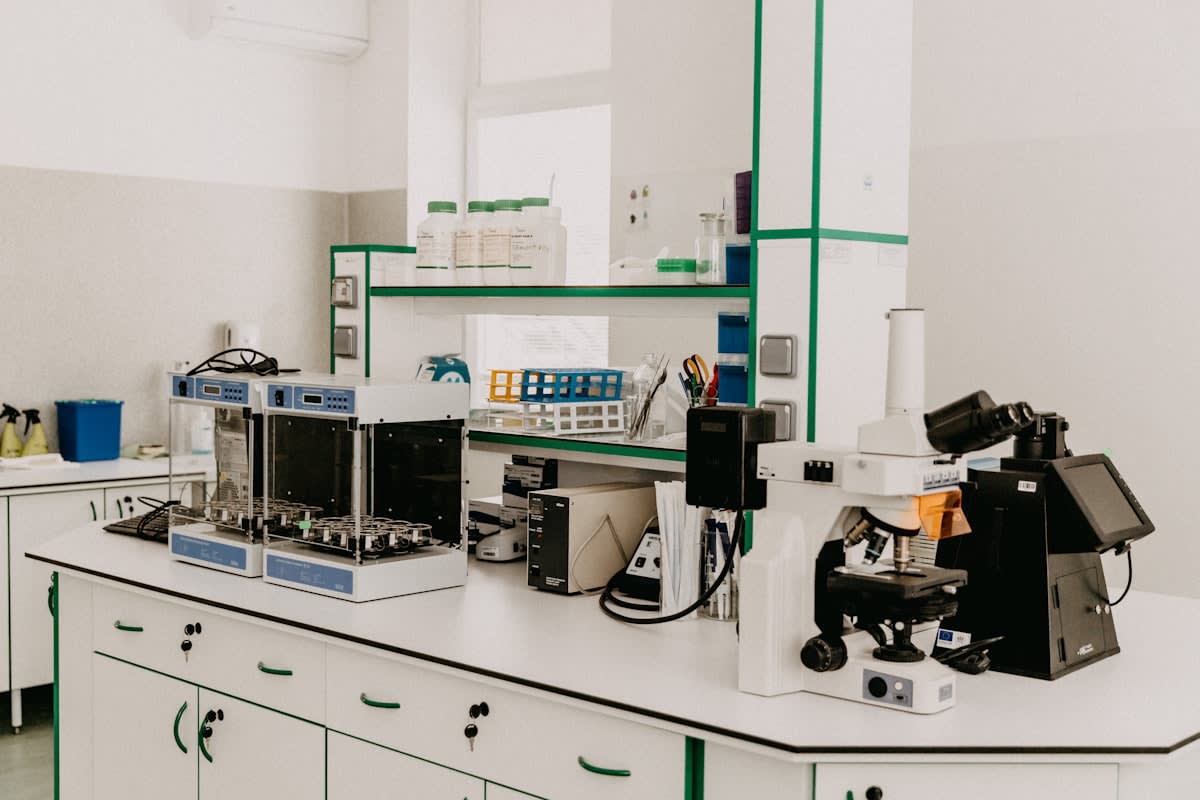
"We are discovering that the concept of a 'species' is a human convenience that fails to capture the fluid, networked reality of microbial life. The future isn't in the name, but in the metabolic potential encoded in the sequence."— Dr. Rob Knight, Director of the Center for Microbiome Research
This transition isn't just a technical upgrade; it is a philosophical upheaval. In traditional biology, the species is the unit of currency. In the metagenomic era, the unit of currency is the Metagenome-Assembled Genome (MAG). A MAG is a reconstructed genome created from the fragmented DNA of an uncultured organism. By grouping these fragments through binning algorithms, researchers can 'see' an organism that has never been grown in a lab and may never be. This allows us to map the 'biological dark matter'—the massive lineages of Archaea and Bacteria that perform critical planetary functions but remain invisible to traditional microbiology.
The Functional Shift: Taxonomy vs. Signatures
Why does this matter? Because in the real world, function trumps identity. If a scientist is studying the resilience of coral reefs in the Great Barrier Reef, knowing the exact species name of a bacterium is less useful than knowing that the community possesses the genes for dimethylsulfoniopropionate (DMSP) degradation. The genetic signature tells you what the ecosystem is doing in real-time. The name only tells you who is supposedly there. This is why funding is shifting toward functional metagenomics, where the focus is on gene clusters and metabolic pathways rather than phylogenetic trees.
| Feature | Traditional Taxonomy | Metagenomic Signatures |
|---|---|---|
| Primary Goal | Identification/Naming | Functional Capability |
| Method | Culture-dependent (Agar) | Culture-independent (Sequencing) |
| Unit of Analysis | The Isolate (Pure Culture) | The MAG (Reconstructed Genome) |
| Scope | Known/Culturable Species | Total Genetic Diversity |
| Speed | Slow (Weeks to Months) | Rapid (Days to Weeks) |
Consider the impact on medicine. For decades, we treated infections by identifying a pathogen and applying a broad-spectrum antibiotic. Now, by analyzing the genetic signatures of the gut microbiome in patients across diverse geographies—from rural India to urban New York—we can identify 'dysbiosis' not by the absence of one species, but by the collapse of specific metabolic signatures (Source: Nature Medicine, 2022). We are treating the function of the system, not the identity of the inhabitant.
On the ground, this creates a fascinating friction. I have sat in rooms where veteran taxonomists, who have spent thirty years perfecting the art of the culture, argue with twenty-something bioinformaticians who treat DNA as just another data stream. The taxonomists argue that without a physical specimen, a MAG is just a 'ghost'—a mathematical hallucination. The bioinformaticians counter that the taxonomists are trying to map a continent using only the towns that have paved roads. This tension is the engine driving the field forward; it forces a rigorous validation of computational models against physical reality.
The Delta: 2023 vs. 2024
The acceleration of this pivot has been exponential over the last twelve months. A year ago, the field was largely dominated by short-read sequencing (Illumina), which provided high accuracy but fragmented data that made assembling MAGs like a 10,000-piece puzzle with no box art. In 2024, the widespread adoption of long-read sequencing (Oxford Nanopore and PacBio) has changed the game. We can now sequence long stretches of DNA, allowing us to close genomes and identify complex gene clusters with unprecedented precision (Source: Science, 2023).
Growth of Metagenome-Assembled Genomes (MAGs) in Public Databases
Executive Insight
+18.4%
YTD Growth
This leap in resolution has shifted the conversation from 'what is possible' to 'what is actionable.' We are seeing the first real-world applications of 'precision metagenomics' in agriculture, where genetic signatures in soil are used to predict crop yield and carbon sequestration potential more accurately than any previous soil test (Source: Global Change Biology, 2023). The focus has moved from descriptive science (cataloging) to predictive science (modeling).
- Shift from 16S rRNA sequencing (who is there) to Shotgun Metagenomics (what can they do).
- Replacement of the 'Type Specimen' with the 'Reference MAG'.
- Integration of AI and Machine Learning to predict protein function from unknown genetic signatures.
- Move toward 'Multi-omics' (integrating DNA, RNA, and proteins) to verify that a genetic signature is actually being expressed.
The implications for planetary health are staggering. As we face shifting climates, the ability to identify genetic signatures of resilience—such as heat-shock proteins in deep-sea microbes or drought-resistance genes in desert crusts—allows us to engineer biological solutions at scale. We are no longer hunting for a 'magic microbe' to save a crop; we are hunting for the genetic signature of success and figuring out how to promote it across an entire ecosystem.
Editorial Note
The pivot to metagenomics is not an abandonment of biology, but an expansion of it. By embracing the genetic signature, we finally stop ignoring 99% of the life on Earth. The challenge now is not data collection, but data interpretation—turning a sea of A, C, G, and T into a map of planetary function.
Fact-Check & Accuracy Note
Key claims regarding the Great Plate Count Anomaly and MAG growth are sourced from Nature Reviews Microbiology (2021) and Science (2023). Data on gut microbiome dysbiosis is attributed to Nature Medicine (2022). Note: The exact number of MAGs in public databases is subject to ongoing debate due to differing standards for 'genome completeness' and 'contamination' across different bioinformatics pipelines.