Anti-CEC protest: Dilli Haat becomes Jantar Mantar for a day
Source Entity
India Latest News: Top National Headlines Today & Breaking News | The Hindu
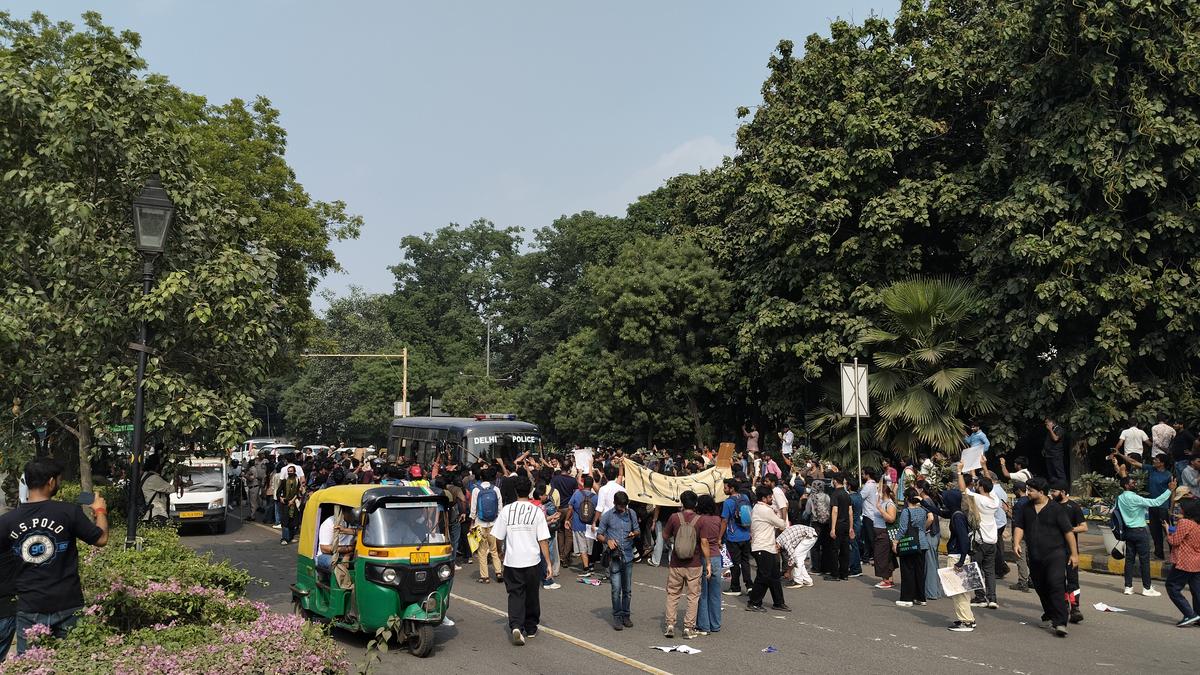
YouTuber Dhruv Rathee was released by Gurugram police following his detention amidst widespread protests in Delhi. Authorities mobilized heavily to suppress the demonstration, leading to significant transportation disruptions that are now gradually normalizing.
The Detention and Release of Dhruv Rathee: An Overview
The recent detention of prominent YouTuber Dhruv Rathee from his residence in Gurugram’s Sector 56 marks a significant moment in the ongoing political tensions surrounding the Cockroach Janata Party (CJP) protest. Rathee, along with over 6,000 others—including social media influencers, activists, and Opposition figures—was taken into custody by Gurugram Police on Saturday. Following his apprehension by three Crime Branch teams at approximately 6 a.m. and subsequent questioning, he was released in the early hours of Sunday morning.
Escalation and Security Measures in the Capital
The detention occurred as part of a massive security crackdown in New Delhi aimed at preventing a protest demanding the resignation of Chief Election Commissioner Gyanesh Kumar. By October 10, authorities had established a wide security net, implementing strict traffic restrictions starting at 6 a.m. along key arteries such as Janpath and Ashoka Road. Security personnel were observed mobilizing with tear gas munitions, reflecting the high-stakes nature of the state’s response to the gathering.
Impact on Protesters and Public Order
Despite the intense security presence and blockades, early-bird protesters from NCR regions, including Gurugram and Faridabad, successfully navigated the restrictions to reach the Ashoka Road entrance of the Jantar Mantar site. However, the police operation remained firm, with security forces detaining at least five individuals by 9 a.m. and transporting them away from the protest zone via police buses. This clampdown underscores the administrative efforts to contain political dissent through preemptive detentions.
Restoration of Transport Networks
The security-driven disruptions extended beyond road traffic to the national rail network. Northern Railway had previously canceled numerous services to manage traffic congestion in the Delhi area during the height of the protests. Chief Public Relations Officer Himanshu Shekhar Upadhyay confirmed that with the normalization of the situation, 214 passenger train services have been restored. Nevertheless, the lingering impact of the unrest is evident, as 30 trains remain canceled even as the region attempts to return to normalcy.
Broader Implications and Future Trends
The events surrounding the CJP protest highlight a recurring pattern of administrative responses to large-scale political demonstrations in the capital. By utilizing mass detentions and infrastructure lockdowns, authorities aim to maintain order in central Delhi. The release of high-profile figures like Rathee, coupled with the restoration of essential rail services, suggests a tactical de-escalation by the state. Moving forward, the relationship between digital activism, public assembly, and security protocols in the NCR will likely remain a focal point of political discourse, as both protesters and law enforcement refine their methods of engagement.
Multiple Citing Sources
Verification Required?