For decades, the golden rule of conservation was simple: protect the land and let nature take its course. This philosophy of passive recovery assumed that species could migrate on their own as the climate shifted. But the clock is ticking faster than the seeds can fly. We are witnessing a fundamental pivot in how we manage the planet's biodiversity. Conservationists are no longer just guards at the gate; they are becoming architects of movement, intentionally relocating species to habitats that will be suitable for them in the coming decades. This is the rise of assisted migration, and it marks a departure from the cautious preservationism of the last century.
The Death of the 'Local-Only' Dogma
The traditional approach to restoration relied almost exclusively on local seed sources. The logic was that local genotypes were best adapted to their specific environment. However, this logic fails when the environment itself is transforming at an unprecedented rate. In coastal sage scrub restoration, for instance, practitioners are now recommending assisted migration from more extreme environments, such as inland areas, to ensure the survival of restored plots (Source: BSA Pubs, 2026). Why cling to local seeds that are genetically programmed for a climate that no longer exists? The shift toward sourcing from warmer or more arid regions is a pragmatic admission that the past is no longer a reliable guide for the future.

This transition is most critical for long-lived tree species. Unlike opportunistic weeds or highly mobile birds, alpine and boreal conifers have limited dispersal capacity. They cannot simply 'walk' north or climb a mountain fast enough to escape rising temperatures. To prevent total population collapse, the intentional relocation of these genotypes to climatically suitable habitats has become a necessary gamble (Source: MDPI, 2026). We aren't just talking about planting a few trees; we are talking about the strategic redistribution of genetic legacies across entire landscapes.
"Assisted migration involves the intentional relocation of species or genotypes to climatically suitable habitats to prevent population collapse under rapid warming."— MDPI Systematic Review on Forest Vegetation Dynamics, 2026
Is this an act of hubris or a necessary evolution? The debate is fierce. For years, the scientific community focused on 'passive recovery,' but recent analysis suggests this focus may have been too narrow. A study on extinction debt and colonization credit highlights that proactive interventions, including assisted migration and species reintroductions, were proposed by only a fraction of practitioners in earlier conservation frameworks (Source: Royal Society Publishing, 2026). The delta between then and now is clear: the industry is moving from a defensive posture to an offensive one.
Ground Zero: The Indian Himalayan Region
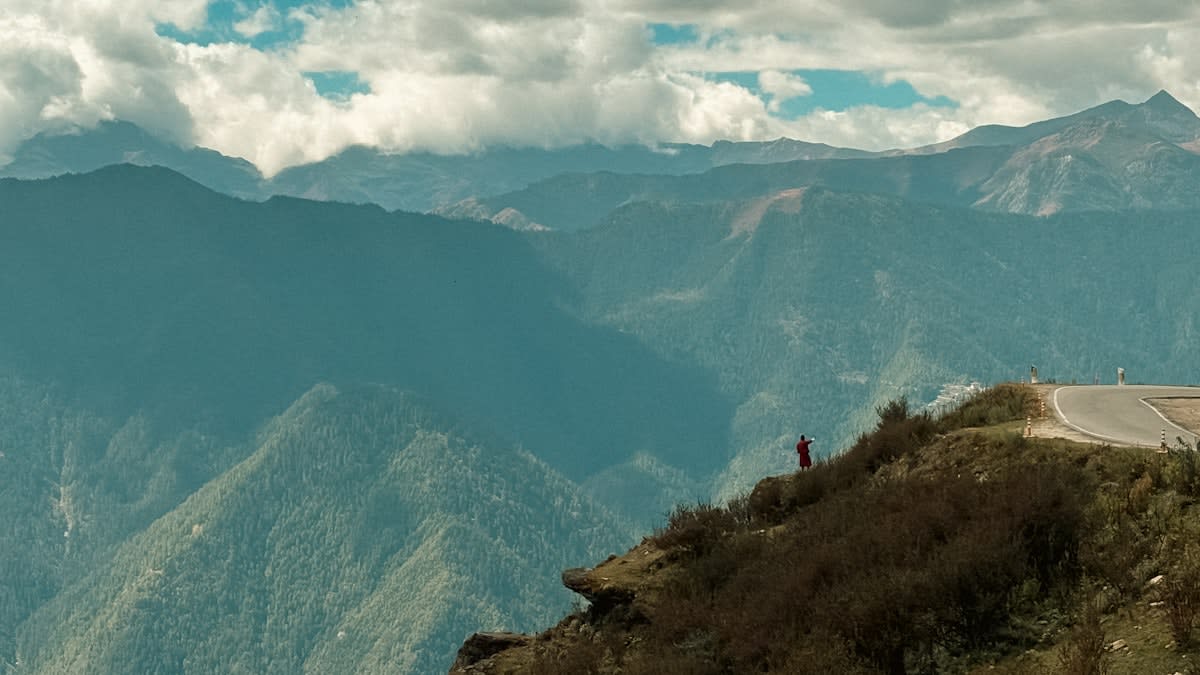
Nowhere is this shift more evident than in the Indian Himalayan region. Here, the stakes involve not just individual species, but the stability of entire mountain ecosystems. Researchers are exploring the assisted regeneration of climate-resilient provenances of specific high-altitude trees, including Cedrus deodara, Quercus semecarpifolia, and Abies pindrow (Source: MDPI, 2026). By selecting genotypes that can withstand warming scenarios, practitioners aim to sustain forest productivity and prevent the collapse of the watershed services these forests provide. This isn't a theoretical exercise; it is a targeted attempt to maintain ecosystem stability in one of the world's most fragile regions.

Beyond the forests, the logic of facilitated movement is extending to fauna. In Australia, for example, infrastructure planning is beginning to integrate the needs of threatened species. Recent plans for the West Dapto Road area acknowledge that warmer temperatures can actually help facilitate the safe departure of threatened species, such as microbats, provided the corridors are available (Source: Mirage News, 2026). It is a subtle but important shift: seeing temperature rise not just as a threat, but as a driver that can be channeled to help species relocate to safer ground.
On the ground, this looks like a battle of spreadsheets and seed banks. Practitioners spend months mapping 'climate envelopes'—predicting where a species will be comfortable in 2050 or 2080—and then physically transporting seeds or saplings to those coordinates. The real friction occurs in the field meetings. You have the 'purists' who argue that moving species is an ecological risk that could lead to invasiveness, and the 'pragmatists' who argue that doing nothing is a guaranteed death sentence. The conversation has shifted from 'Should we do this?' to 'How do we do this without breaking the existing ecosystem?'
The Risk Matrix: Maladaptation and Invasiveness
The path to resilience is not without peril. Moving a species into a new area is, by definition, introducing a non-native element to that specific plot of land. The primary risks associated with assisted migration include maladaptation—where the moved species fails to thrive despite the temperature match—and the potential for the relocated species to become invasive, disrupting local species interactions (Source: MDPI, 2026). There is a thin line between a 'climate refugee' and an 'invasive species.' The success of these programs depends entirely on the precision of the selection process.
| Strategy | Primary Goal | Key Risk | Example Species/Region |
|---|---|---|---|
| Passive Recovery | Natural adaptation/migration | Extinction debt | General conservation areas |
| Assisted Migration | Prevent population collapse | Invasiveness/Maladaptation | Himalayan Conifers |
| Genotype Sourcing | Increase adaptive resilience | Loss of local genetic purity | Coastal Sage Scrub |
To mitigate these risks, the industry is leaning heavily on genetic conservation. This involves a multi-pronged approach: using seed banks and clonal archives to preserve adaptive genetic diversity, and creating in situ reserves that act as safety nets (Source: MDPI, 2026). By maintaining a library of genetic traits, conservationists can experiment with different provenances, ensuring that the species they migrate possess the evolutionary resilience needed to survive the transition.
The broader scientific context is the concept of extinction debt—the delayed extinction of species after the loss of critical habitat. If we only focus on preserving what is left, we are merely managing the decline. Proactive interventions like assisted migration are designed to create 'colonization credit,' effectively giving species a head start in their new homes before their old ones become uninhabitable (Source: Royal Society Publishing, 2026). It is a shift from managing the end of a story to writing a new chapter.
Fact-Check & Accuracy Note
Key claims regarding the relocation of Himalayan conifers (Cedrus deodara, Quercus semecarpifolia, Abies pindrow) and the risks of maladaptation are sourced from the MDPI 2026 systematic review. The shift in coastal sage scrub restoration is attributed to BSA Pubs (2026), and the analysis of passive vs. proactive recovery is sourced from Royal Society Publishing (2026). Ongoing debate persists regarding the threshold at which a relocated species is classified as 'invasive' versus 'resilient.'