'Stand for what's true': Priyanka Gandhi's emotional message for son after exhibition row
Source Entity
AASTHA JHA
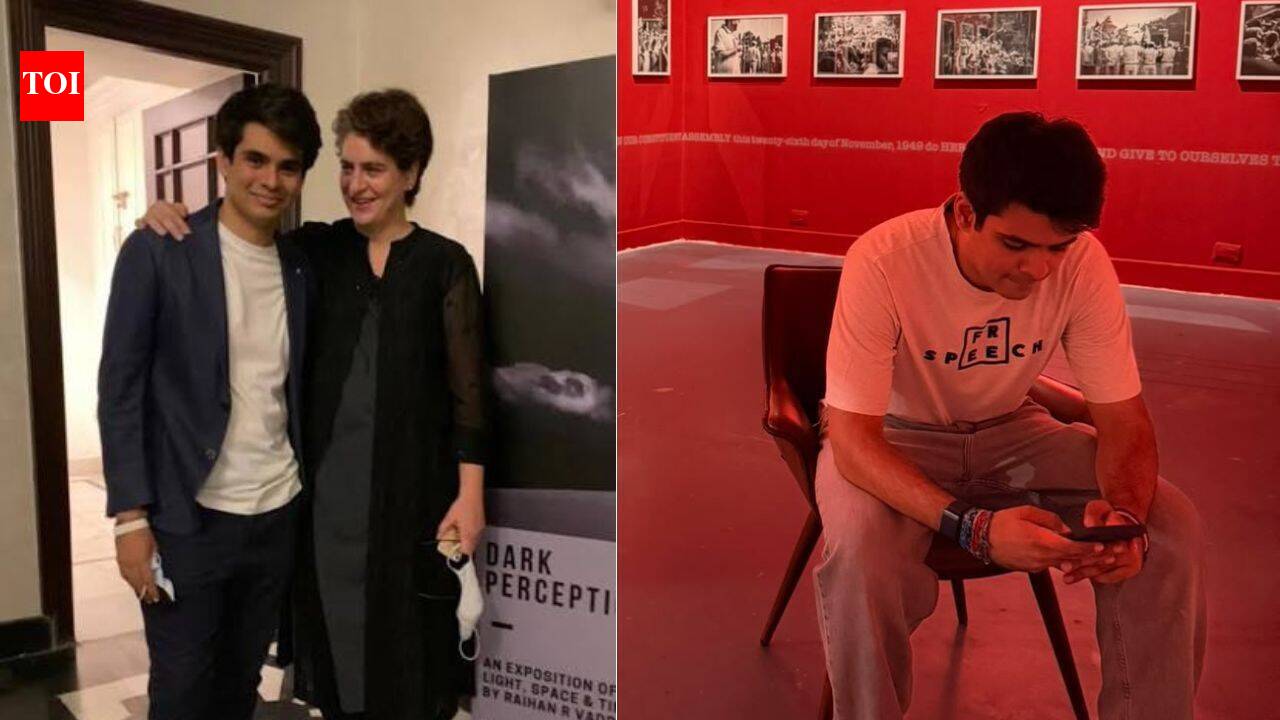
Priyanka Gandhi Vadra has publicly supported her son, Raihan Vadra, after authorities removed over 70 of his photographs from a Bikaner House exhibition. The images, which depicted Delhi protests, were reportedly censored, prompting a defense of artistic freedom from the Congress leader.
Artistic Freedom and Political Discourse: The Bikaner House Incident
Congress leader Priyanka Gandhi Vadra has publicly extended her support to her son, visual artist and curator Raihan Rajiv Vadra, following a controversy at the Bikaner House in Delhi. The incident involved the removal of over 70 photographs from Raihan’s debut exhibition, which was scheduled to open on Thursday. According to reports, the management at Bikaner House objected to the content of the photographs, which included depictions of recent protests by young people in Delhi, as well as images of the national flag.
The Intersection of Art and Authority
The core of this dispute lies in the tension between creative expression and institutional oversight. By choosing to document protests, Raihan Vadra’s work inherently engaged with the socio-political climate of the capital. The decision by exhibition management to remove these specific pieces has ignited a debate regarding the boundaries of artistic freedom within public and semi-public spaces. This event serves as a microcosm of broader discussions surrounding censorship and the tolerance for dissent in contemporary artistic circles.
Priyanka Gandhi’s Stance on Power and Expression
In a public statement shared on X, Priyanka Gandhi framed the incident as a litmus test for those in positions of authority. She articulated that when power becomes reactive to the creative output of individuals, it inadvertently signals a fragility in the authority being exercised. Her message, "When someone with power becomes afraid of the expression of another, he doesn’t know it, but he has already lost the very power he is trying to protect," suggests that the suppression of art is a counterproductive strategy for those seeking to maintain influence.
Implications for Public Discourse
The removal of images depicting the national flag alongside protest scenes highlights the sensitivity surrounding national symbols in political art. The fact that these images were deemed objectionable enough to trigger a mass removal—over 70 items in total—indicates a significant clash in values between the curator and the venue management. This event underscores the challenges faced by young artists in India who seek to use their platforms to provide a visual narrative of ongoing social movements.
Personal Support and Moral Alignment
Beyond the political implications, the episode highlights the personal support Priyanka Gandhi offers her son. By publicly affirming that she is "proud" of him and encouraging him to "stand for what is true," she has elevated a private exhibition dispute into a broader national conversation about integrity and courage in the face of institutional pressure. This support validates the artist's choice to prioritize his vision over the constraints imposed upon his exhibition.
Future Trends in Artistic Censorship
This incident is likely to influence how future exhibitions at state-managed or high-profile venues are handled. As artists continue to engage with protest culture, the conflict between venue management and creative freedom will likely remain a contentious issue. The Bikaner House row serves as a reminder that the act of displaying art is never just aesthetic; it is an act of communication that can provoke strong reactions from those who view such expression as a challenge to the status quo.
Multiple Citing Sources