‘I'm not a travel agent’: Shashi Tharoor when asked about Rahul Gandhi's foreign trip
Source Entity
AADRITA HALDER
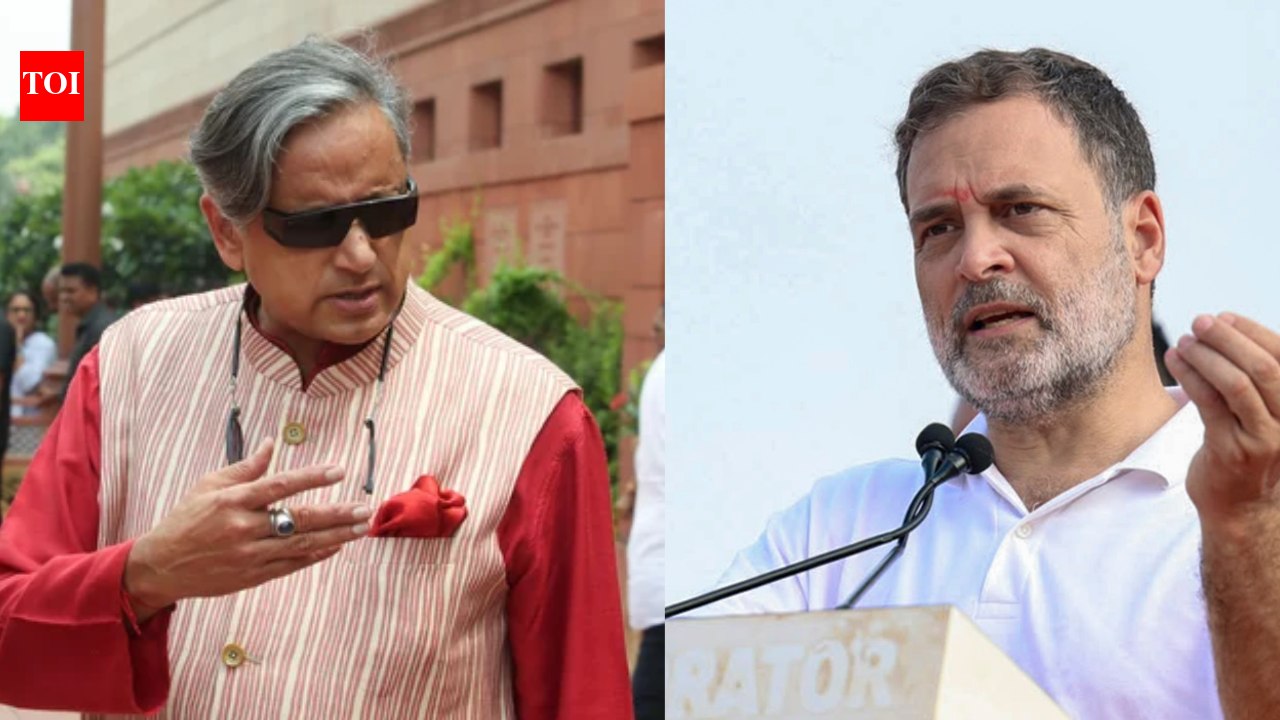
Congress MP Shashi Tharoor dismissed questions regarding Rahul Gandhi's reported trip to Vietnam amidst opposition protests in Delhi. Tharoor stated he is not a travel agent, emphasizing that individual leaders manage their own schedules and responsibilities.
Tharoor's Stance on Gandhi's Travel: A Study in Political Communication
Congress Member of Parliament Shashi Tharoor recently found himself at the center of a media inquiry regarding the whereabouts of Leader of the Opposition, Rahul Gandhi. When pressed by reporters in Thiruvananthapuram about why Gandhi was traveling abroad during a period of intense political activity in New Delhi, Tharoor offered a blunt response: "I am not a travel agent." This interaction underscores the complexities of internal party messaging and the scrutiny opposition leaders face when their personal schedules intersect with national political protests.
The Context of Political Protest
The controversy emerged against the backdrop of significant political friction in the national capital. The opposition, spearheaded by the INDIA bloc, has been staging protests against Chief Election Commissioner (CEC) Gyanesh Kumar, specifically focusing on the Special Intensive Revision (SIR) of electoral rolls. Rahul Gandhi had been a central figure in these demonstrations over the preceding two weeks, even facing police detention. His sudden departure for a reported four-day break in Vietnam—following his participation in the 'Goy Rakhon Yatra' in Goa—provided the Bharatiya Janata Party (BJP) with an opening to criticize the opposition leadership's commitment to the ongoing agitation.
The 'Travel Agent' Defense: Navigating Accountability
Tharoor’s refusal to engage with the inquiry reflects a clear attempt to maintain boundaries within the party's communication strategy. By stating, "There is no point in asking me that question," and noting that "every person has certain responsibilities," Tharoor signaled that he is neither the spokesperson for Gandhi's personal itinerary nor the appropriate venue for such queries. This approach is a common tactic in high-stakes politics: compartmentalizing individual actions to prevent them from becoming a collective liability for the party organization.
BJP's Strategic Criticism
The BJP’s critique of Rahul Gandhi’s travel serves as a broader narrative tool to paint the opposition leadership as detached from the issues they ostensibly champion. By highlighting Gandhi's absence during the protests against the Election Commission, the ruling party aims to cast doubt on the seriousness of the INDIA bloc’s campaign. For the BJP, characterizing Gandhi as being on a "foreign trip" while supporters are on the streets of Delhi is a potent way to shape public perception regarding the priorities of the Leader of the Opposition.
Implications for Internal Party Dynamics
This incident highlights the challenges of coordinating a diverse and high-profile opposition front. While the Congress party has been successful in energizing its rank and file through protests, the optics of a key leader traveling abroad mid-agitation can create friction. Tharoor’s sharp retort suggests that while senior leaders remain aligned on ideological issues, there is a clear preference for maintaining personal autonomy regarding schedules. This creates a delicate balance: the party must project a unified front against the government while allowing individual members the flexibility to manage their professional and personal lives.
Future Trends in Political Scrutiny
As the digital age continues to accelerate the news cycle, the personal movements of political figures will likely face even greater scrutiny. Future political discourse will continue to leverage these moments of "absence" to challenge the dedication of opposing leaders. For the Congress party, this necessitates a more robust and unified media strategy to explain such absences before they are framed by political rivals. Tharoor’s dismissal serves as a reminder that in the current climate, every absence is a potential talking point, and managing the narrative around these instances is as vital as the protests themselves.