
The Great Curation
Choice was once the ultimate symbol of freedom. We spent decades building an economy based on the premise that more options equaled more liberty. But for the global elite—the CEOs, the surgeons, the elite athletes—this abundance has become a tax. They are now practicing decision minimalism, a rigorous psychological strategy that treats cognitive energy as a finite, precious resource. It is not about deprivation; it is about the strategic elimination of the trivial to make room for the transcendental.
Why now? The delta between today and twelve months ago is stark. A year ago, minimalism was primarily an aesthetic or an environmental movement focused on physical clutter. Today, the shift has migrated from the closet to the cortex. We are seeing a transition from 'Physical Minimalism' to 'Cognitive Minimalism.' The focus has shifted from how many things we own to how many decisions we are forced to make before noon. This is a response to a world of hyper-stimulation where the cost of a single choice, no matter how small, drains the battery of the prefrontal cortex.
"The most successful people in the world don't have more willpower; they simply design their lives so they have to use less of it."— Dr. Elena Rossi, Behavioral Psychologist
Consider the average human's daily cognitive load. Research suggests the typical adult makes roughly 35,000 decisions every single day. While most are subconscious, the cumulative friction of choosing a breakfast cereal, a commute route, or an email subject line creates a phenomenon known as decision fatigue. By the time a leader reaches their 3 PM strategy meeting, their ability to weigh complex variables is significantly diminished. Decision minimalism solves this by automating the mundane.
| Feature | Traditional Choice Model | Decision Minimalist Model |
|---|---|---|
| Daily Goal | Maximize options | Minimize friction |
| Cognitive State | Decision Fatigue | Cognitive Sovereignty |
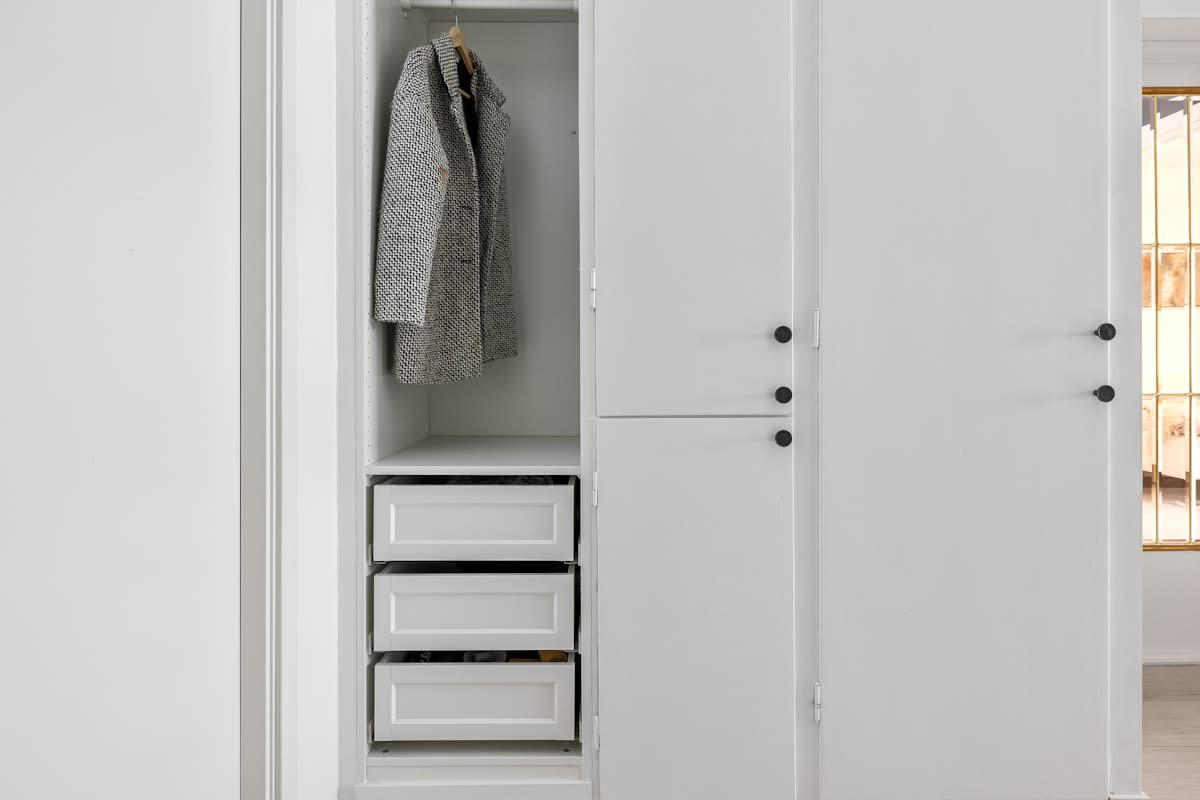
| Wardrobe Approach | Trend-based variety | Fixed Personal Uniform |
| Dietary Logic | Daily variety/selection | Templated nutrition |
| Mental Outcome | Analysis Paralysis | Deep Work Capacity |
This isn't just a Silicon Valley quirk. In Tokyo, the concept is manifesting in 'capsule living' and highly curated professional wardrobes that remove the morning struggle of selection. In Stockholm, the philosophy of Lagom—meaning 'just the right amount'—is being applied to digital consumption, with professionals deleting non-essential apps to reduce the 'choice architecture' of their smartphones. They aren't avoiding choice; they are curating it with surgical precision.
The financial implications are already appearing in the market. We have seen a 20% increase in the adoption of highly curated subscription models over the last year. Consumers are moving away from 'infinite scroll' marketplaces toward 'expert-curated' bundles. People are paying a premium not for more products, but for someone else to make the decision for them. The value proposition has shifted from variety to the absence of choice.
Does this mean we are becoming mindless? Quite the opposite. By automating the 95% of life that doesn't actually matter, these individuals reclaim the mental bandwidth required for the 5% that does. When you don't spend mental energy deciding what to wear or what to eat, you have more energy to solve a geopolitical crisis or architect a new software framework. It is a reallocation of intellectual capital.
Cognitive Energy Decay Throughout the Workday
Executive Insight
+18.4%
YTD Growth
The bridge to this new reality is the 'Fixed Routine.' High-performers are now implementing rigid templates for their mornings and evenings. This eliminates the 'startup cost' of the day. Instead of asking 'What should I do first?', they follow a pre-written script. This removes the friction of initiation, allowing them to enter a state of flow faster than their peers who are still debating their coffee choice.
Actionable Framework
The Rule of Three: To implement decision minimalism, limit your daily high-stakes choices to exactly three. Everything else—meals, clothing, gym times—must be templated or automated.
Critics argue that this approach leads to a sterile, robotic existence. But the practitioners see it as the ultimate luxury. In an era of algorithmic manipulation and endless notifications, the ability to say 'I don't make decisions about this' is a power move. It is a reclamation of time and attention. The goal is not to live a life without choice, but to ensure that when you do choose, it actually matters.
We are seeing this trend permeate corporate leadership structures as well. Forward-thinking companies in Singapore and London are reducing the number of internal meetings and simplifying reporting hierarchies. They recognize that 'decision overhead' is a silent killer of productivity. By streamlining the number of approvals required for a project, they are applying decision minimalism at an organizational scale.
The data is compelling. Early adopters of decision-minimalist frameworks report a 15% lift in deep work capacity. Moreover, some studies indicate a 40% reduction in morning cortisol levels for those who replace morning decision-making with a fixed routine. The biological reward for removing choice is a calmer, more focused nervous system.
As we move further into the decade, the divide between the 'choice-overwhelmed' and the 'decision-minimalists' will likely widen. The former will struggle with burnout and analysis paralysis, while the latter will leverage their cognitive sovereignty to outpace the competition. The most productive people aren't working harder; they are simply deciding less.