The Immediate Friction of July 2026
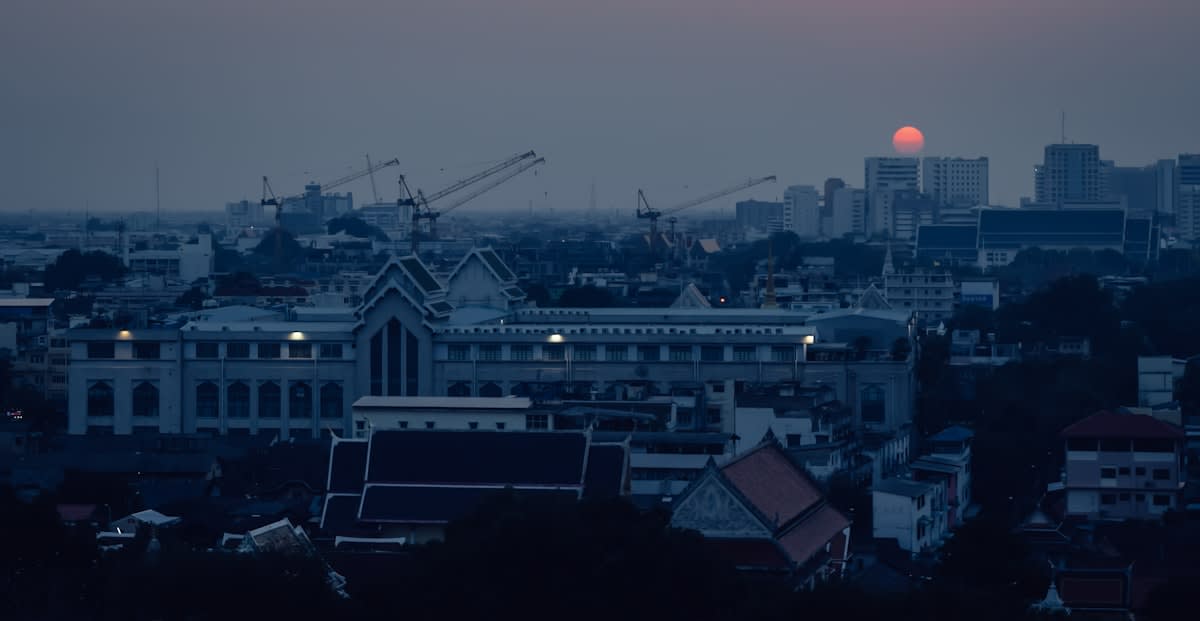
The current month has exposed a raw nerve in the urban Southeast Asian experience. In Bangkok, the immediate aftermath of a deadly music bar fire has turned police stations and forensic institutes into the primary meeting grounds for grieving kinship networks. This is not merely a tragedy of safety failures; it is a snapshot of how urban families now coalesce around systemic collapse. When the state and the private sector fail, the relative becomes the only reliable unit of survival and advocacy. The sight of families gathering to receive bodies at the Institute of Forensic Medicine underscores a brutal reality: the urban family is often defined by its response to crisis rather than its daily cohesion.
Consider the case of Natthaphong Lakhorn, a 26-year-old survivor of the Bangkok blaze. His experience—escaping through a back door while a relative perished—highlights the precariousness of the young urban professional's social circle. In these dense metropolitan hubs, the line between 'chosen family' (friends and companions) and biological kinship blurs. The urgency with which survivors are now seeking compensation from bar owners suggests a shift in the family's role from emotional support to a legal and financial recovery unit. This is the new urban kinship logic: the family as a collective bargaining chip against corporate negligence.
Why does this matter now? Six months ago, the narrative of the Southeast Asian family was still rooted in the ideal of the multi-generational home. However, July 2026 reveals a delta of desperation. The reliance on forensic institutes and police stations for family reunification suggests that the traditional home is no longer the center of gravity. Instead, the family is being redefined by its ability to navigate the bureaucracy of urban disaster. The kinship structure is no longer a static heritage but a reactive mechanism.
The Consumerist Pivot in Phnom Penh
While Bangkok grapples with the fragility of life, Phnom Penh is witnessing the financialization of the family's aspirations. The launch of Phillip Bank's Shiok Sabay 2026 campaign is more than a marketing exercise; it is an invitation to a new kind of social identity. By blending Singaporean financial trust with local riverside festivals, the bank is positioning itself as a surrogate for the stability traditionally provided by the family patriarch. The focus on exclusive customer rewards and roadshows suggests that social status is now derived from alignment with global capital rather than ancestral standing.
This shift is subtle but profound. When a Singaporean-owned commercial bank becomes the curator of 'vibrant local experiences' via a seven-week campaign, it replaces the traditional community festival with a brand-led event. The family unit in urban Cambodia is increasingly orbiting these markers of international prestige. The goal is no longer just survival or local success, but the acquisition of a 'gold standard' of trust that is imported and institutionalized. The family is becoming a consumer unit first and a kinship unit second.
"Phillip Bank is bringing the spirit of Singapore directly to the public... blending the gold standard of Singaporean financial trust with vibrant local experiences."— Cambodia Investment Review
Does this signal the end of the communal Cambodian household? Not necessarily, but it changes the incentive structure. The 'Shiok Sabay' ethos promotes an individualized, reward-based lifestyle that clashes with the collective sacrifice of traditional family structures. We are seeing the emergence of a middle class that views the family as a vehicle for accessing these rewards. The kinship bond is being leveraged to ensure that the next generation can enter this circle of Singaporean-style financial security.
The Strategic Shift
The 'Delta' of 2026: In previous cycles, urban growth in SE Asia was framed as a way to support the extended family. Now, the data suggests a pivot where global financial institutions and educational platforms are the primary architects of family stability, replacing traditional kinship networks.
The Migration Equation and Educational Displacement
The restructuring of the family is most evident in the extreme measure of migration. The experience of over 500 Hong Kong migrant families in the UK, supported by Ascend Education, serves as a proxy for a wider Asian trend: the decoupling of the family from its geographic origin to secure academic capital. These families are not just moving; they are decoding entirely new systems of existence. The transition from Hong Kong-style learning to British educational expectations requires a total reconfiguration of the parent-child dynamic.
In this context, the family becomes a strategic project. The focus on predicted grades, exam boards, and university pathways transforms the home into a preparatory academy. The emotional bond is subsumed by the academic strategy. When parents rely on bilingual platforms to bridge the gap between two vastly different cultures, the traditional role of the parent as the primary source of wisdom is replaced by the educational consultant. The family is now a partnership in navigation.
This educational migration creates a fragmented family structure where the 'home' is a conceptual space rather than a physical one. The 500 families assisted by Ascend Education represent a growing class of 'global nomads' who view the family unit as a portable asset. The psychological cost is high, but the perceived reward—entry into a global elite—outweighs the loss of local kinship. The family is no longer a root; it is a rocket.
| Driver | Traditional Structure | 2026 Urban Shift |
|---|---|---|
| Safety Net | Extended Kinship/Village | Legal Compensation/Insurance |
| Success Metric | Lineage and Local Stability | International Education/Global Mobility |
| Social Bond | Communal Rituals/Tradition | Brand-led Experiences/Financial Trust |
| Parental Role | Cultural Gatekeeper | Educational Strategic Partner |
When we synthesize these events—the Bangkok fire, the Phnom Penh banking surge, and the UK migration—a clear pattern emerges. The urban Asian family is moving away from a model of permanence toward a model of agility. The family is no longer a sanctuary from the world but a tool for engaging with it. Whether it is fighting for compensation in a Bangkok police station or decoding GCSEs in London, the objective is the same: leveraging the family unit to survive and thrive in an increasingly volatile global environment.
Scale of Educational Migration Support (Sample)
Executive Insight
+18.4%
YTD Growth
The resilience of these structures is being tested in real-time. The fact that 32 people died in a single Bangkok bar fire and their families are now the ones pushing for accountability shows that the family is the only remaining check on urban chaos. The kinship network has evolved into a survivalist guild. This is the quiet redefinition: the family is not disappearing; it is becoming a specialized agency for risk management and social climbing.