
The Architecture of the Zone
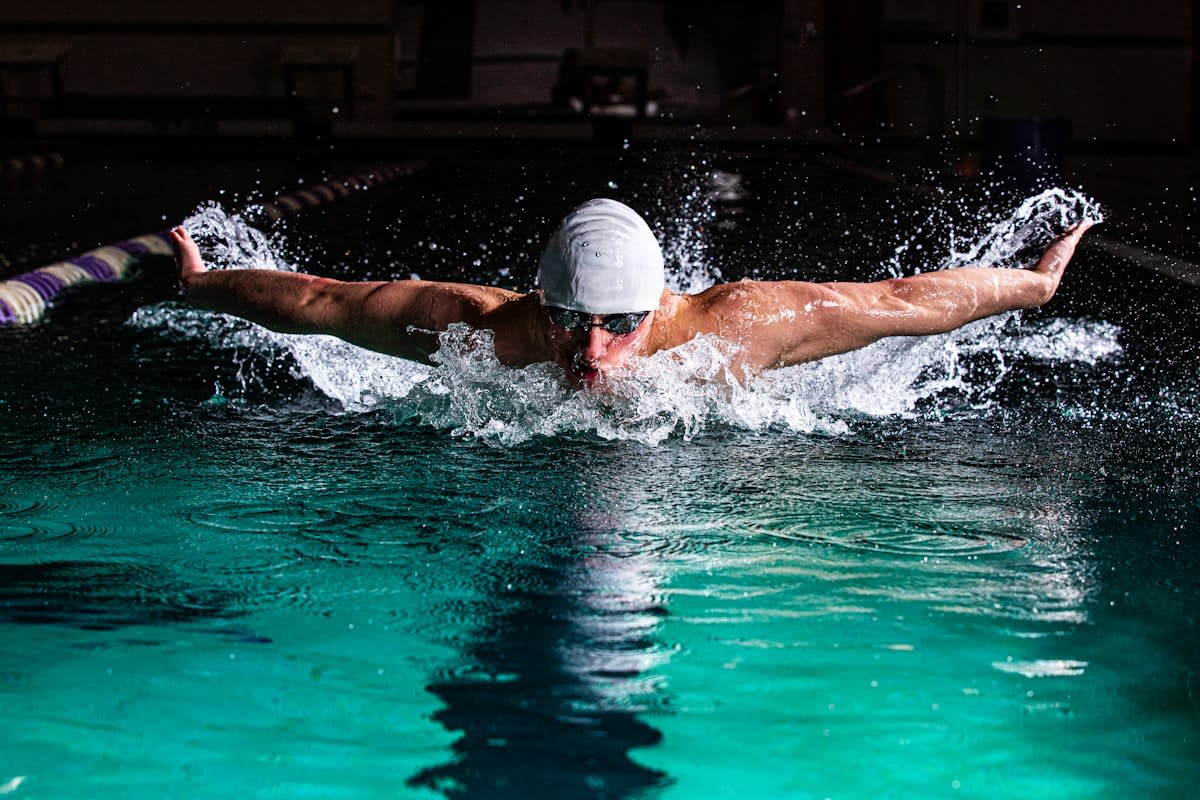
Flow isn't a gift from the gods; it's a biological state that can be engineered. When a Japanese Kendo master strikes or a Brazilian footballer weaves through a defense, they aren't thinking. They have entered a state of transient hypofrontality where the prefrontal cortex—the seat of self-criticism and doubt—temporarily shuts down. This allows the subconscious, which processes information at speeds the conscious mind cannot touch, to take the wheel. To trigger this, you don't pray for luck; you calibrate your environment and your internal chemistry with surgical precision.
Most athletes mistake the 'zone' for a random streak of good luck. In reality, peak performance is the result of a specific neurochemical cocktail involving dopamine, norepinephrine, endorphins, and anandamide. These chemicals sharpen focus, dampen pain, and accelerate pattern recognition. When these systems align, the perception of time distorts and the gap between intention and action vanishes. The goal is to move from accidental flow to intentional triggering, transforming a rare occurrence into a repeatable skill.
Prerequisites: The Foundation of Flow
You cannot trigger flow from a vacuum of skill. The most critical prerequisite is a high baseline of technical competence. Flow does not grant you skills you haven't practiced; it simply allows you to execute those skills with 100% efficiency. If a tennis player hasn't mastered the mechanics of a serve, the brain remains trapped in the conscious, analytical phase of execution, which is too slow for elite competition. Mastery is the ticket to entry.
Beyond skill, you need total commitment to the immediate moment. This requires a mental environment free from the 'noise' of outcome-dependency. If an athlete is worrying about the trophy or the critics in the stands, they are operating in the prefrontal cortex, not the flow state. You must establish a psychological boundary that isolates the performance from the consequence. Without this detachment, the anxiety levels will spike, triggering a cortisol release that kills the flow state before it even begins.
The Mastery Paradox
Flow is the bridge between competence and transcendence. You must be competent enough to stop thinking about the 'how' so your brain can focus on the 'now'.
The Step-by-Step Trigger Process
Triggering flow requires a sequential alignment of external challenges and internal states. It is a ramp-up process that moves the brain from a state of resting awareness to one of hyper-focus. By following these specific steps, athletes can bypass the struggle phase and slide directly into the zone.
- Calibrate the Challenge-Skill Balance: Ensure the task is roughly 4% beyond your current ability. If the challenge is too low, you succumb to boredom; if it is too high, you freeze in anxiety. This 'sweet spot' forces the brain to engage fully without overloading the system.
- Establish a Pre-Performance Ritual: Use a consistent set of physical and mental cues. Whether it is the specific way a basketball player bounces the ball or a sprinter's breathing pattern, rituals signal to the brain that it is time to transition from the mundane to the elite.
- Implement Attentional Narrowing: Eliminate all peripheral distractions. Focus on a single, immediate goal—like the seam of the ball or the breath of the opponent. This narrows the sensory input, forcing the brain to prioritize only the data relevant to the task.
- Seek Immediate Feedback Loops: Engage in activities where the result of an action is instantly visible. The brain needs a constant stream of 'success signals' to maintain dopamine levels, which keeps the flow state active and prevents the mind from wandering.
- Execute the 'Letting Go' Phase: Once the rhythm is established, consciously stop trying to control the outcome. Shift from 'doing' to 'observing'. At this point, the subconscious takes over, and the body moves with a fluid, automatic precision.
The 4% rule is the most vital component of this sequence. Research suggests that when a challenge exceeds skill by a small but perceptible margin, the brain releases a surge of norepinephrine to increase alertness. This chemical spike acts as the catalyst for the subsequent release of dopamine. When you hit that precise delta, the brain stops questioning its ability and starts executing its potential. This is why the most elite athletes constantly seek out opponents who are slightly better than they are.
"The moment you stop trying to find the zone is the moment you are usually in it. Effort is the enemy of flow."— Elite Performance Coach
Consider the rhythmic endurance of Ethiopian long-distance runners. They don't fight the pain; they integrate it into a rhythmic loop of breath and stride. By focusing on the mechanical repetition (the feedback loop), they trigger a state of flow that allows them to sustain intensities that would be mentally unbearable for an amateur. They aren't ignoring the struggle; they are using the struggle as a trigger for the zone.
The Neurochemical Payload
To understand why flow feels like a superpower, one must look at the chemistry. During flow, the brain releases a potent mix of five chemicals. Dopamine and norepinephrine increase focus and pattern recognition. Endorphins and anandamide block pain and induce a feeling of euphoria. Together, these create a state where reaction times can improve by up to 25%, and the cognitive load required for complex movements drops significantly.
| Chemical | Primary Function in Flow | Performance Outcome |
|---|---|---|
| Dopamine | Pattern Recognition | Faster decision making |
| Norepinephrine | Arousal and Alertness | Hyper-awareness of environment |
| Anandamide | Lateral Thinking | Creative problem solving on the fly |
| Endorphins | Pain Suppression | Ability to push past physical limits |
This chemical surge is why athletes report a sense of 'effortlessness' even while performing at their absolute physical limit. The anandamide, in particular, promotes lateral thinking, allowing a quarterback or a point guard to see a passing lane that didn't exist a millisecond ago. They aren't calculating the trajectory; they are perceiving the solution. This is the essence of the flow state: the transition from calculation to intuition.
Common Pitfalls: Why the Flow State Breaks
The most common mistake athletes make is 'trying' to enter flow. Flow is a state of non-striving. The moment you consciously think, 'I need to get in the zone,' you have activated the prefrontal cortex, which is the exact part of the brain that needs to shut down for flow to occur. This is known as the Icarus Paradox: the harder you strive for the peak, the further you push it away. The key is to focus on the triggers, not the state itself.
Another critical failure is the neglect of the recovery phase. Flow is metabolically expensive. The surge of neurochemicals leaves the brain and body depleted. Athletes who try to force flow every single day without adequate sleep and neurological downtime find themselves hitting a wall of burnout. You cannot live in the zone; you visit it. The recovery period is where the brain integrates the gains made during the flow state, turning a peak performance event into a permanent skill increase.
- Over-analyzing technique during the performance (The Analysis Paralysis).
- Allowing external expectations to outweigh the internal challenge.
- Ignoring the biological need for deep recovery between peak events.
- Setting goals that are too vague to provide a clear feedback loop.
Ultimately, the ability to trigger flow on command is the ultimate competitive advantage. It is the difference between an athlete who is merely talented and one who is legendary. By mastering the balance of challenge and skill, utilizing rituals to prime the brain, and respecting the biological cost of peak performance, any athlete can move from the chaos of inconsistency to the precision of the zone.