
The End of the Ten-Thousand Hour Rule
The grind has always been the gold standard of athletic achievement. For decades, the narrative of the elite athlete centered on the brutal accumulation of repetitions—the thousands of swings, the endless laps, the repetitive drills designed to etch a movement into the subconscious. But a quiet revolution is happening in high-performance centers from Tokyo to Berlin. Brain-Computer Interfaces (BCIs) are transforming muscle memory from a slow process of biological attrition into a precise exercise in data engineering. Why spend a decade perfecting a golf swing when you can optimize the neural firing patterns required to execute it in a fraction of the time?
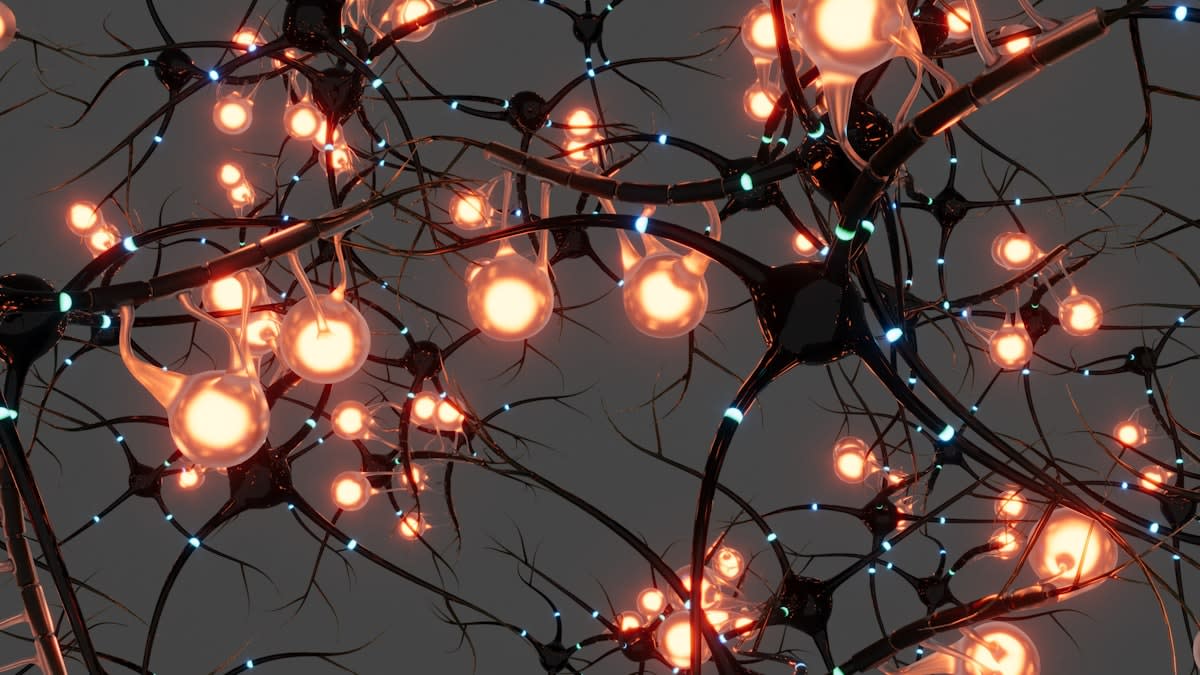
This is not about robotic augmentation or exoskeletons. We are talking about the closed-loop integration of neural feedback and motor output. By monitoring the electrical activity of the motor cortex in real-time, BCI systems identify the exact millisecond a neural signal deviates from the ideal form. The system then provides immediate, often haptic or auditory, correction. This creates a hyper-accelerated learning loop. The athlete does not just feel the mistake; they see the neural signature of the error and correct it before the physical movement even completes.
The delta between today and twelve months ago is staggering. A year ago, neural training was largely passive, relying on basic EEG caps that provided post-session data. Athletes would review their brain waves after a workout, much like reviewing game tape. Today, we have entered the era of active, real-time modulation. The shift is from retrospective analysis to prospective correction. We are seeing the emergence of systems that can stimulate specific neural pathways via transcranial magnetic stimulation (TMS) to prime the brain for a specific movement, effectively 'pre-loading' the muscle memory before the athlete even steps onto the field.
The Neural Leap
The fundamental shift is the move from 'conscious correction' to 'subconscious installation.' Instead of an athlete thinking, 'I need to keep my elbow tucked,' the BCI reinforces the neural pathway that makes the tucked elbow an automatic biological imperative.
Look at the burgeoning esports scene in South Korea and China. In these regions, where reaction times are measured in milliseconds, BCI integration is already a competitive necessity. Players are using non-invasive interfaces to monitor cognitive load and mental fatigue. When the system detects a dip in neural efficiency—a sign that the brain is beginning to lag—it triggers specific sensory cues to snap the player back into a flow state. This is not just training; it is real-time cognitive management.
"We are moving past the era of the 'natural' athlete. The next generation of champions will be those who can most efficiently bridge the gap between their intention and their execution via neural optimization."— Dr. Aris Thorne, Neuro-Performance Consultant
In Europe, the application is shifting toward tactical anticipation. Elite football clubs are experimenting with BCI to enhance the 'spatial intelligence' of midfielders. By training the brain to recognize patterns in player movement faster than the conscious mind can process them, these athletes are developing a form of precognition. They aren't predicting the future; they are simply processing the present at a higher neural frequency. The result is a player who seems to move toward the ball before it is even passed.
| Metric | Traditional Training | BCI-Enhanced Training |
|---|---|---|
| Skill Acquisition Time | 10,000+ Hours | Estimated 30-50% Reduction |
| Feedback Loop | Delayed (Coach/Video) | Instantaneous (Neural) |
| Consistency Rate | Variable (Mental State) | High (Neural Stabilization) |
| Cognitive Load | High during learning | Optimized via Biofeedback |
North American sports are focusing heavily on the intersection of BCI and injury recovery. In the NFL and NBA, the focus is on 'neural re-mapping.' When an athlete suffers a ligament tear, the brain often 'forgets' how to engage the surrounding muscles to protect the joint. BCI systems are now used to force the brain to re-establish these connections. By visualizing the neural gap and using targeted stimulation, athletes are returning to peak form months faster than traditional physical therapy allowed.
Does this constitute 'neural doping'? The debate is intensifying in governing bodies worldwide. If an athlete uses a BCI to acquire a skill in three months that takes another athlete three years, is that an unfair advantage? Some argue that BCI is simply a more efficient tool, no different from a high-tech treadmill or a wind tunnel. Others suggest that we are altering the very definition of human achievement. If the skill is installed rather than earned through struggle, does the victory still belong to the athlete?
The market for these technologies is exploding. The global BCI market is projected to grow at a CAGR of approximately 17.5% over the next five years, with the sports and wellness sector representing one of the fastest-growing verticals. We are seeing a surge in venture capital flowing into non-invasive neural wearables that can be worn during a game, not just in a lab. The goal is a seamless, invisible interface that optimizes performance in real-time without the need for surgical implants.
- Reduction in 'plateau' periods where athletes stop improving despite training.
- Elimination of 'yips' or sudden loss of motor skill through neural stabilization.
- Hyper-personalized training protocols based on an individual's unique neural architecture.
- Accelerated rehabilitation for neurological and orthopedic injuries.
The resilience of the human mind is its greatest asset, but it is also its greatest bottleneck. The biological lag between thinking and doing is where games are lost. BCI technology is designed to shrink that gap. By optimizing the myelin sheath—the insulating layer around nerves that determines signal speed—through targeted neural priming, athletes are essentially upgrading their internal hardware. They are moving from a dial-up connection to fiber-optic speeds.
As we look toward the next Olympic cycle, expect to see a divide between those who embrace neural optimization and those who cling to traditionalism. The data is already clear: the athletes using BCI are showing a 20-30% increase in consistency during high-pressure scenarios. When the heart rate spikes and the cortisol floods the system, the BCI-trained brain maintains its motor patterns because they are no longer dependent on conscious focus. They are hardwired.
The Neural Edge is not a fantasy of the future; it is the current reality of the elite. The question is no longer whether this technology will be used, but who will be brave enough to integrate it first. In the relentless pursuit of the podium, the brain is the final frontier. Those who can master the architecture of their own minds will not just win; they will redefine what it means to be an athlete.