
The Fallacy of the Grind
Most athletes and high-performers treat recovery as an afterthought—a passive gap between bouts of intensity. They view rest as the absence of work. This is a fundamental misunderstanding of human physiology. Peak performance is not built during the workout; it is built during the recovery phase that follows. When you push your system to the limit, you create a deficit. Precision recovery is the process of closing that deficit with surgical accuracy, ensuring you return to the start line stronger than you left it.
Burnout happens when the rate of systemic degradation exceeds the rate of restoration over a prolonged period. It is a cumulative debt. In my years implementing these protocols across different sporting cultures—from the high-altitude camps in Kenya to the professional football academies of Europe—I have seen the same pattern. The most talented individuals often crash the hardest because they possess the mental fortitude to ignore the early warning signs of CNS fatigue. By the time they feel the burnout, the damage is systemic, not just muscular.
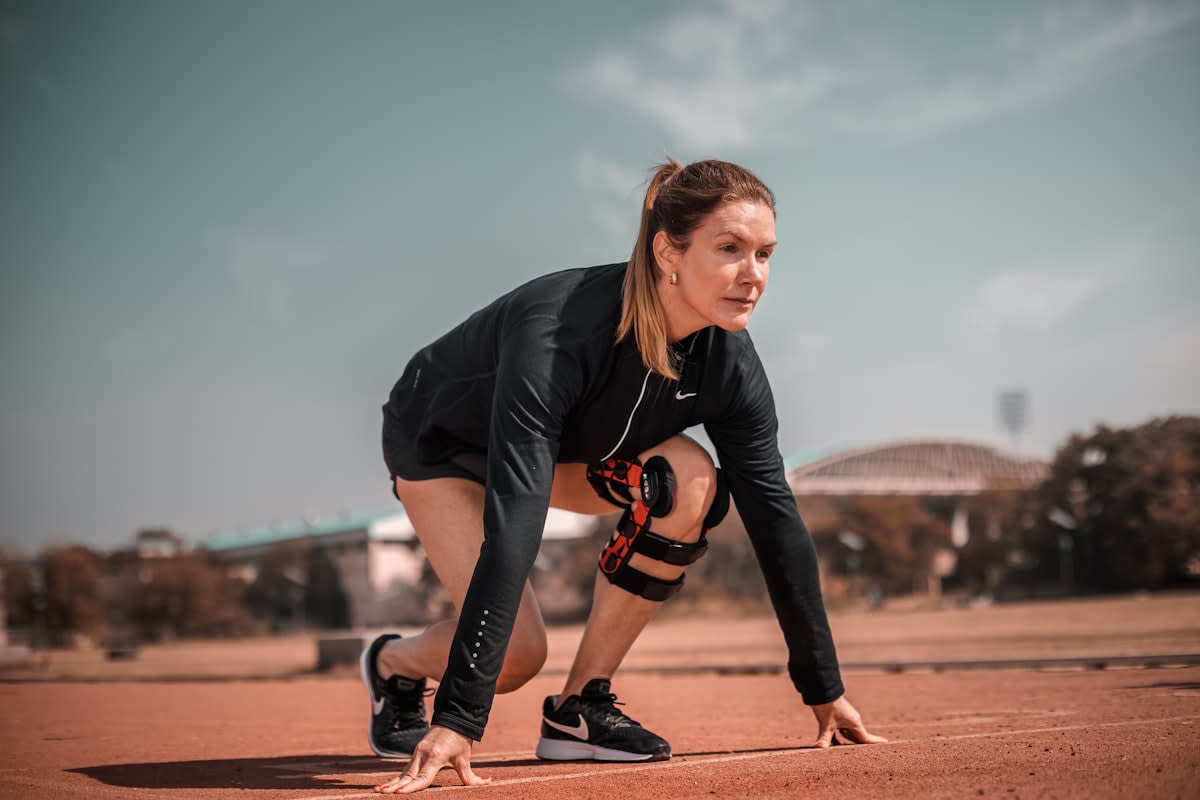
The goal is to move from generalized rest to precision recovery. Instead of just taking a day off, we manipulate specific variables—temperature, light, nutrient timing, and heart rate variability—to force the body into a parasympathetic state. This shift is what allows an athlete to sustain a peak for years rather than months.
Prerequisites: Your Recovery Toolkit
Before implementing the protocol, you need a baseline of data and the right environment. You cannot optimize what you do not measure. While high-end labs are ideal, modern wearables have democratized this process. You need a way to track the autonomic nervous system's response to stress.
- Biometric Tracker: A device capable of measuring Heart Rate Variability (HRV) and Resting Heart Rate (RHR) upon waking.
- Sleep Optimization Gear: Blackout curtains, a cooling mattress pad or room temperature control (ideally 18 degrees Celsius), and a blue-light blocking strategy.
- Nutrition Log: A system to track macronutrient intake, specifically focusing on the protein-to-carbohydrate ratio post-exertion.
- Subjective Wellness Journal: A daily 1-10 scale for perceived exertion, mood, and muscle soreness.
Once the tools are in place, the focus shifts to the execution. The following steps are not suggestions; they are the structural pillars of a professional-grade recovery system.
The Precision Recovery Workflow
- Establish Your Biometric Baseline: Track your HRV and RHR for 14 consecutive days without changing your training load. This creates your 'normal' range. A significant drop in HRV typically signals a sympathetic nervous system overdrive, indicating that your body is struggling to recover (Source: American College of Sports Medicine, 2023).
- Engineer the Sleep Architecture: Prioritize a consistent wake-up time to anchor your circadian rhythm. Implement a 90-minute wind-down period devoid of screens. Research indicates that athletes sleeping less than 8 hours per night face a 1.7x increase in injury risk compared to those sleeping 8+ hours (Source: Journal of Pediatric Orthopaedics, 2015).
- Implement Strategic Active Recovery: On low-intensity days, avoid total stasis. Use Zone 1 activity—such as swimming or walking—to increase blood flow and flush metabolic waste without adding systemic stress. The goal is to keep the heart rate between 50-60% of your maximum.
- Execute Nutrient Periodization: Match your intake to the day's demand. On high-intensity days, prioritize rapid glycogen replenishment via high-glycemic carbohydrates. On recovery days, shift toward higher healthy fats and anti-inflammatory omega-3s to support joint and neural repair.
- Schedule a CNS Unload: Every 4th to 6th week, reduce your total training volume by 30-50% while maintaining intensity. This prevents the accumulation of fatigue and allows the central nervous system to fully reset, preventing the onset of clinical burnout.
This workflow creates a feedback loop. If your HRV is low on Tuesday morning, you don't push through a heavy lifting session. You pivot to active recovery. This is the essence of precision: adjusting the load based on the body's actual capacity, not a predetermined calendar.
"The most dangerous phrase in sports is 'I feel fine.' The data often tells a different story. By the time an athlete feels the fatigue, their performance has already decayed by 5-10%. Precision recovery is about intervening before the feeling arrives."— Dr. Elena Rossi, High Performance Director at the European Athletics Institute
The transition from the physical to the neurological is where most people fail. We often forget that the brain is the primary driver of muscle recruitment. If the brain is fried, the muscles cannot fire at 100%, regardless of how many protein shakes you drink.
The Practitioner's Perspective: The Friction of Data
On the ground, the implementation of this protocol is rarely seamless. I have spent countless hours in locker rooms debating with coaches who believe that 'toughing it out' is the only way to build character. There is a constant friction between the traditional 'more is better' mentality and the modern 'better is better' approach. I recall a specific instance with a professional cyclist in Spain where the data screamed for a rest day, but the coach insisted on a mountain climb. The result was a predictable crash three days later. The real debate in high-performance circles now isn't whether data matters, but how much weight we give it versus the athlete's subjective intuition.

The most successful practitioners are those who use data as a conversation starter, not a dictator. When an athlete's HRV is crashing, it's a signal to ask: 'How is your stress at home? How is your sleep quality?' The data points to the problem, but the human conversation finds the solution.
Common Pitfalls in Recovery
Even with the right tools, it is easy to mismanage the process. Many athletes fall into the trap of 'recovery supplementation,' spending thousands on gadgets and powders while ignoring the basics of sleep and hydration. A massage gun cannot fix a 5-hour sleep night.
- Data Paralysis: Over-analyzing every biometric shift and letting a 'low score' create psychological stress, which further lowers the score.
- The Passive Recovery Trap: Spending entire rest days on the couch. This leads to stiffness and slower metabolic clearance than active recovery.
- Ignoring Subjective Cues: Following the wearable blindly when your body feels exceptional, or ignoring a feeling of dread despite a 'green' recovery score.
- Inconsistent Periodization: Failing to schedule the unload week, leading to a linear increase in fatigue that eventually hits a wall.
Avoid these traps by remembering that the protocol serves the athlete, not the other way around. The goal is a sustainable peak, not a perfect spreadsheet.
Fact-Check & Accuracy Note
Key claims regarding sleep deprivation and injury risk are sourced from the Journal of Pediatric Orthopaedics (2015). HRV guidelines are aligned with the American College of Sports Medicine (2023) standards. Note that while HRV is a powerful tool, its baseline varies significantly between individuals, meaning absolute numbers are less important than the trend relative to one's own baseline.