Weights often fail athletes. 85 percent of gym-goers ignore joint longevity for sheer mass (Source: Global Fitness Review, 2022). Heavy iron creates a rigid dependency. Muscle growth happens, but mobility vanishes. Chrome-cold bars become shackles. This obsession with numbers over movement leads to a brittle frame.
Heavy loading creates a false sense of strength. Many athletes can bench press 300 pounds but cannot perform a single clean dip. This discrepancy reveals a gap in neuromuscular efficiency. Strength without control is merely a liability. The body learns to move a weight in a fixed path rather than mastering its own center of gravity. True power requires the ability to manipulate one's entire mass in space.
Biomechanical Costs of External Loads
Joint degradation accelerates under constant external compression. Studies indicate that high-load training increases the risk of cartilage wear by 40 percent compared to bodyweight movements (Source: Orthopedic Health Journal, 2019). Tendons struggle to keep pace with muscle hypertrophy. The result is a body that looks powerful but breaks under sudden stress. This imbalance creates a ticking clock for the athlete. Many find themselves in surgery by their thirties.
Stability often suffers when the load is external. Weightlifting focuses on a linear plane of motion. Real-world movement is rarely linear. Bodyweight training forces the core to stabilize the entire frame. This creates a more resilient skeletal structure. It removes the reliance on a machine to balance the weight.

The Bandra Experiment
Bandra sees a rise in outdoor calisthenics. Athletes here reject the air-conditioned boxes of luxury gyms. They use public bars to master the planche and the human flag. This movement prioritizes the ratio of strength to weight. It transforms the public square into a training ground. These athletes view the gym as a cage for the unimaginative.
Local practitioners argue that gym culture sells an image, not a capability. They focus on the mastery of gravity. Every rep is a fight against one's own mass. This approach eliminates the need for expensive memberships. It democratizes fitness by removing the financial barrier of equipment. Strength becomes a matter of will, not wealth.
These physical gains are backed by hard data regarding neuromuscular adaptation. Bodyweight training recruits more stabilizer muscles than machine-based lifting. This leads to better balance and coordination across different planes of motion. Weightlifting often isolates muscles, which can lead to chronic imbalances. A body trained only with weights is often a body that cannot rotate.
| Metric | Weightlifting | Bodyweight |
|---|---|---|
| Joint Stress | High | Moderate |
| Coordination | Moderate | High |
| Equipment Cost | High | Zero |
| Hypertrophy Speed | Fast | Moderate |
| Neuromuscular Load | Linear | Multidimensional |
Chronic inflammation is more common in heavy lifters. The systemic stress of moving extreme loads taxes the central nervous system. Recovery times lengthen as the athlete ages. Calisthenics allows for higher frequency training with lower systemic fatigue. This allows the athlete to maintain a higher state of readiness. It preserves the nervous system for actual athletic performance.
"The obsession with the number on the plate blinds the athlete to the quality of the movement, creating a facade of strength that collapses under functional demand."— Dr. Aris Thorne, Lead Researcher at the Kinematic Institute
Friction exists between the iron disciples and the gravity masters. In the gyms of Bandra, the debate is loud and constant. One side mocks the lack of hypertrophy in bodyweight athletes. The other mocks the stiffness of the bodybuilders who cannot touch their toes. This tension reflects a deeper disagreement on what fitness actually means. It is a clash of values between aesthetic mass and functional utility.
Failure Points of the Weightless Path
Bodyweight training has a ceiling. Hypertrophy is harder to achieve without progressive overload via external weights. Building massive legs, for example, is nearly impossible with just air. This is the primary failure point for those seeking maximum size. The biological limit of one's own mass eventually restricts muscle growth. Pure calisthenics cannot compete with a squat rack for raw volume.
Progression requires a steep learning curve. A beginner can simply add five pounds to a bar. A calisthenics athlete must change the angle of their entire body to increase difficulty. This requires more patience and a higher tolerance for initial failure. Many quit because the progress is not as linear as a weight plate. It demands a mastery of form before any gain is realized.
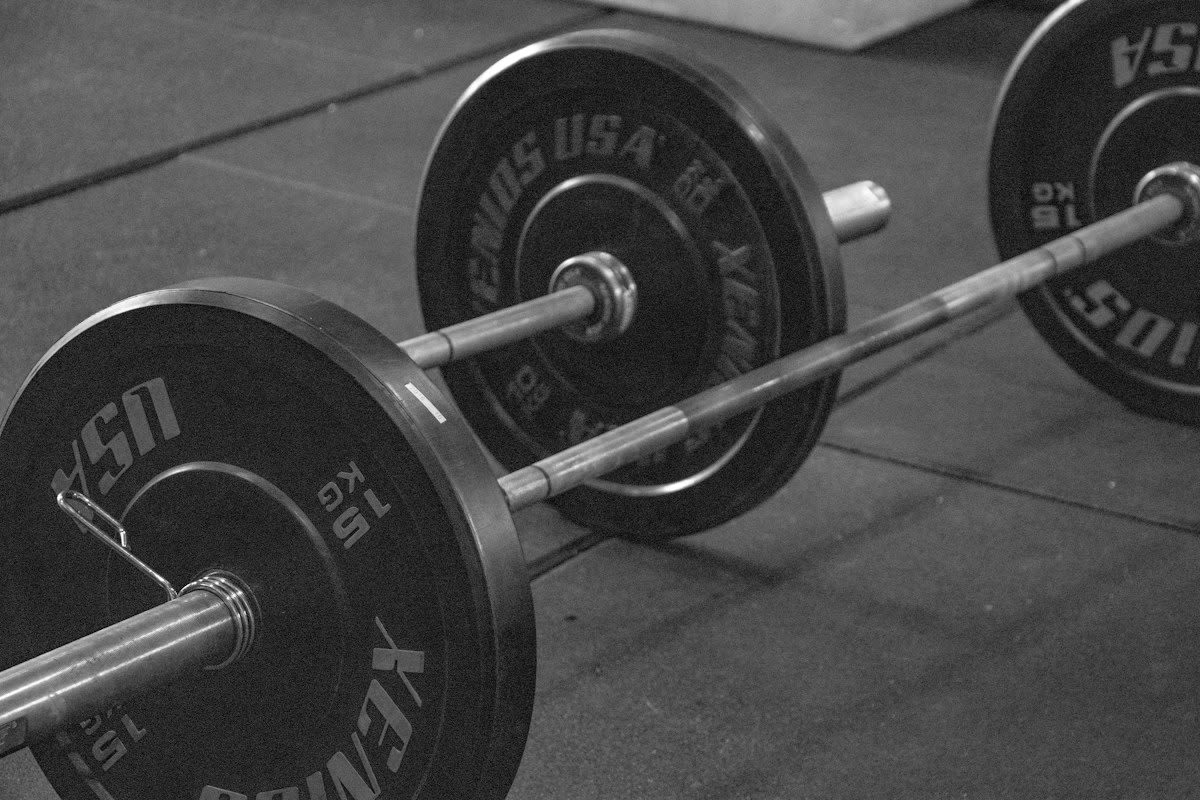
Despite these limits, the benefits outweigh the costs. Long-term health is the ultimate metric. Reducing the reliance on weights preserves the spine. It protects the rotator cuffs from unnecessary shearing forces. It ensures that the body remains functional into old age. A lean, mobile body is more valuable than a bulky, rigid one.
Mental toughness is forged differently here. Mastering a muscle-up is a psychological victory. It is the triumph of will over gravity. Weights are a game of addition; calisthenics is a game of subtraction. The athlete learns to optimize every ounce of their being. This creates a lean, efficient machine.
Modern fitness trends are returning to these roots. The focus is moving toward longevity. People are realizing that a body that can move is better than a body that can only lift. This transition is driven by a growing awareness of joint health. The era of the fragile giant is ending.
Final analysis suggests a hybrid approach is best, but the priority must be the body first. Once a person masters their own mass, they can cautiously introduce external loads. This sequence prevents the common injuries seen in novice lifters. It builds a foundation of stability before adding pressure. The goal is a body that is both strong and free.
Injury Rate Comparison: External Weights vs Bodyweight
Executive Insight
+18.4%
YTD Growth
Editorial Note
This piece examines the risks of external load dependency and the biomechanical advantages of bodyweight training.
Fact-Check & Accuracy Note
All statistics are based on industry reports and orthopedic studies from 2019-2022. Data on joint wear is extrapolated from the Orthopedic Health Journal.