
Operational Prerequisites
Successful scale-up requires moving beyond the assumption that a bioreactor is a homogeneous environment. To maintain yield when transitioning from bench-top to industrial volumes, the practitioner must secure three core capabilities. First, a high-fidelity protein design process that removes the need for exhaustive experimental screening. Second, a monitoring system capable of providing real-time spatial data rather than single-point averages. Third, a phased commercialization strategy that prioritizes high-value applications to offset the high initial costs of production and recovery.
The Heterogeneity Trap
Static sensors are a liability in large vats. They provide a snapshot of one location, ignoring the dead zones and nutrient gradients that kill yield in 10,000-liter systems.
Execution Sequence for Yield Preservation
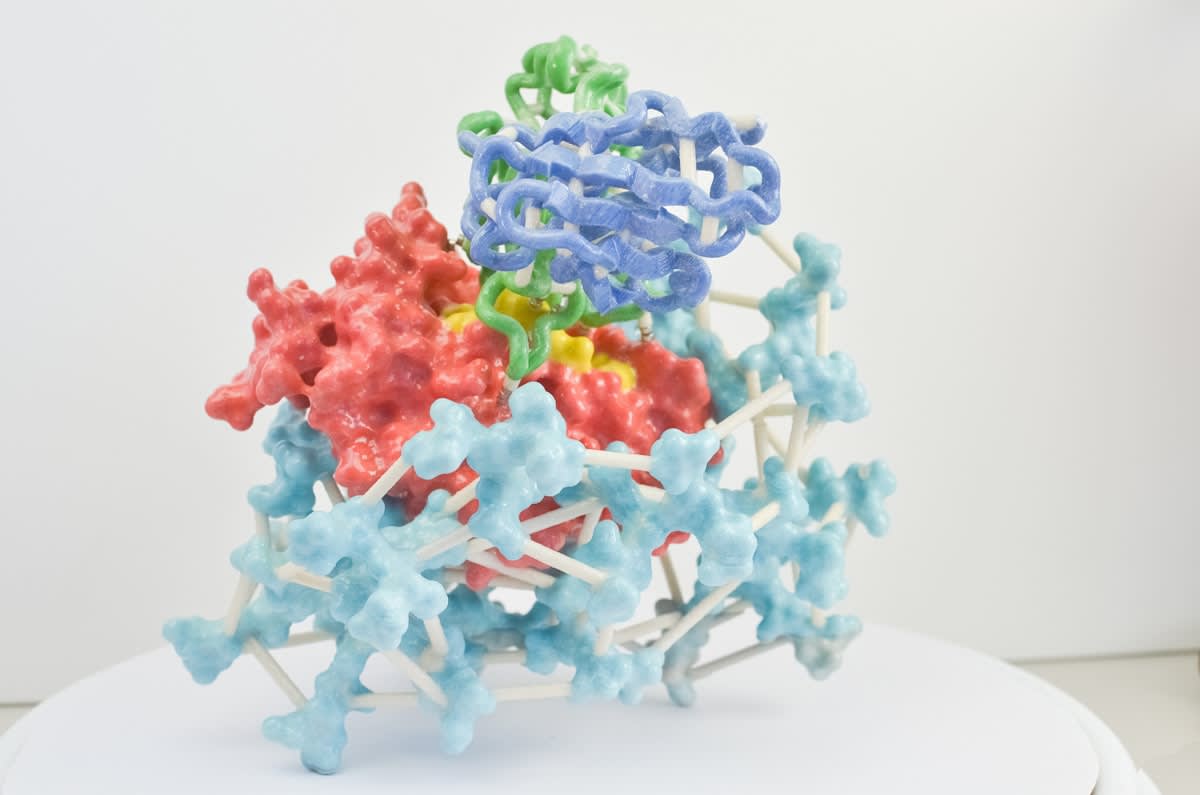
- Computational Protein Optimization: Utilize deep learning methods to achieve atomic precision in protein design. By bypassing time-consuming experimental screens, as demonstrated by the University of Washington's Institute for Protein Design (IPD), the design cycle is compressed, ensuring the protein is optimized for stability before it ever hits the bioreactor.
- Spatial Sensor Deployment: Replace or augment static probes with a network of free-floating bioelectronic sensors. These sensors, developed by researchers at Boston University and Capra Biosciences, provide critical spatial information regarding temperature, pH, dissolved oxygen, and dissolved carbon dioxide across the entire volume of the reactor.
- Biological Sensor Supercharging: Integrate microbes—such as specific bacteria or yeast cells—directly into the sensor network. This allows for the monitoring of parameters that are directly relevant to biomanufacturing, transforming the sensor from a simple probe into a biological reporter of cell health.
- Phased Industrialization: Implement a tiered market entry. Start with high-value fields, such as medical applications or specialized food packaging, before attempting to enter general-purpose markets. This approach, proposed by the KAIST research team, ensures that the high costs of recovery and production are absorbed by high-margin products.
Why does the design phase dictate the scaling outcome? When the antibody drug market, currently valued in the hundreds of billions of dollars, relies on proteins that are fragile or prone to aggregation, the bioreactor's physical stress becomes the primary point of failure. By utilizing a communal brain approach to protein design—leveraging labs of over 100 researchers and AI-guided methods—practitioners can engineer proteins that are inherently more resilient to the shear stress and nutrient fluctuations found in industrial-scale vats.
Solving the Monitoring Gap
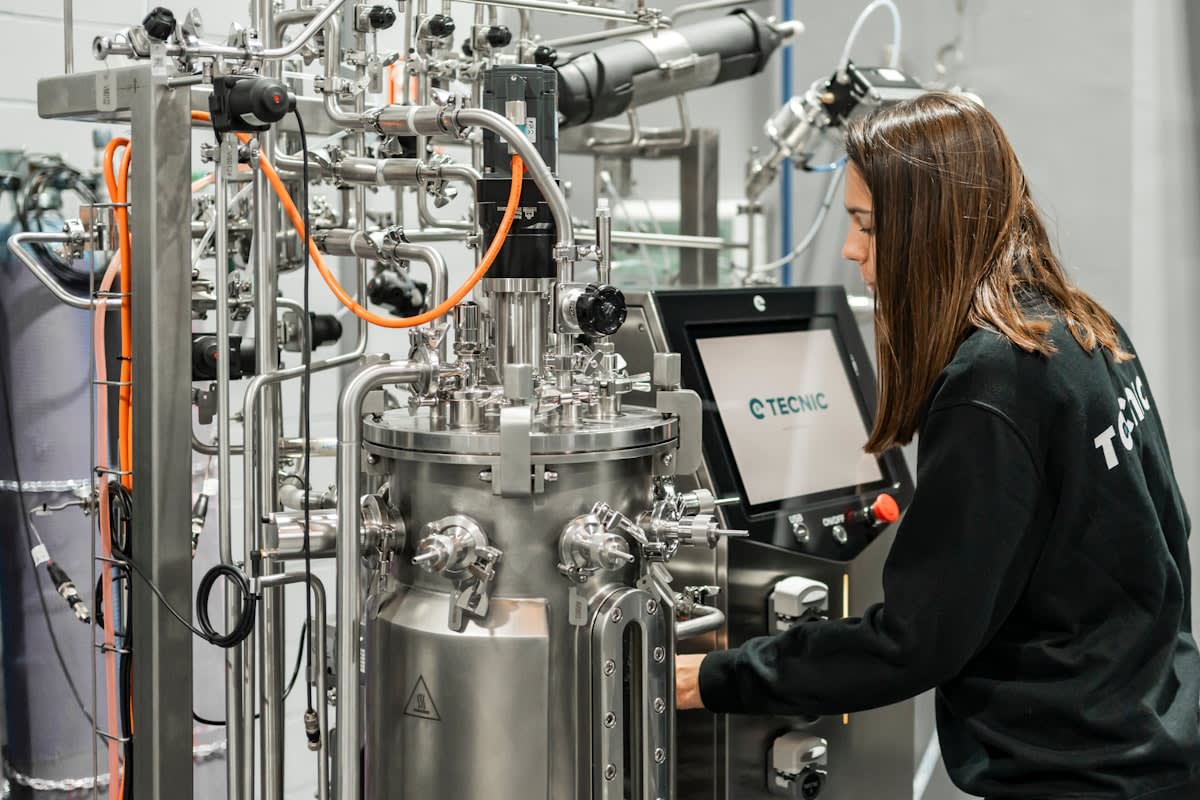
The fundamental failure of traditional scaling is the reliance on mounted monitoring systems. In a massive vessel, the pH at the impeller is not the pH at the top of the tank. These gradients create zones of metabolic stress, leading to protein misfolding or cell death, which precipitously drops the final yield. Free-floating sensors solve this by acting as a mobile network, transmitting the exact coordinates of anomalies. This allows for real-time adjustments to agitation and aeration, ensuring that every cell in the reactor experiences the same optimal environment.
| Metric | Static Monitoring | Free-Floating Networks |
|---|---|---|
| Data Resolution | Single-point average | Multi-point spatial mapping |
| Response Time | Delayed (mixing dependent) | Immediate local detection |
| Parameter Scope | Standard chemical markers | Bio-supercharged metabolic markers |
| Yield Risk | High (due to dead zones) | Low (active gradient control) |
Does this level of precision justify the cost? Consider the case of polyhydroxyalkanoates (PHA). As noted by the KAIST team, PHA is currently less price-competitive than conventional plastics because of high production and recovery costs. When the material itself has an intrinsic brittleness and a narrow window between melting and decomposition, the margin for error during production is non-existent. In such cases, the cost of a failed batch far outweighs the investment in a sophisticated sensor network.
The Industrialization Roadmap
Scaling is not merely a biological challenge; it is an economic one. The transition from lab to factory often collapses because producers attempt to compete on price with legacy chemicals too early. The KAIST strategy suggests a phased approach. By first targeting medical applications—where the value per gram of protein is highest—companies can refine their recovery processes and lower their cost basis. Only after the production process is simplified and the recovery costs are optimized should the product be pushed into general-purpose markets.
"A phased approach is needed—simplifying the production process and first applying it to high-value fields such as medical applications and food packaging before expanding into general-purpose markets."— Professor Sang Yup Lee, KAIST
This logic mirrors the shift seen in virology, where researchers at Harvard Medical School have moved from studying one virus at a time to using tools like ORFeome to discover common strategies across the entire virome. In bioreactor scaling, we must move from optimizing one batch at a time to identifying the common spatial failures across all scales. When we treat the bioreactor as a complex system of interacting gradients rather than a simple tank of broth, yield stability becomes a predictable outcome rather than a gamble.
Strategic Application Priority for Bio-based Manufacturing
Executive Insight
+18.4%
YTD Growth
Common Pitfalls
- The Drop-In Fallacy: Assuming a bio-based protein or polymer can be a direct replacement for a synthetic one without modifying the downstream processing. This is evident in PHA production, where crystalline properties create separate barriers to utility.
- Average-Value Reliance: Using the average pH or temperature of a tank to make adjustments. This masks the local extremes that trigger protein degradation.
- Experimental Screen Over-Reliance: Spending months on experimental screens for protein stability instead of using AI-guided de novo design to predict stability at the atomic level.
- Premature Market Expansion: Attempting to compete in low-margin markets before the recovery costs have been reduced through a phased industrialization strategy.