SIR in Karnataka: Will deadline extension ease burden on voters and BLOs? | Decode Karnataka
Source Entity
India Latest News: Top National Headlines Today & Breaking News | The Hindu
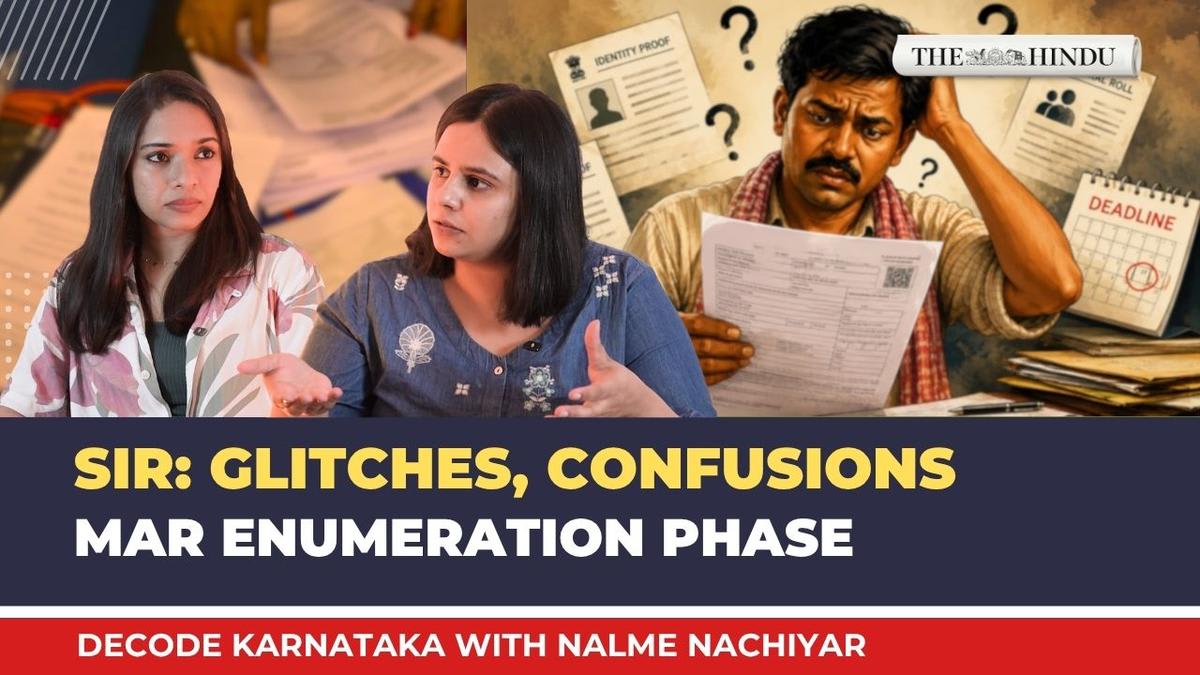
An analysis of the Special Intensive Revision (SIR) of electoral rolls in Karnataka, examining how deadline extensions impact the workload of Booth Level Officers (BLOs) and the accessibility of registration for voters.
Analyzing the Special Intensive Revision (SIR) of Electoral Rolls in Karnataka
The Special Intensive Revision (SIR) of electoral rolls is a critical administrative exercise conducted to ensure that the democratic process in Karnataka remains inclusive and accurate. At its core, the SIR is designed to purge the voter lists of deceased individuals, remove those who have shifted residences, and incorporate first-time voters or those who have recently moved into a constituency. The current discourse surrounding the extension of deadlines for this process highlights a recurring tension in electoral management: the balance between strict administrative timelines and the practical realities of ground-level implementation.
The Burden on Booth Level Officers (BLOs)
Booth Level Officers (BLOs) serve as the primary link between the Election Commission and the citizenry. These individuals, often government employees or teachers, are tasked with the arduous process of door-to-door verification. When deadlines are tight, the pressure on BLOs intensifies, leading to potential errors in data entry or incomplete verification. A deadline extension, while appearing to prolong the work, can actually serve as a vital safety valve. It allows BLOs to conduct more thorough checks, reducing the likelihood of 'ghost voters' remaining on the rolls or eligible citizens being erroneously omitted, thereby enhancing the overall integrity of the electoral database.
Enhancing Voter Inclusivity and Accessibility
For the general electorate, the SIR process can be daunting, particularly for marginalized communities or those in rural areas with limited access to digital portals. Many voters struggle with the documentation required for registration or corrections. A deadline extension provides a crucial window for these populations to rectify their status. By easing the time constraint, the state reduces the risk of voter disenfranchisement, ensuring that the final rolls are a true reflection of the eligible population. This inclusivity is fundamental to the legitimacy of any subsequent election, as a comprehensive roll prevents disputes and legal challenges during the polling phase.
Administrative Challenges and Systemic Pressure
From an administrative perspective, extending a deadline is a double-edged sword. While it improves accuracy, it can delay the final publication of the rolls and push back subsequent electoral preparations. The Karnataka administration must navigate the logistical challenge of coordinating thousands of BLOs across diverse terrains. The current progress of the SIR reflects a struggle to synchronize manual field verification with the digital uploads required by the Election Commission's centralized systems. This lag often necessitates extensions to ensure that the 'intensive' nature of the revision is not sacrificed for the sake of a calendar date.
Historical Context and the Shift Toward Digitization
Historically, electoral revisions in India were purely manual, relying on physical registers and paper forms. The transition to digital platforms, such as the Voter Helpline App and NVSP portal, was intended to streamline the SIR. However, the Karnataka experience shows that technology cannot entirely replace the human element of the BLO. The 'intensive' part of the SIR specifically refers to the physical verification process, which remains the gold standard for preventing fraud. The ongoing debate over deadlines underscores the fact that while the interface is digital, the verification remains a labor-intensive, physical task.
Future Trends in Electoral Roll Management
Looking forward, the trend in Karnataka and across India is likely to move toward 'continuous updating' rather than periodic 'intensive revisions.' By integrating electoral rolls with other government databases (such as Aadhaar or birth/death registries), the burden on BLOs could be significantly reduced. However, until such seamless integration is fully realized and legally vetted, the SIR will remain a cornerstone of electoral hygiene. We can expect future revisions to incorporate more AI-driven deduplication tools to assist BLOs in identifying duplicate entries more efficiently.
Conclusion
In summary, the extension of the SIR deadline in Karnataka is more than a mere administrative delay; it is a necessary adjustment to ensure the accuracy and inclusivity of the democratic process. While it places a prolonged demand on the resources of BLOs, the trade-off is a more robust and legitimate electoral roll. Ensuring that every eligible citizen is registered and every ineligible entry is removed is the only way to guarantee the sanctity of the ballot box in the state's upcoming elections.
Verification Required?