'Not in good shape but…': Sonam Wangchuk refuses to end fast, calls for Parliament march
Source Entity
Latest News: Today's Latest News Headlines from India & World | Hindustan Times | Hindustan Times
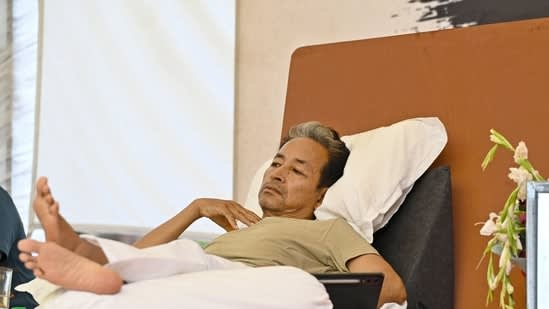
Climate activist Sonam Wangchuk continues his hunger strike despite failing health, demanding a march to Parliament to advocate for Ladakh's constitutional safeguards. The Delhi High Court is now intervening via a PIL to address his deteriorating medical condition.
The Stand of Sonam Wangchuk: A Critical Juncture for Ladakh
Sonam Wangchuk, the renowned educationist and climate activist from Ladakh, has reached a critical point in his ongoing protest. Despite reports that he is 'not in good shape,' Wangchuk has steadfastly refused to break his fast, escalating his demands by calling for a march toward Parliament. This development has triggered a legal intervention, with the Delhi High Court scheduled to hear a Public Interest Litigation (PIL) centered on his deteriorating health. The situation represents a high-stakes standoff between a prominent public figure's commitment to his cause and the state's responsibility to ensure the survival of a citizen.
The Core of the Conflict: Constitutional Safeguards
To understand why Wangchuk is risking his life, one must look at the broader political landscape of Ladakh. Since the reorganization of Jammu and Kashmir in 2019, Ladakh has been a Union Territory without a legislature, leaving its residents feeling politically disenfranchised. Wangchuk's fast is primarily a demand for the inclusion of Ladakh under the Sixth Schedule of the Indian Constitution. This schedule provides for the creation of Autonomous District Councils, which would grant the local population significant control over land, forests, and water—critical assets in the ecologically fragile Himalayan region. The refusal to end the fast underscores the desperation of a community fearing that industrial exploitation could permanently damage their ancestral lands.
Legal Interventions and the Right to Protest
The involvement of the Delhi High Court through a PIL introduces a complex legal dimension to the event. The court is tasked with balancing two competing interests: the fundamental right to protest and the 'right to life' as enshrined in the Constitution. When a protest takes the form of a hunger strike, the state often faces a dilemma regarding whether to forcibly intervene for medical reasons or respect the individual's agency. The court's deliberation on Thursday will likely set a precedent for how the judiciary handles high-profile hunger strikes where the protester's health is actively failing but their resolve remains intact.
The Symbolic Weight of the Parliament March
Wangchuk's call for a march to Parliament is a strategic shift from a localized protest to a national political demand. By bringing the struggle of Ladakh to the doorstep of India's legislative heart, he aims to force the central government to move beyond administrative assurances and provide concrete legal guarantees. A march to Parliament serves as a powerful visual and political symbol, signaling that the issues of the remote high-altitude desert of Ladakh are not periphery concerns but central to the discourse on Indian federalism and environmental stewardship.
Broader Implications for Environmental Governance
Beyond the immediate political demands, Wangchuk's protest highlights a growing global trend of 'environmental citizenship.' His fight is not merely about administrative boundaries but about the survival of a unique ecosystem. The demand for the Sixth Schedule is essentially a demand for environmental autonomy. If the government ignores these pleas, it may signal a prioritization of industrial growth over ecological preservation in the Himalayas, potentially leading to more frequent and intense protests from other hill states facing similar vulnerabilities.
Predicting Future Trends
Looking forward, the trajectory of this event will likely depend on the Delhi High Court's directives and the government's willingness to negotiate. If the court orders a medical intervention, it may lead to a temporary pause in the fast but could potentially galvanize more public support for Wangchuk, casting him as a martyr for his cause. Conversely, if the government opens a direct dialogue to avoid a health catastrophe, it could lead to a partial implementation of Ladakh's demands. However, the persistence of Wangchuk suggests that nothing short of a formal constitutional commitment will satisfy the movement.
Conclusion
The current crisis surrounding Sonam Wangchuk is more than a health emergency; it is a manifestation of deep-seated political and ecological anxieties. The intersection of a hunger strike, a call for a mass march, and judicial oversight creates a volatile yet pivotal moment for the region. As the Delhi High Court hears the PIL, the outcome will determine whether the path forward for Ladakh is one of dialogue and constitutional protection or continued friction between the periphery and the center.
Verification Required?