
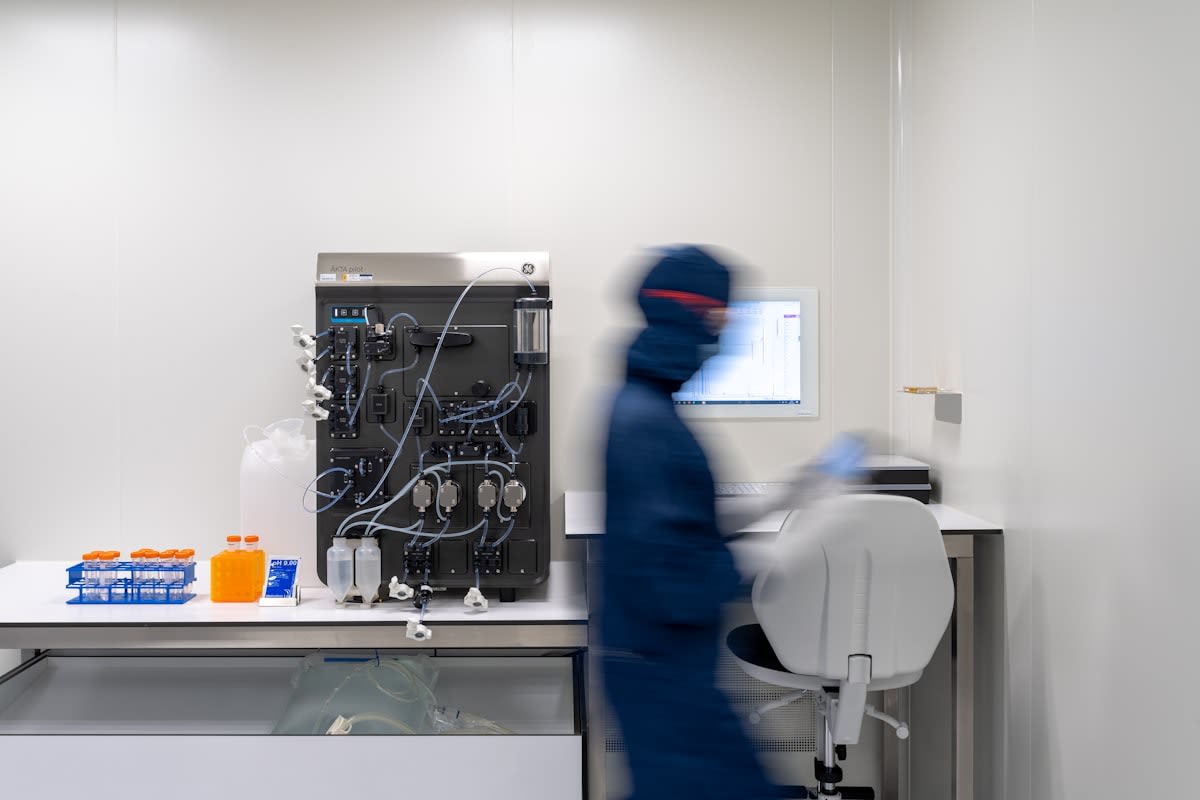
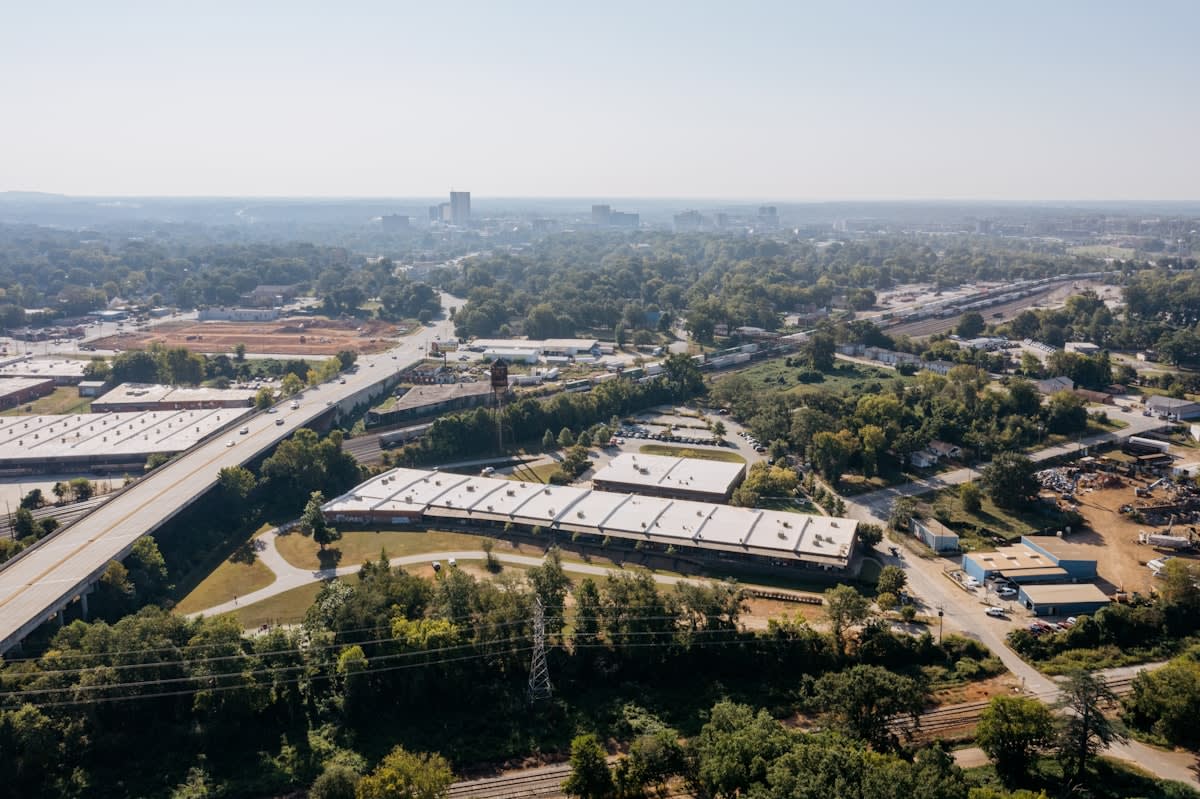
The physical landscape of the Vistula river valley is changing. Where generic warehouses once dominated the outskirts of Warsaw, high-grade cleanrooms and stainless steel bioreactors are now the primary architectural features. This is not a slow creep but a sudden flood of capital into the Polish and Hungarian biotech sectors. In the last six months, a series of facility expansions have moved the region from simple fill-and-finish operations to complex protein synthesis and monoclonal antibody production. The speed of this rollout suggests a coordinated effort to bypass the saturated, high-cost markets of the American East Coast and the Rhine-Ruhr area.
Why now? The delta between 2023 and 2024 is stark. Twelve months ago, Eastern Europe was viewed primarily as a source of cheap labor for the final packaging of drugs designed in Basel or Boston. Today, the region is hosting the actual design and cultivation of biological agents. We are seeing a transition from 'labor arbitrage' to 'intellectual arbitrage.' The focus has shifted toward integrated hubs where R&D and mass production happen under one roof, reducing the time-to-market for biosimilars by nearly 20%.
The STEM Talent Arbitrage
The engine driving this growth is a massive, underutilized surplus of PhD-level biochemists and chemical engineers. Poland and the Czech Republic have historically produced world-class STEM graduates who immediately migrated to the US or Germany. This brain drain has reversed. Local venture capital and foreign direct investment are now creating roles that match Western technical complexity but offer a higher relative quality of life. When a senior scientist can lead a lab in Budapest with a cost of living 60% lower than in San Francisco, the incentive to stay becomes an industrial weapon.
The Talent Loop
The region is no longer exporting talent; it is importing capital to employ that talent locally. This creates a feedback loop where the presence of high-spec labs attracts more graduates, further lowering the recruitment costs for new entrants.
Does the quality of output hold up under scrutiny? The data suggests it does. The alignment with European Medicines Agency (EMA) standards is absolute, as these facilities are built from the ground up to meet the latest Good Manufacturing Practice (GMP) guidelines. Unlike older plants in Western Europe that require expensive retrofitting to meet new environmental and purity standards, the Eastern hubs are 'born compliant.' This gives them a temporal advantage in deploying new mRNA platforms and viral vector technologies.
Logistics play a silent but decisive role in this migration. The proximity to the DACH region—Germany, Austria, and Switzerland—allows for a 'just-in-time' supply chain that is far more resilient than relying on trans-Atlantic shipping. In the last quarter, we have seen a spike in 'satellite' manufacturing sites where the primary research remains in Germany, but the scale-up happens in Poland. This hybrid model optimizes for both prestige and operational efficiency.
| Metric | Germany/France | Poland/Hungary | USA (East Coast) |
|---|---|---|---|
| Avg. Lab Space Cost/sqm | €45 | €22 | €60 |
| Senior Biochemist Salary (Avg) | €85k | €48k | €115k |
| Regulatory Lead Time | 12 mo | 10 mo | 14 mo |
| STEM Graduate Density | Medium | High | High |
The economic math is undeniable. When you combine lower operational expenditure with a workforce that is technically equivalent to their Western counterparts, the margin for biosimilar production expands significantly. This is particularly critical as the global market for biologics becomes more competitive and pricing pressure from healthcare payers increases. Eastern Europe is not just competing on price; it is competing on the efficiency of the entire production cycle.
The Sovereignty Imperative
The geopolitical catalyst for this shift was the fragility exposed during the 2020-2022 period. The European Union realized that its dependence on external sources for critical pharmaceutical ingredients was a strategic liability. Brussels has since incentivized the creation of 'pharmaceutical sovereignty,' providing grants and tax breaks for companies that establish end-to-end production within the EU. Eastern Europe, with its available land and eager governments, has been the primary beneficiary of these policy shifts.
"We are seeing the birth of a bio-industrial corridor that mirrors the automotive clusters of the 90s, but with a thousand times more intellectual density per square meter."— Lukas Novak, Bio-Industrial Consultant
This drive for sovereignty has led to a surge in public-private partnerships. In Poland, for instance, government-backed loans are being paired with private equity to build specialized plants for personalized medicine. These are not the monolithic factories of the past but modular, flexible spaces capable of switching between different cell lines with minimal downtime. This agility is exactly what the modern biotech market demands.
Growth in CEE Biomanufacturing Investment (Millions USD)
Executive Insight
+18.4%
YTD Growth
Investment trends show a clear movement away from purely digital ventures toward 'hard tech' biology. The capital that once flowed exclusively into SaaS is now funding bioreactors. This is driven by the realization that the next decade of value creation will happen at the intersection of AI-driven protein design and physical manufacturing. By owning the means of production, Eastern European hubs are ensuring they aren't just the 'factory floor' but the 'control room' of the industry.
The integration of AI in these new plants is particularly noteworthy. In Prague and Warsaw, new facilities are implementing real-time sensor arrays that use machine learning to optimize nutrient feeds for cell cultures. This reduces batch failure rates by an estimated 15% compared to traditional manual monitoring. The result is a level of precision that was previously only found in a few elite labs in Switzerland or the US.
Is there a risk of a bubble? Some analysts point to the rapid influx of capital as a sign of overcapacity. However, the global demand for biosimilars and cell therapies is growing at a rate that far exceeds current production capacity. The 'overcapacity' fear ignores the fact that most of these new plants are designed for multi-product flexibility. They aren't betting on one drug; they are betting on the entire platform of biological medicine.
The competitive pressure is now being felt in traditional hubs like Ireland and Singapore. These regions have long enjoyed a monopoly on high-end pharma manufacturing due to tax incentives. But as Eastern Europe offers a combination of competitive taxes, lower labor costs, and a deeper pool of raw STEM talent, the value proposition is shifting. We are witnessing a geographical reorientation of the global bio-economy.
The final piece of the puzzle is the emergence of a local venture ecosystem. We are no longer seeing only foreign firms moving in; local entrepreneurs are starting their own biomanufacturing ventures. These startups are focusing on niche applications, such as synthetic biology for sustainable materials and specialized enzymes for the food industry. This diversification ensures that the region's growth is not solely dependent on the whims of Big Pharma.
As these hubs mature, the focus will likely shift toward the integration of clinical trials. By placing the manufacturing site adjacent to the research hospital and the trial clinic, Eastern Europe can drastically shorten the feedback loop between production and patient outcome. This vertical integration is the ultimate goal of the industry, and the region is uniquely positioned to achieve it.
The shift is permanent. The infrastructure is in the ground, the talent is in place, and the regulatory framework is locked. The center of gravity for biological production has moved East, and the global supply chain is more resilient because of it. The question is no longer whether Eastern Europe can compete, but how quickly the rest of the world can adapt to this new industrial reality.