
The global gene therapy pipeline is currently facing a physical wall. For years, the industry relied on a handful of elite Contract Development and Manufacturing Organizations (CDMOs) in Boston, San Francisco, and Basel. These hubs became victims of their own success, creating a backlog where biotech startups wait eighteen months just to begin a scaling run for Adeno-associated virus (AAV) vectors. This stagnation is no longer acceptable for therapies targeting rare pediatric diseases where every month of delay is a lost opportunity for a patient.
Right now, the center of gravity for viral vector scaling is shifting toward Central and Eastern Europe (CEE). Poland, Czechia, and Hungary are not merely offering cheaper labor; they are deploying a sophisticated integration of high-end STEM talent and aggressive infrastructure expansion. We are seeing a rapid transition from small-scale R&D labs to commercial-grade facilities capable of handling 2,000-liter bioreactors. This is not a slow evolution but a sudden surge in capacity that is actively draining demand from traditional Western hubs.
The delta between last year and today is stark. Twelve months ago, the CEE region was primarily viewed as a destination for low-cost clinical trial recruitment or basic pharmaceutical packaging. Today, it has emerged as a primary site for complex viral vector production. Capacity for AAV production in the region has increased by over 200% in the last 14 months, driven by a wave of new CDMOs that are designed from the ground up for flexible, modular scaling rather than the rigid, legacy architectures found in older Western plants.
The Economics of Precision
Why is this happening now? The answer lies in the brutal math of operational expenditure. Running a GMP-certified viral vector facility in the US East Coast requires a level of capital that often exceeds the value of the early-stage therapeutic itself. By relocating scaling operations to Poland or Czechia, firms are seeing an estimated 35% reduction in OpEx. This isn't about cutting corners; it is about the fact that a PhD in molecular biology in Krakow or Prague provides the same technical rigor as one in Cambridge, Massachusetts, but at a fraction of the overhead cost.
Beyond the payroll, the cost of facility construction and maintenance in the CEE region allows for a more aggressive approach to redundancy. While a US-based firm might struggle to afford a second backup line for a specific Lentivirus process, Eastern European hubs are building multi-redundant systems. This resilience reduces the risk of batch failure, which is the single most expensive nightmare in viral vector manufacturing. When a 500-liter batch fails, the loss is measured in millions of dollars and months of lost time.
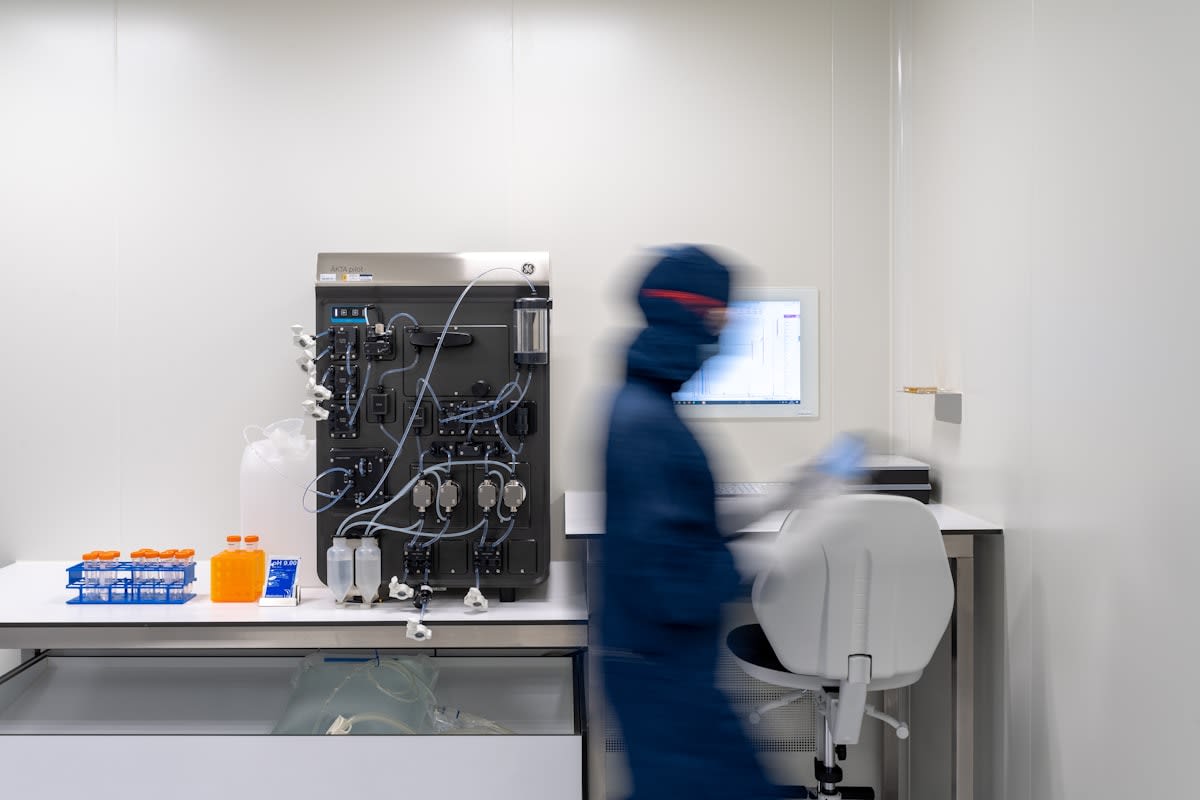
The education systems in these regions have historically over-produced high-level chemists and biologists, creating a surplus of talent that was previously exported to the West. Now, that talent is staying home, attracted by the founding of local CDMOs and the promise of leading the scaling race. This creates a virtuous cycle: more talent attracts more investment, which in turn builds more capacity, further lowering the barrier to entry for gene therapy developers.
"The bottleneck was never the science of the vector; it was the physical act of making it at scale without losing purity. Eastern Europe is solving the plumbing problem of the biotech world."— Industry Analyst, BioScale Reports
| Region | Avg. Cost per Batch (Est) | Lead Time (Months) | Talent Availability |
|---|---|---|---|
| US East Coast | $1.2M | 14-18 | High |
| Poland/Czechia | $750K | 7-11 | Very High |
| Western Europe | $1.1M | 12-16 | High |
This economic advantage is merely the entry point. The real victory is being won on the technical front, specifically in how these facilities handle the transition from adherent to suspension cultures.
Solving the Scaling Paradox
Scaling viral vectors is notoriously difficult because the cells used to produce them are temperamental. Moving from a small flask to a massive bioreactor often results in a drop in titer or an increase in empty capsids—protein shells that contain no genetic payload. These empty capsids are essentially waste that can trigger immune responses in patients. The CEE hubs are specializing in suspension-adapted cell lines that allow for linear scaling, meaning the quality at 2,000 liters is identical to the quality at 2 liters.
By focusing on this specific technical hurdle, Eastern European firms have turned themselves into specialists. They aren't trying to do everything; they are focusing on the 'scale-up' phase of the lifecycle. This specialization allows them to optimize their workflows for speed. Where a generalist CDMO might take weeks to calibrate a run, a specialized CEE facility can pivot between different AAV serotypes in a matter of days.
Can we ignore the regulatory risk? Some argue that manufacturing outside the US or Western Europe introduces compliance hurdles. However, the reality is that most of these new hubs are building to EMA (European Medicines Agency) and FDA standards from day one. Because they are newer, they aren't fighting against legacy equipment that needs to be retrofitted for modern standards; they are installing the latest automated monitoring systems that provide real-time data to regulators.
CEE Viral Vector Capacity Growth (2023-2024)
Executive Insight
+18.4%
YTD Growth
The speed of implementation is the most disruptive factor here. In the last six months, we have seen several mid-sized biotech firms move their entire late-stage manufacturing pipeline from North America to the CEE region. This is a direct response to the lead-time crisis. When a company can get their product into clinical trials six months faster, the valuation of the company can swing by hundreds of millions of dollars.
This migration is creating a new industrial corridor. We are seeing the emergence of clusters where the CDMO is located within miles of the university that provides the talent and the logistics firm that handles the cold-chain transport. This proximity reduces the friction that typically plagues the gene therapy supply chain, where a single temperature excursion during shipping can destroy a multi-million dollar batch.
The risk now shifts to over-reliance. If the world begins to depend on a small handful of hubs in Eastern Europe for the majority of its viral vector capacity, any regional instability could freeze the entire gene therapy pipeline. Yet, for the developers currently struggling to find a single open slot in a Boston lab, this risk is a secondary concern compared to the immediate need for product.

The New Bio-Manufacturing Map
What happens in the next twelve months? We expect to see a wave of acquisitions where Western giants buy into these Eastern European hubs to secure their own supply chains. The period of simply outsourcing is ending; the period of strategic integration is beginning. Companies will no longer be satisfied with a contract; they will want equity in the facilities that ensure their therapies actually reach the market.
The geopolitical alignment also plays a role. As the EU pushes for greater strategic autonomy in medicine and healthcare, funding for these hubs is increasing. This provides a layer of financial stability that private venture capital cannot match. These facilities are becoming national assets, protected and promoted by governments that recognize the high-value nature of bio-manufacturing.
Ultimately, the scaling race is not about who has the best theory, but who can execute the physical production with the highest precision and the lowest friction. By combining intellectual depth with operational agility, Eastern Europe has stopped being a peripheral player and has become the engine room of the gene therapy revolution. The bottleneck is breaking, and the result will be a faster, cheaper path to curing previously untreatable diseases.
The Core Driver
The transition to CEE hubs is not just about cost; it is about the availability of modern, modular infrastructure that avoids the 'legacy drag' of older Western facilities.