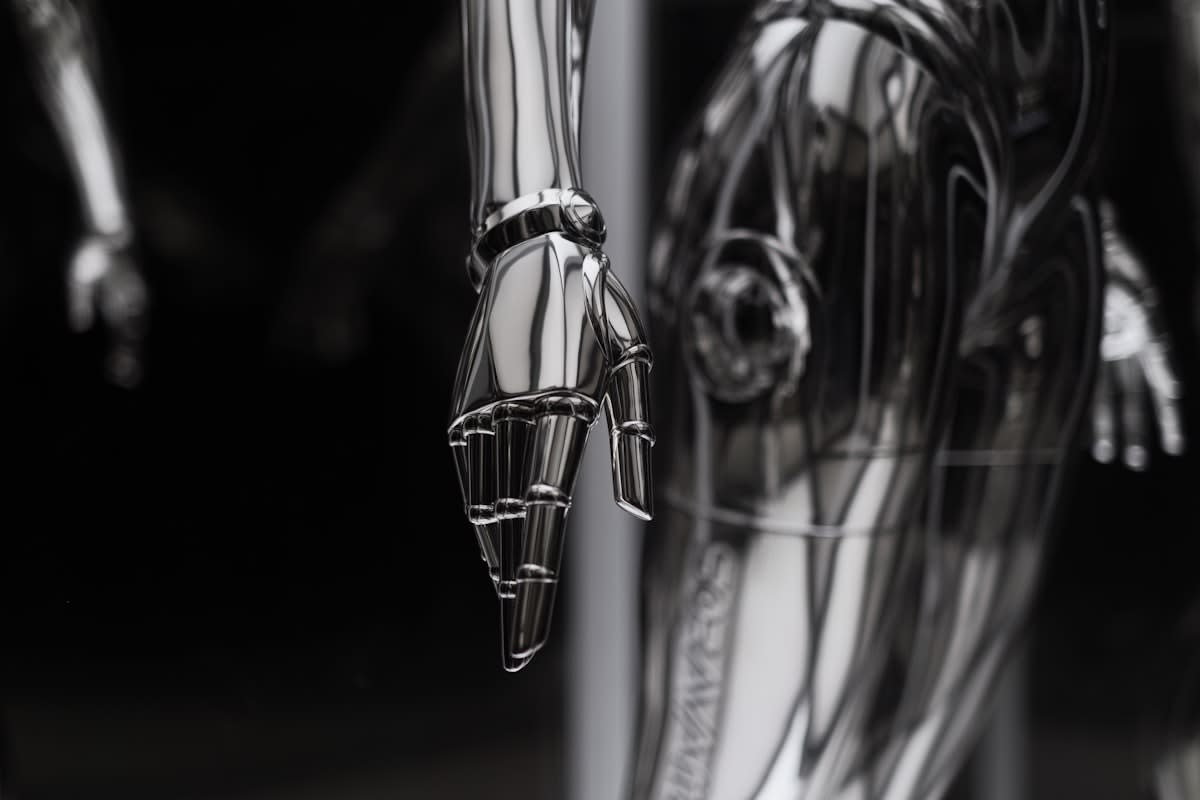
For years, the robotics industry operated under a fundamental delusion: that the best way to mimic human movement was to replace muscles with high-torque electric motors. We built machines that looked like us but moved like CNC milling machines—stiff, precise, and violently inefficient. These robots fought gravity in every single frame of motion, consuming massive amounts of power just to maintain a standing posture. The result was a generation of humanoids that were technically impressive in laboratory settings but practically useless in the chaotic, unpredictable environments of a warehouse or a home.
The narrative changed abruptly over the last twelve months. The industry is now witnessing a mass migration toward compliant actuation, specifically the integration of synthetic tendons and elastic elements. Rather than placing a heavy motor directly at every joint, engineers are moving the mass toward the center of the robot's body and using cables or polymers to transmit force. This mimics the biological reality of the human body, where the bulk of the muscle resides in the torso and thighs, pulling on distant joints via tendons. The shift is not just a design preference; it is a survival necessity for the humanoid category.
Breaking the Energy Wall
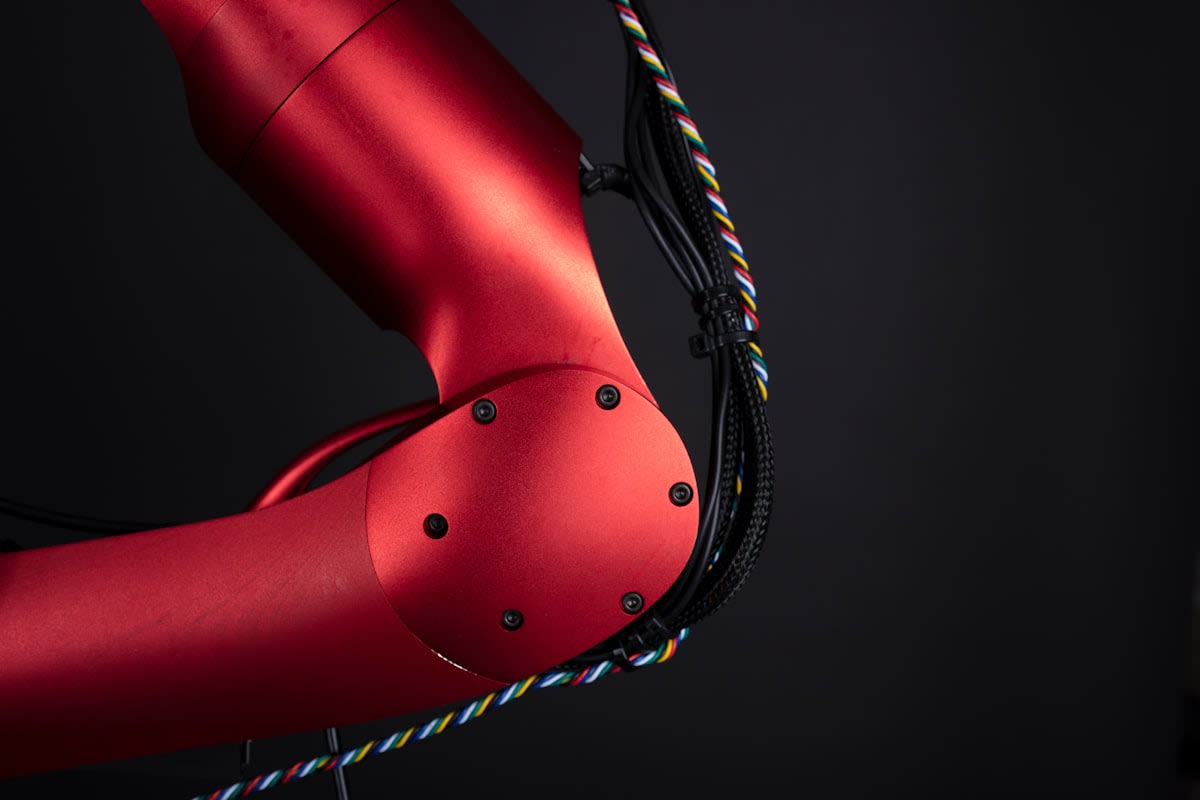
The primary driver of this transition is the energy wall. In a rigid system, any external force—a stumble, a nudge, or a heavy load—is absorbed entirely by the motor and the gearbox. This creates immense mechanical stress and requires constant, high-frequency current to maintain stability. By introducing tendons and springs, robots can now store potential energy during a descent and release it during an ascent. This passive energy recovery is the secret to how humans walk for miles without exhausting their caloric reserves, and it is finally being codified into silicon and steel.
Comparative Energy Expenditure per Step (Normalized)
Executive Insight
+18.4%
YTD Growth
When we compare current prototypes to those from a year ago, the delta in efficiency is staggering. We are seeing a reduction in energy expenditure per step by as much as 35% in models that utilize series-elastic actuators. This efficiency gain directly translates to battery life, which has been the Achilles' heel of the humanoid industry. A robot that can operate for eight hours on a single charge is a commercial product; a robot that dies after ninety minutes is a science project. The move to tendons is what pushes the humanoid from the lab into the logistics center.
The Physics of Compliance
Compliance is not about softness; it is about the ability of a system to yield to external forces without breaking or requiring active computational correction. This physical intelligence reduces the burden on the AI control loop.
This physical intelligence changes how the robot interacts with the world. In Tokyo's advanced robotics labs, researchers are finding that compliant limbs allow robots to navigate uneven terrain without needing a perfect 3D map of every pebble. The tendon system acts as a mechanical low-pass filter, absorbing the high-frequency shocks of impact before they reach the sensors. This means the software no longer has to calculate a thousand micro-adjustments per second just to keep the robot from tipping over.
Beyond energy, there is the critical issue of weight distribution. In traditional designs, the motors in the ankles and wrists added significant rotational inertia, making the limbs sluggish and energy-hungry. By relocating these motors to the torso and using tendons to pull the joints, the effective mass of the limbs is reduced by nearly 20%. This allows for faster acceleration and a more natural, fluid gait that resembles human locomotion rather than the jerky, stop-start motion of earlier iterations.
| Metric | Rigid Motor Design | Tendon-Driven Design |
|---|---|---|
| Limb Inertia | High | Low |
| Impact Absorption | Active (Software) | Passive (Mechanical) |
| Energy Recovery | Negligible | Significant |
| Safety Profile | High Risk | Compliant/Safe |
The global race for humanoid dominance is now being fought on the battlefield of materials science. In Munich and Seoul, the focus has shifted from better code to better polymers. We are seeing the emergence of synthetic tendons made from high-strength aramids and shape-memory alloys that can contract and expand with minimal heat loss. These materials allow for a level of precision that was previously only possible with rigid gears, but without the catastrophic failure points associated with gear stripping.
"The goal is no longer to build a machine that can simulate a human; it is to build a machine that inherits the physical shortcuts nature spent millions of years perfecting."— Lead Actuation Engineer, Robotics Research Hub
However, this pivot introduces a new, formidable challenge: the control problem. Rigid robots are easy to model mathematically; if you turn a motor 15 degrees, the arm moves 15 degrees. Tendons introduce elasticity and slack, which means the relationship between motor movement and joint position is non-linear. This has forced a revolution in control theory, moving away from classical kinematics toward reinforcement learning and neural networks that can 'feel' the tension in the cables.
- Non-linear dynamics: Tendons stretch under load, requiring real-time tension compensation.
- Hysteresis: The material does not always return to its original shape instantly, creating a lag in precision.
- Wear and Tear: Synthetic cables fray over millions of cycles, necessitating new maintenance protocols.
- Complexity of Routing: Designing a torso that can house dozens of cables without tangling is a geometric nightmare.
Despite these hurdles, the industry is doubling down. The safety implications alone make tendons an obvious choice. A rigid robot in a factory is a liability; a single software glitch can turn a robotic arm into a steel piston that can crush a human worker. A compliant robot, by contrast, has a built-in mechanical fuse. If it hits something, the tendons stretch. This inherent safety is the only way regulators in the EU and North America will ever allow humanoids to operate in shared spaces without cages.

Looking ahead, the convergence of tendon-driven hardware and generative AI will likely lead to the first truly autonomous general-purpose robots. When the hardware can handle the physics of the world passively, the AI can focus on the high-level logic of the task. We are moving toward a future where the robot doesn't just follow a path, but interacts with the environment with the same tactile intuition as a human. The rigid era was a necessary stepping stone, but it was always a dead end.
The economic impact will be felt first in logistics. A robot that costs 20% less to operate and requires 50% less energy to move a pallet is a massive win for the bottom line. As these systems scale, we will see the cost of humanoid deployment drop, not because the chips get cheaper, but because the mechanical architecture becomes fundamentally more efficient. The industry has finally stopped trying to out-engineer nature and has started to copy it.