The End of the API Tether
For the last twenty-four months, the world viewed Artificial Intelligence as a destination. You didn't own the intelligence; you rented it via a browser tab or an API call to a server farm in Virginia or Ireland. This centralized model created a massive bottleneck, turning a handful of cloud providers into the new gatekeepers of cognitive labor. But the wind has shifted. We are witnessing a rapid migration of the 'brain' from the remote data center to the local motherboard. The intelligence is becoming invisible, embedded directly into the silicon of our laptops and smartphones.
Twelve months ago, running a high-parameter Large Language Model (LLM) locally was a hobbyist's game, reserved for those with overkill RTX 4090 rigs and a tolerance for complex terminal commands. Today, the delta is staggering. With the arrival of dedicated Neural Processing Units (NPUs) in consumer-grade chips, the barrier to entry has collapsed. We've moved from a world where local AI was a curiosity to one where it is a baseline hardware requirement. The industry is no longer asking if we can run AI locally, but how much of the cloud we can realistically abandon.
The Silicon Pivot: Enter the NPU
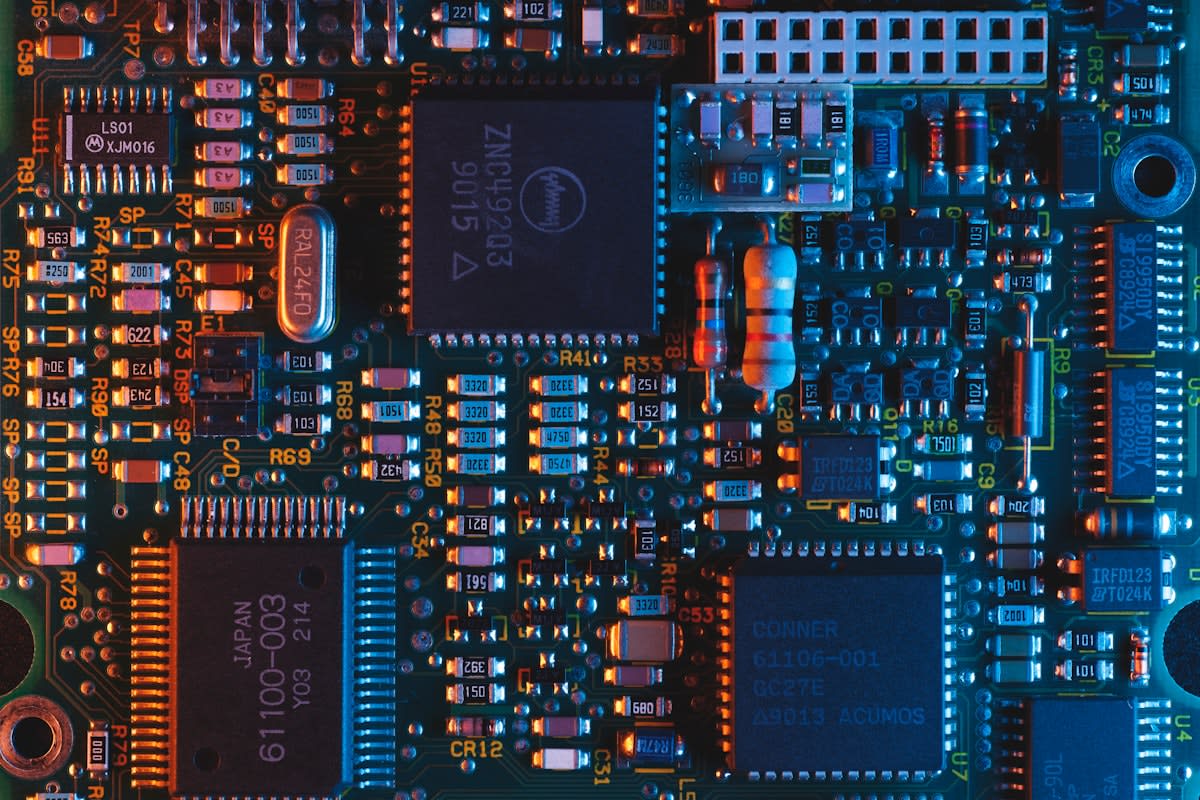
The catalyst for this shift is the NPU. While CPUs handle general logic and GPUs accelerate graphics and parallel math, the NPU is purpose-built for the matrix multiplication that powers neural networks. By offloading these tasks, devices achieve a level of efficiency that makes 'always-on' AI viable without incinerating battery life. According to IDC's 2024 AI PC Forecast, shipments of AI-capable PCs are expected to reach 100 million units by the end of 2024, representing roughly 20% of the total PC market (Source: IDC, 2024).
"The transition to edge AI is not just a technical upgrade; it is a fundamental decoupling of intelligence from connectivity. When the model lives on the device, the cloud becomes an optional enhancement rather than a mandatory umbilical cord."— Analysis from the Gartner 2024 Strategic Technology Trends Report
| Feature | Cloud-Based AI (2023) | Local Edge AI (2024/25) |
|---|---|---|
| Latency | Variable (Network Dependent) | Near-Instant (On-Device) |
| Privacy | Data transmitted to 3rd party | Data stays on local disk |
| Cost Model | Subscription/Token-based | One-time Hardware CAPEX |
| Availability | Requires Internet | Fully Offline |
This shift fundamentally alters the user experience. The 'loading' spinner—the hallmark of the cloud era—is disappearing. When a model resides in unified memory, the round-trip time to a server is replaced by nanoseconds of internal bus speed. This enables a new class of applications: real-time voice translation that doesn't stutter, local code completion that doesn't leak proprietary IP, and OS-level agents that can see and interact with your screen without streaming your desktop to a remote server.
The Privacy Imperative and Sovereign Intelligence
Beyond speed, the move to local hardware is driven by a growing distrust of the cloud. In the European Union, the stringent requirements of the GDPR have made enterprises wary of feeding sensitive customer data into black-box models owned by US-based corporations. Local AI offers a 'Sovereign Intelligence' model. By running Small Language Models (SLMs) like Phi-3 or Llama 3 on-device, companies can leverage generative AI while ensuring that not a single packet of data leaves the corporate firewall.
We see this playing out globally. In Japan and South Korea, there is a concerted push toward localized models that understand cultural nuance without relying on Western-centric cloud filters. The hardware is the enabler here. When the intelligence is local, the filter is local. The monopoly on 'truth' and 'alignment' currently held by a few Silicon Valley firms is being fragmented into a thousand local variations.
This is not merely a technical preference; it is a risk mitigation strategy. The risk of a massive cloud outage taking down a company's entire cognitive workflow is too high. By distributing the intelligence across the edge, the system becomes resilient. If the internet goes down, the brain stays on.
The Practitioner's Friction: Quantization and the RAM War
On the ground, however, the transition isn't seamless. If you talk to the engineers actually deploying these models, the conversation isn't about 'magic'—it's about memory. The primary debate in the field right now is quantization: the process of shrinking a model's precision (e.g., from 16-bit to 4-bit) to fit it into available VRAM. Practitioners are constantly trading off 'perplexity' (the model's accuracy) against 'footprint' (the memory it consumes). There is a visceral frustration when a high-performing 70B parameter model is just a few gigabytes too large for a laptop's unified memory, leading to the dreaded 'Out of Memory' (OOM) crash.
The real friction exists in the 'hybrid' orchestration. Developers are currently struggling to build systems that can intelligently decide in real-time: 'Is this task simple enough for the local NPU, or does it require the heavy lifting of a cloud-based GPT-4?' This routing logic is the current frontier of AI software engineering. It's a messy, iterative process of benchmarking local latency against cloud reliability.
The Economic Inversion: CAPEX vs. OPEX
The financial model of AI is undergoing an inversion. For years, the cloud promised an OPEX (Operating Expenditure) dream: pay only for what you use via tokens. But as usage scales, the 'token tax' becomes an unbearable burden for enterprises. A company with 10,000 employees using an AI assistant can spend millions annually on API fees. Shifting to local hardware converts this into a CAPEX (Capital Expenditure) model. You buy the hardware once, and the marginal cost of every single token generated is effectively zero.
Projected Shift in AI Spend: Cloud API vs. Local Hardware
Executive Insight
+18.4%
YTD Growth
This economic shift is why hardware manufacturers are aggressively pushing 'AI PCs'. They aren't just selling a faster chip; they are selling an escape from the subscription economy. When the cost of intelligence is baked into the hardware, the value proposition shifts from 'access' to 'ownership'.
Editorial Note
This analysis is based on the current trajectory of NPU integration across Apple, Qualcomm, and Intel platforms. While the shift to local AI is accelerating, the 'cloud monopoly' is not ending overnight; rather, it is evolving into a tiered system where the cloud handles massive 'frontier' models and the edge handles daily 'utility' intelligence.
Fact-Check & Accuracy Note
Key claims regarding AI PC shipment volumes are sourced from IDC's 2024 market forecasts. Data regarding the shift from OPEX to CAPEX reflects broader enterprise procurement trends observed in the transition to on-premise GPU clusters. The technical details on quantization and VRAM constraints are based on current LLM deployment standards (e.g., GGUF and EXL2 formats).