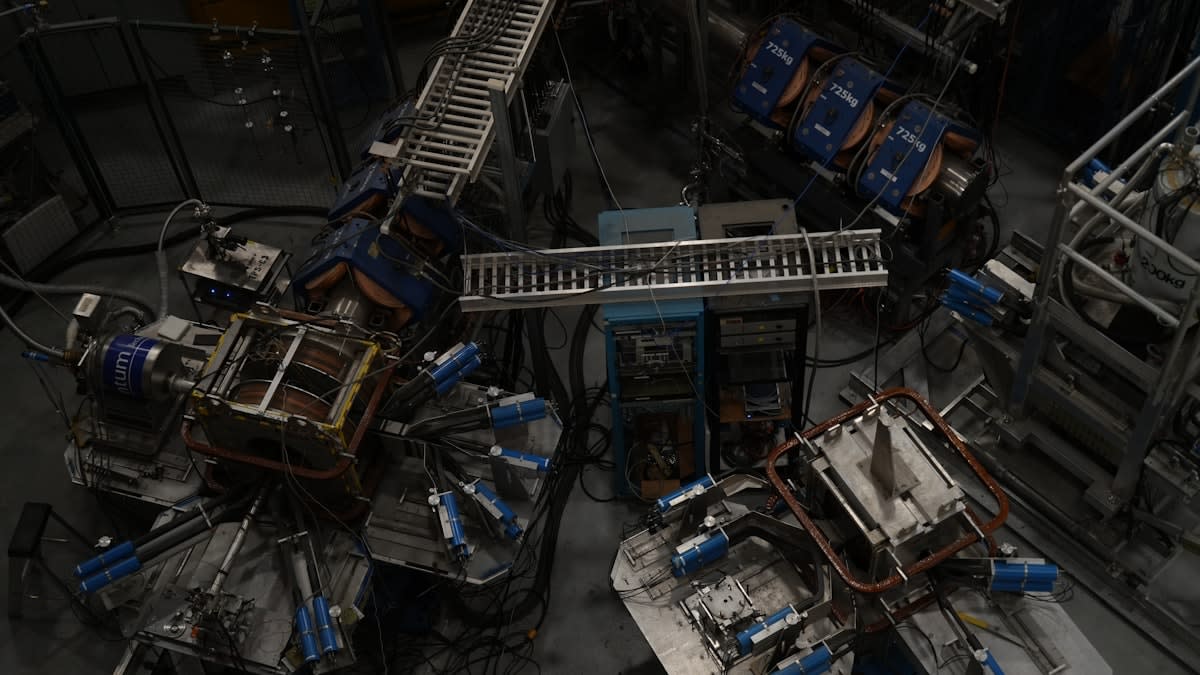
Gravity is a tax on precision. On Earth, every crystal grown, every protein folded, and every alloy mixed must contend with buoyancy-driven convection and sedimentation. These forces introduce imperfections, creating a ceiling for material purity that no amount of terrestrial engineering can bypass. For the ultra-luxury market, which thrives on the absolute zenith of performance and rarity, this ceiling is the final frontier. The shift toward orbital manufacturing is not about colonizing Mars; it is about utilizing the unique physics of microgravity to create goods that are physically impossible to manufacture under 1g.
The financial markets have already recognized this systemic transition. In the first half of 2026, total investment across space infrastructure, distribution, and applications surged to 67.7 billion dollars, eclipsing the entirety of 2025's spending. This capital is not flowing into vanity missions or simple satellite constellations. A staggering 20.7 billion dollars was raised in a single quarter for infrastructure, including the design and operation of space-based assets. We are witnessing the construction of a supply chain designed for the delivery of high-value, low-volume orbital products to terrestrial buyers.
"In contrast to a more traditional reentry mission where you would have a big satellite and a small capsule attached to it that makes its reentry, this is a singular system where more than 80% of the mass of the actual system makes its way back down to Earth."— Stef Crum, CEO of Reditus Space
The primary bottleneck for orbital luxury has always been the return trip. It is one of thing to synthesize a perfect protein crystal in orbit; it is another to bring it back to a climate-controlled vault in Zurich or New York without destroying the molecular structure. The completion of the ENOS reentry vehicle by Reditus Space in July 2026 changes the calculus. By designing a system where the vast majority of the vehicle's mass returns to Earth, the cost of returning manufactured goods is no longer a prohibitive luxury tax but an amortized operational expense. When high-cadence flights become the norm, the orbital factory becomes a viable extension of the terrestrial luxury house.
| Constraint | Terrestrial Manufacturing (1g) | Orbital Manufacturing (Microgravity) |
|---|---|---|
| Fluid Dynamics | Convection currents cause turbulence and impurities | Diffusion-dominated transport ensures homogeneity |
| Crystallization | Sedimentation leads to structural defects | Symmetric growth produces near-perfect lattices |
| Biological Synthesis | Gravity-induced stress alters cellular morphology | 3D cellular growth mimics natural organoid structures |
| Material Purity | Limited by chemical precipitation and density gaps | Absolute purity via absence of sedimentation |
Why does this matter for the luxury consumer? Consider the pharmaceutical and biotech sectors. Research has already identified that spaceflight conditions cause mitochondrial dysfunction and cartilage degradation, specifically driven by the NOX4 protein. However, the discovery that plant compounds like kaempferol can protect mice from this degradation suggests a deeper truth: the space environment allows us to isolate and manipulate biological pathways with a precision unattainable on Earth. The first orbital luxury goods will likely be 'biological upgrades'—regenerative therapies and customized proteins synthesized in orbit to avoid the structural collapses that occur under Earth's gravity.
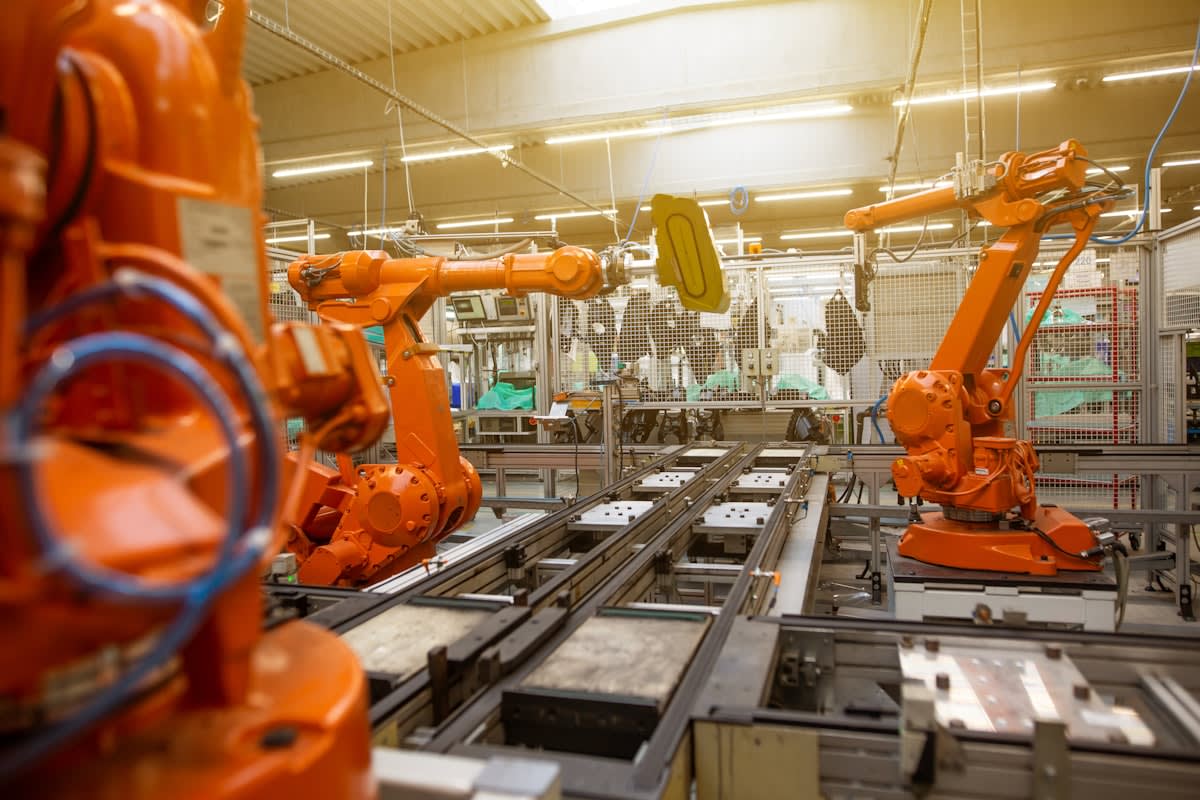
The intelligence layer required to manage these factories is arriving simultaneously. Jeff Bezos' Prometheus venture recently secured a 12 billion dollar Series B round to develop industrial AI designed to automate physical engineering. This is the missing link. Orbital manufacturing cannot rely on human technicians in spacesuits; it requires autonomous systems capable of adjusting molecular synthesis in real-time. Prometheus represents the shift toward 'dark factories' in orbit—autonomous hubs that produce high-margin materials and trigger a reentry vehicle for delivery without human intervention.
The Connectivity Requirement
The 'Orbital Data Economy' is the invisible backbone of this industry. High-capacity optical ground stations and laser communication links are essential to synchronize the precise timing of orbital synthesis with the launch windows of reentry vehicles.
Communication latency and bandwidth have historically limited the control of orbital assets. The success of NASA's Deep Space Optical Communications (DSOC) project, validated in July 2026, proves that optical communication is ready for high-reliability deep space missions. While DSOC focuses on Mars-range distances, the technology trickles down to the orbital data economy. When you can beam terabytes of telemetry and control data via laser, the orbital factory is no longer a remote outpost; it is a connected node in a global luxury supply chain, managed from a boardroom in Tokyo or London.
Does this create a new class of scarcity? Absolutely. Terrestrial luxury is often based on the scarcity of a resource—diamonds, rare earths, or heritage craftsmanship. Orbital luxury is based on the scarcity of an environment. The 'Made in Orbit' label will not signify that a product is from another planet, but that it possesses physical properties—optical clarity, superconducting efficiency, or biological purity—that are physically impossible to achieve on the planetary surface. It is the ultimate flex: owning an object that defies the laws of Earth's geography.
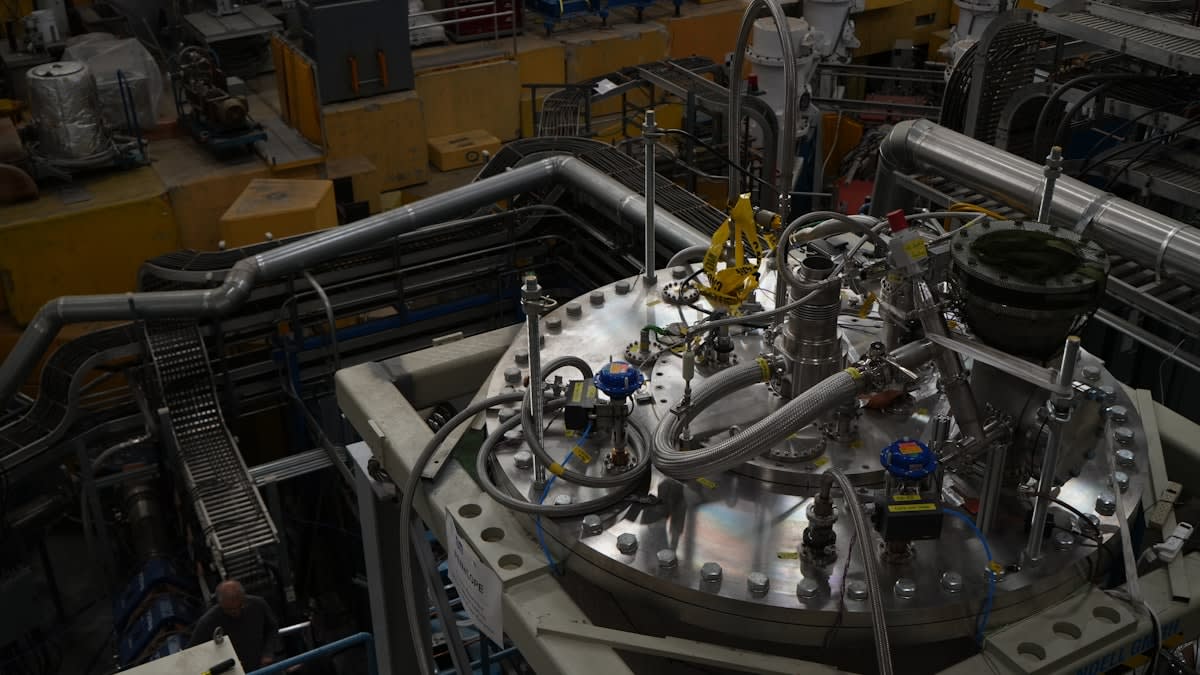
The economic loop is closing rapidly. Satellite investment reached 8.1 billion dollars in the first half of 2026 alone, providing the necessary orbital infrastructure. With the development of reusable reentry systems, companies can now amortize the cost of the vehicle over multiple missions. This converts the orbital factory from a government-funded research project into a commercial enterprise. The cost per gram of returned material will plummet, but the price per gram for the consumer will remain astronomical, driven by the inherent uniqueness of the product.
We must ask: who is the customer for a microgravity-grown diamond or a space-synthesized pharmaceutical? The target is the sovereign wealth fund and the ultra-high-net-worth individual who has already exhausted the possibilities of terrestrial luxury. For them, the value lies in the technical audacity of the product. A material that has survived the vacuum of space and the heat of reentry to provide a biological or physical advantage is the only remaining status symbol in an era of digital abundance.
Ultimately, orbital manufacturing represents the decoupling of production from planetary constraints. By moving the factory to the vacuum, we are not just expanding our industrial footprint; we are redefining the meaning of 'premium.' The future of luxury is not found in the rarity of the ingredient, but in the impossibility of the process. The vacuum of space is the only place where that impossibility becomes a reality.