The current global energy architecture relies on a precarious dependence on a single manufacturing hub. China's grip on the solar value chain is not merely an industrial achievement but a strategic lever, controlling over 95 percent of global wafer production and 80 percent of overall manufacturing capacity. This concentration creates a vulnerability where the energy transition of the West is effectively tethered to the political whims of a single sovereign entity. When the means of production for renewable energy are this centralized, the promise of energy independence becomes a mathematical impossibility for any nation lacking its own integrated silicon supply chain.
Why continue fighting for the scraps of terrestrial silicon when the source of the energy is available in an unfiltered, constant stream 35,000 kilometers above the surface? The move toward space-based solar power is not about adding another renewable source to the grid; it is about removing geography as a constraint. By relocating the collection point to orbit, nations can bypass the territorial disputes and supply chain bottlenecks that define current energy politics. The battle is no longer over who owns the land where the panels sit, but who controls the orbital slots and the frequencies used to beam that energy back to Earth.
The Vertical Migration of Energy
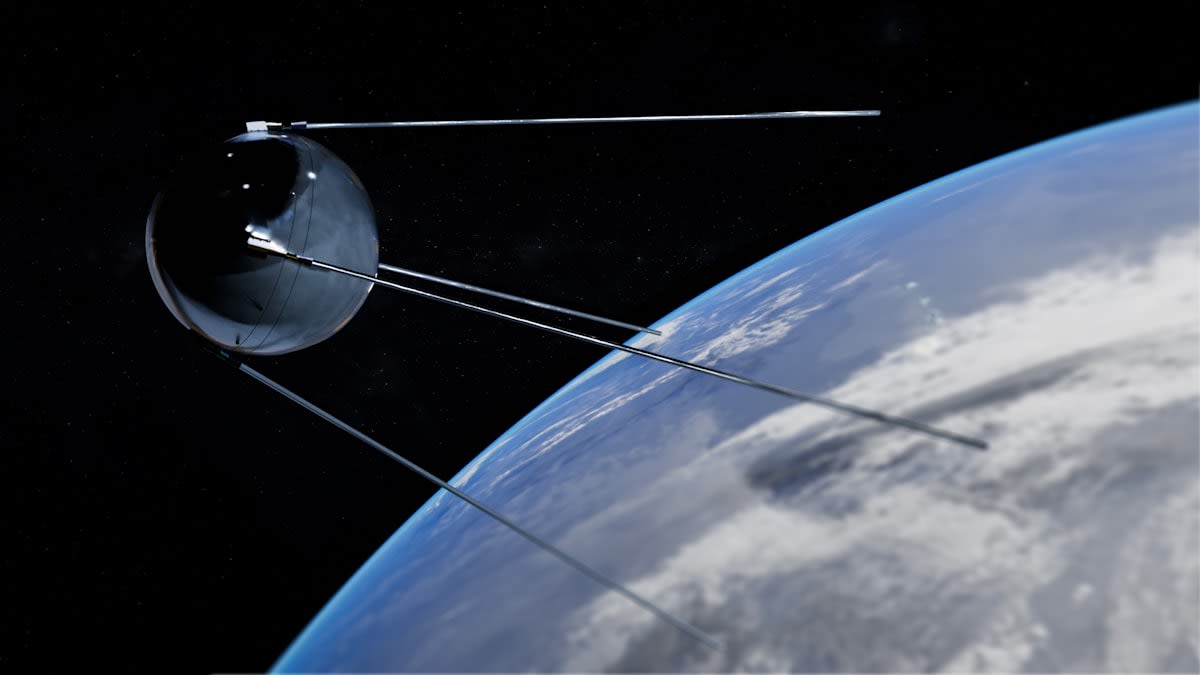
The US Defense Innovation Unit (DIU) is already accelerating this transition, seeking commercial proposals to beam electrical power between spacecraft and from orbit to the ground. Their goal is an operational military utility by the end of the decade, envisioning a multi-orbit system that services low, medium, and geosynchronous Earth orbits. This is a calculated move to decouple military energy needs from terrestrial logistics. If a forward operating base in a remote region of Sub-Saharan Africa or a satellite in a contested orbit can receive power via a wireless beam, the strategic necessity of fuel convoys and limited battery life vanishes.
Parallel to military efforts, the private sector is testing the limits of orbital illumination. Reflect Orbital recently received US federal approval to deploy an 18-meter-wide mirror designed to reflect sunlight to the dark side of the Earth. The company intends to sell this reflected light to municipalities and solar farms at rates up to $5,000 an hour. This effectively turns the night sky into a commodity. By allowing solar farms to generate power after dark, Reflect Orbital is attempting to solve the intermittency problem of terrestrial solar without relying on massive, lithium-heavy battery arrays.
"It is clear that the activities that Reflect Orbital is proposing will have an impact on the Earth environment, including on human health, agriculture and wildlife, in addition to astronomy."— Roohi Dalal, Director of Public Policy at the American Astronomical Society
Does the ability to sell sunlight by the hour create a new form of orbital colonialism? When a private entity can decide which city stays lit or which solar farm remains productive at midnight, the definition of energy sovereignty changes. We are moving toward a model where energy is not mined or generated locally, but leased from orbital infrastructure. This shifts the geopolitical risk from the volatility of oil prices to the stability of orbital licenses and the security of the transmission beam.
The Hardware Bottleneck and the New Strategic Minerals
Scaling this vision requires a leap in structural engineering. Beyond Reach Labs, which recently secured a $10 million seed round, is addressing the physics of massive solar arrays. Current technology hits a ceiling because larger arrays become susceptible to vibrations during maneuvers and extreme temperature swings. To move from small satellite panels to energy-beaming arrays, we need materials that can survive the brutal cycling of the thermosphere while maintaining structural rigidity. The race is now on to build the skeletal systems that can support kilometer-scale collectors.
| Metric | Terrestrial Solar | Orbital Solar |
|---|---|---|
| Energy Availability | Intermittent (Diurnal/Weather) | Constant (Near 24/7) |
| Primary Bottleneck | Mineral Supply Chain (Wafers) | Launch Capacity & Orbital Slots |
| Geopolitical Risk | Manufacturing Monopoly | Frequency Interference/Beam Control |
| Infrastructure Cost | Low per unit / High land use | Extreme initial / Zero land use |
The Pentagon is already identifying the new critical failure points in this chain. A $7.1 million award to Martin Materials Solutions for radiation-resistant cover glass highlights a shift in strategic procurement. In the terrestrial world, the focus is on the purity of the silicon; in the orbital world, the focus is on the protection of the cell. Radiation-resistant glass is the new strategic mineral. Without it, the massive investments in orbital arrays would be wiped out by the first significant solar event, making the domestic production of these specialized materials a matter of national security.
This creates a strange irony: to escape the terrestrial monopoly of solar manufacturing, the West must build a new, highly specialized industrial base for space-qualified materials. The Defense Production Act is being used to force this expansion, signaling that the US government views the ability to protect orbital solar cells as equivalent to the ability to produce semiconductors. The energy war has simply moved from the factory floor to the materials lab.
The Vulnerability of the Vacuum
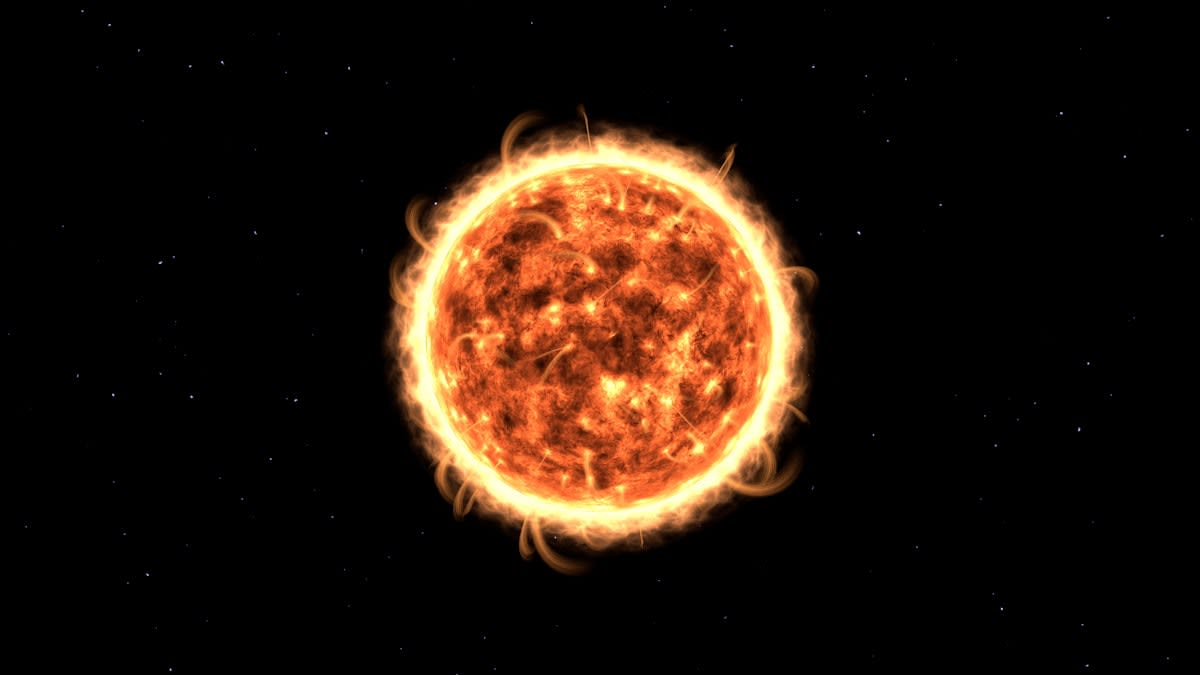
While the promise of orbital power is immense, the risks are equally scaled. Recent research suggests that we have fundamentally underestimated the threat of extreme solar storms. Scientists now argue that once-in-a-thousand-year geomagnetic storms could pack a much larger punch than current models predict, potentially devastating satellites and power grids. For a civilization that beams its primary energy from orbit, a solar storm is no longer a technical nuisance—it is a total system failure.
If the world transitions to orbital power, we are essentially placing our energy security in a high-radiation environment that we cannot control. The fragility of this system creates a new kind of strategic anxiety. A nation that relies on orbital beams is vulnerable not only to the laws of physics but to any adversary capable of disrupting the transmission frequency or physically damaging the collector arrays. The energy grid becomes a target that cannot be repaired with a truck and a toolbox; it requires a launch vehicle.
Can we justify this risk? For nations in the Global South or regions with limited land for massive solar farms, the trade-off is attractive. The ability to receive power without the need for expensive terrestrial grids or the political baggage of mineral imports is a powerful incentive. The geopolitical map will likely split between those who own the orbital infrastructure and those who subscribe to its beams.
Ultimately, space-based solar power will dismantle the traditional energy geopolitics of the 20th century. The era of fighting over pipelines and oil fields is being replaced by a competition for the high ground of the thermosphere. Those who master the triad of large-scale deployment, radiation-resistant materials, and precise power beaming will dictate the terms of global energy for the next century. The power is no longer in the ground; it is in the beam.