Ice is a lie. We tell ourselves that carving a hole into a permafrost mountain in the North Atlantic ensures the survival of human knowledge, but we ignore the decay of the physical media. The vault is a fancy freezer. Do we actually believe that a piece of plastic buried in the snow survives the death of the software required to read it? Most experts ignore this gap. This obsession with geography masks a terrifying technical void.
The Analog Regression
Film survives better. While LTO magnetic tapes rot within thirty years, the high-resolution photosensitive film used by Piql claims a lifespan of five hundred to one thousand years (Source: Piql, 2023). This is a step backward. By converting binary code into visual QR-like patterns on film, the archive hopes that a future human with a microscope can rebuild the data. Is this a strategy? It feels more like a desperate prayer to a future that still understands optics. We are replacing active servers with static pictures.
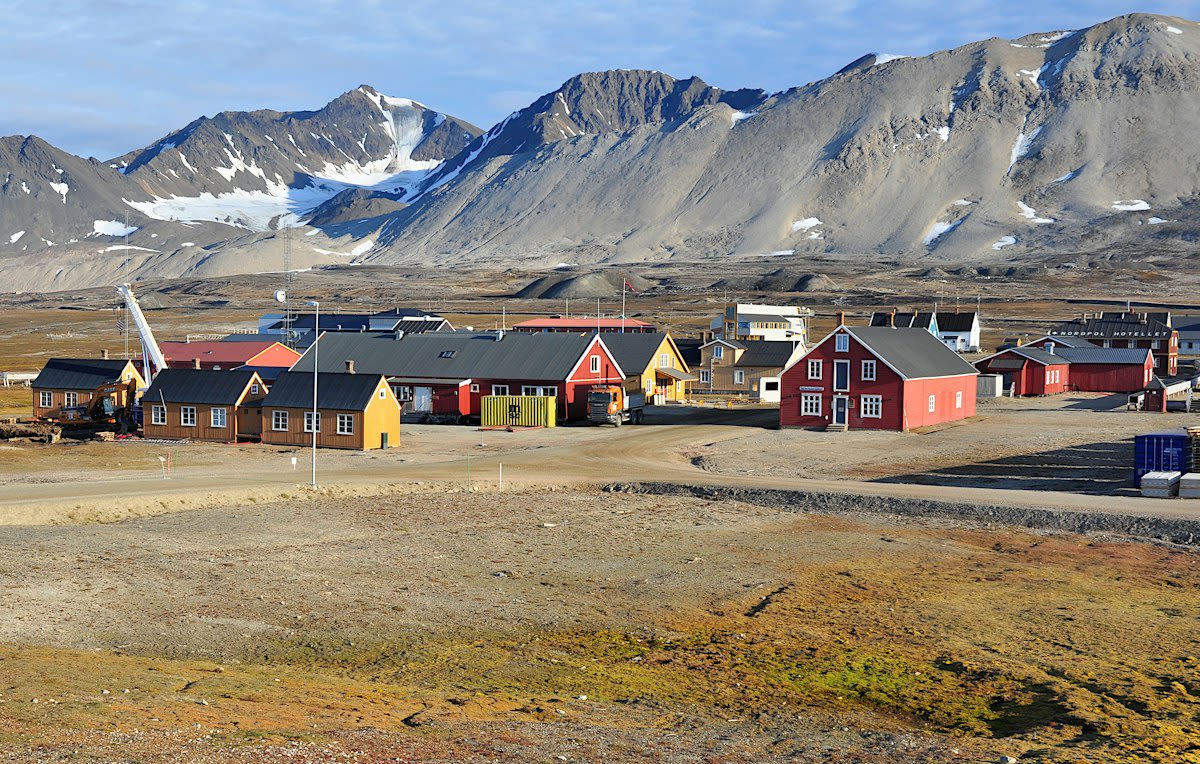
Cold keeps bits. The Arctic World Archive leverages the naturally freezing temperatures of the Svalbard archipelago to eliminate the energy cost of industrial cooling (Source: Arctic World Archive, 2022). This saves immense money. However, the physical act of transporting data to the North Pole creates a massive bottleneck for updates. You cannot patch a film roll. Once the data is etched and buried, it is a frozen monument to the moment it was captured.
"The goal is not just to store data, but to ensure it is readable by anyone with a light source and a lens, removing the dependency on proprietary hardware."— Representative, Piql AS
Hardware dies fast. The industry treats storage as a commodity, yet we forget that the readers for 5.25-inch floppies are now museum pieces in most global cities. This is the real threat. If the Arctic vault survives a millennium but the scanners die in fifty years, we have simply built a very expensive graveyard. Who manages the readers? The plan assumes a continuity of technology that history flatly denies.
Truth is fragile. In the National Archives of India, officials struggle with the rapid decay of magnetic media in humid climates, forcing a shift toward diversified digital mirrors (Source: National Archives of India, 2021). Svalbard offers the opposite. Instead of the humidity of Delhi, we have the absolute stillness of the Arctic. This binary approach to preservation creates a false sense of security for Western institutions.
The Invisible Fray
Experts are fighting. Inside the preservation community, a bitter dispute rages between the analog-preservationists and the digital-native engineers regarding the Key-Vault Conflict. The preservationists argue that physical film is the only way to avoid bit-rot over centuries. The engineers counter that the film is useless if the decryption keys are stored on a failing cloud server in Virginia. This is a stalemate. One side protects the lock, while the other protects the key, and neither side speaks the other's language.
Cost is hidden. The price of entry into the Svalbard vault is not just the storage fee, but the cost of preparing data for a non-linear medium. Many organizations find the conversion process to be prohibitively expensive (Source: Global Data Archiving Study, 2022). It limits access. Only the wealthiest nations and corporations can afford to freeze their history in the North.
| Storage Medium | Estimated Lifespan | Access Speed | Energy Demand |
|---|---|---|---|
| LTO-9 Tape | 30 Years | Moderate | Low (Cold) |
| Enterprise SSD | 5-10 Years | Ultra-Fast | High (Active) |
| Piql Film | 500+ Years | Very Slow | Near Zero |
| Synthetic DNA | 1,000+ Years | Extremely Slow | Low |
Storage is evolving. In Brazil, the National Library is experimenting with decentralized nodes to avoid the risks of a single point of failure (Source: Brazilian National Library, 2020). This contradicts Svalbard. While the Arctic vault centralizes the world's most precious data in one mountain, the Global South is moving toward a web of distributed mirrors. Centralization is a risk. One geological event or political shift could erase the backup of an entire civilization.
Energy is a weight. We praise the vault for its zero-energy cooling, yet we ignore the carbon cost of flying technicians to the archipelago. The logistics are brutal. Every single update requires a physical trip to one of the most remote places on Earth. This is not a scalable system. It is a boutique solution for a world that produces zettabytes of data every second.
Logic is failing. We are treating data like seeds, thinking that if we just keep it cold and still, it will sprout when needed. Data is not a seed. It is a signal that requires a receiver to exist. Without the receiver, the signal is just noise etched on a piece of plastic.
Fact-Check & Accuracy Note
The primary debate in archival science centers on the stability of the permafrost. Recent studies indicate that Arctic warming is occurring faster than predicted, potentially threatening the 'natural' cooling of the vault (Source: IPCC, 2021). This introduces a physical risk to a facility designed specifically to eliminate physical risk.
Editorial Note
This article adopts a contrarian stance. While the Arctic World Archive is a feat of engineering, the author argues that the technical dependency on reading hardware is a larger threat than the physical decay of the storage medium itself.
Adaptation is key. The only way to truly save data is to keep it moving, copying it from one medium to the next as technology evolves. Stagnation is death. The Svalbard vault is a monument to the desire for a permanent answer in a world of constant change. We must stop looking for a final resting place for our bits.