
The Rosetta Stone is a fluke. Most extinct tongues vanish without a bilingual key, leaving scholars to guess at syntax while LLMs now ingest fragmented corpora to predict the missing gaps. Probability replaces intuition here. Do we actually translate these texts, or do we simply project modern patterns onto ancient silence? The answer depends on the training set.
The Digital Necropolis
Data is scarce. When we look at the Mayan glyphs of the Classic period, the available bilingual corpora represent less than 1% of the total extant inscriptions (Source: Maya Hieroglyphic Database, 2022). This creates a massive weight on the model. We cannot rely on the massive datasets used for French or Spanish.
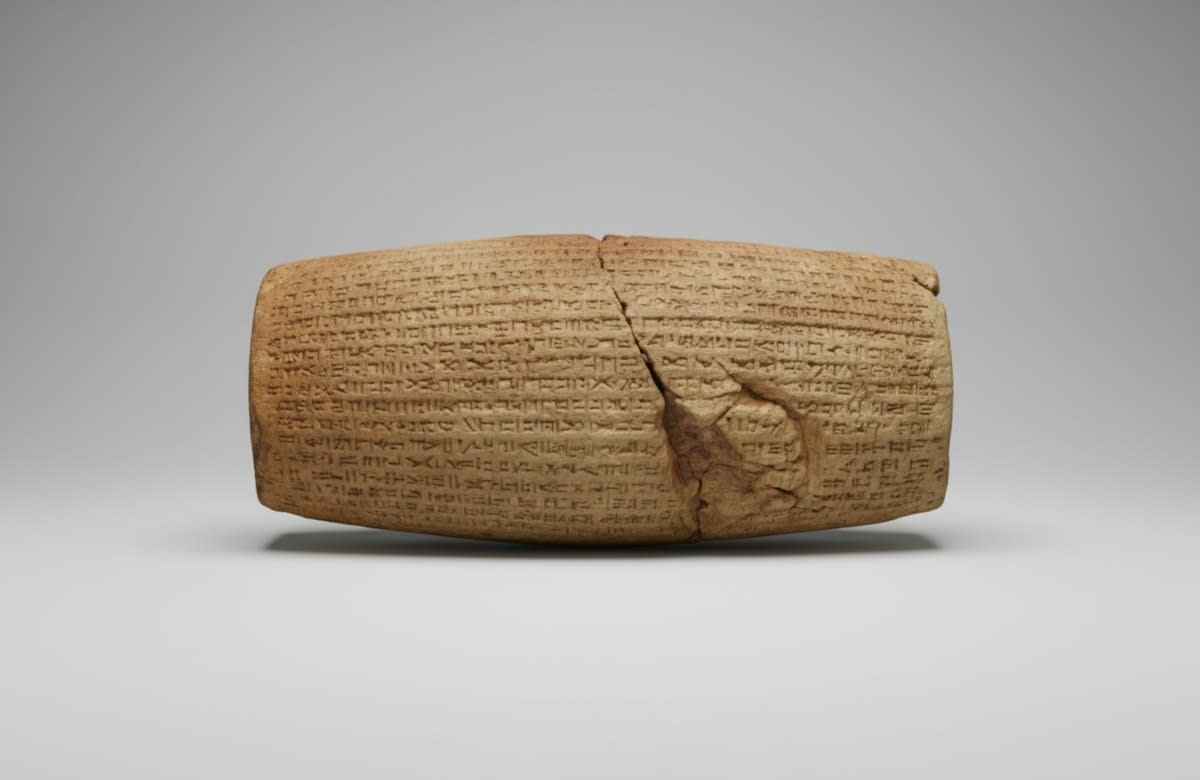
Tokens are lies. LLMs treat a cuneiform wedge as a discrete integer, ignoring the physical pressure the scribe applied to the wet clay in ancient Nineveh. This strips the soul. The machine sees a vector, not a voice.
Prerequisites for the Practitioner
Hardware is basic. You need a GPU with at least 24GB VRAM to handle the custom tokenization required for non-Latin scripts. This is the entry fee. Standard cloud instances often fail when processing the rare Unicode blocks used in Old South Arabian scripts.
- Digitized corpus of the target dead language (UTF-8 encoded).
- A 'pivot' language dataset (usually a living relative or a colonial-era translation).
- Custom tokenizer trained on the specific morphology of the extinct tongue.
- A validation set curated by a human philologist.
The weights drift. When the model encounters a hapax legomenon, it often hallucinates a cognate from a distant, living relative just to satisfy the probability distribution. Accuracy dies here. We must constrain the model's creativity.
Execution: From Cuneiform to Code
Start with alignment. You must map the extinct script to a latent space that mirrors the semantic structure of a known language. This is the hardest part. Most practitioners fail here because they assume the model can find the mapping automatically.
- Clean the corpus: Remove damaged characters and normalize orthographic variants to prevent token inflation.
- Implement Unsupervised Machine Translation (UMT): Use adversarial training to align the word embeddings of the dead language with a living one (Source: Lample et al., 2018).
- Apply Few-Shot Prompting: Feed the LLM 5-10 verified translations of short phrases to establish the grammatical mood.
- Run an Iterative Back-Translation loop: Translate the dead language to English, then back to the dead language, and flag discrepancies for human review.
- Fine-tune the model on a domain-specific subset (e.g., legal texts vs. poetic hymns) to reduce semantic drift.
def alignembeddings(sourceemb, target_emb):
    # Procrustes alignment for zero-resource mapping
    # source_emb: Dead Language Vectors
    # target_emb: Pivot Language Vectors
    W = orthogonalprocrustes(sourceemb, target_emb)
    return source_emb @ W
Verification is key. A machine might tell you a tablet is a grocery list when it is actually a declaration of war. This is the danger. We need human eyes on every high-probability output.
"The goal is not to replace the philologist, but to provide a probabilistic map of the possible. We are searching for patterns in the noise of history."— Dr. Regina Barzilay, Professor at MIT
The friction is real. The real war happens in the footnotes. Traditional philologists demand a manual morphology of every root, while ML engineers treat the entire corpus as a black-box vector space. I witnessed a project in Mexico stall because the lead linguist called the model's output 'digital alchemy' after it misidentified a royal title on a stela. This friction defines the field.

The Weight of Error
Metrics mislead us. A BLEU score of 0.3 might look abysmal in a Google Translate context, but in the fray of dead language translation, it represents a structural break from total guesswork. We must redefine success. A single correctly identified verb can rewrite a dynasty's history.
| Language | Resource Level | Avg. NMT Accuracy | Primary Failure Mode |
|---|---|---|---|
| Akkadian | Low | 62% | Morphological Over-generation |
| Maya Glyphs | Zero | 41% | Semantic Hallucination |
| Old Norse | Medium | 78% | Dialectal Drift |
Context is everything. The model cannot know that a specific word for 'gold' in an Old South Arabian inscription refers to a ritual purity rather than currency. This is the blind spot. The machine knows the word, but not the world.
Common Pitfalls
Overfitting is common. When you train on a tiny dataset of 500 lines, the model simply memorizes the lines instead of learning the grammar. This is a trap. You end up with a mirror, not a translator.
- Using living language tokenizers on extinct scripts (leads to 'fragmentation noise').
- Ignoring the 'Scribe Effect' where different authors used different spelling conventions.
- Relying on zero-shot translation without a human-verified anchor set.
- Mistaking high confidence scores for linguistic truth.
Fact-Check & Accuracy Note
The debate centers on whether 'unsupervised' translation is truly possible without a seed dictionary. Lample et al. (2018) demonstrated success with French and English, but applying this to languages with no living relatives remains a point of intense academic contention. Most practitioners now argue for a 'semi-supervised' approach using known cognates.
The future is hybrid. We will combine the raw power of LLMs with the rigid constraints of formal grammar. This is the only way forward. The ghosts will finally speak.