
The traditional obsession with the linear corridor—the belief that a straight line of asphalt or rail between two points solves the problem of movement—is a relic of continental thinking. This model assumes a contiguous landmass where the primary friction is distance. In the fragmented geographies of Southeast Asia, distance is secondary to the friction of transition. When a shipment moves from a vessel to a warehouse, then to a motorcycle, and finally to a customer across an archipelago, the physical road is the least interesting part of the equation. The real bottleneck is the invisible layer of regulations, customs, and standards that govern these hand-offs.
Why do we continue to fund massive physical assets while ignoring the software of movement? The Global Academy for Future Governance (GAFG) recently challenged this obsession with its Connectivity Doctrine. The core argument is a stark departure from standard urban planning: connectivity is not infrastructure, it is governance. By reframing corridors as interdependent governance ecosystems rather than isolated projects, GAFG suggests that the actual productivity of a transit network is determined by the coherence of its institutions. This is the difference between building a bridge and ensuring that the bridge actually facilitates movement through synchronized customs and digital standards.
The Governance Multiplier
Infrastructure creates potential, but governance determines whether that potential is realized. A high-speed rail line is useless if the regulatory framework for cargo handling at the terminus is archaic. GAFG argues that the real value of any corridor depends on the relational coordination between the entities managing it. This systemic approach moves the focus away from the project level—where success is measured by the completion of a physical structure—to the system level, where success is measured by the resilience and adaptability of the network to geopolitical shocks. If the rules are coherent, the physical assets become multipliers; if the rules are fragmented, the assets become stranded.
"Corridors should be viewed as interdependent governance ecosystems where interoperability, complementarity, and relational coordination matter more than isolated physical assets."— GAFG Connectivity Doctrine
Consider the stark contrast between the emerging models in the Global South and the maintenance-heavy systems of the West. In the United States, the focus remains on asset management to prevent collapse. For example, Network Rail Consulting recently secured a $26 million contract with Sound Transit to enhance asset management for the Link light rail network. While critical, this is a defensive strategy—maintaining existing reliability as a network expands. In contrast, the archipelagic logic emerging in Southeast Asia is offensive; it is about creating new types of hubs that blend logistics, technical preparation, and governance into a single node.
The partnership between VinFast and Bespoke Logistics in the Philippines serves as a blueprint for this shift. Rather than relying on a generic distribution network, they are establishing an integrated mobility processing center. This is not merely a warehouse. It is a specialized node responsible for warehousing, vehicle inspection, technical preparation, and yard management for electric motorcycles. By concentrating these functions into one authorized service workshop, they eliminate the fragmented hand-offs that typically plague archipelagic transit. They are essentially building a governance ecosystem for a specific product category, ensuring the vehicle is ready for delivery the moment it hits the final leg of its journey.
This approach asks a fundamental question: why move the product through five different checkpoints when you can collapse those checkpoints into a single, integrated processing center? The Bespoke Logistics model treats the transit process as a series of value-added technical steps rather than a simple movement from point A to point B. This is the essence of archipelago logic—optimizing the node because you cannot control the volatility of the transit between nodes.
The Node over the Line
The failure of the linear model is most evident when we treat logistics as a commodity. In fragmented geographies, logistics is a specialized technical service. The VinFast-Bespoke agreement proves that the 'last mile' is actually a complex sequence of technical preparations that must happen before the vehicle even enters the final transit phase.
As these physical nodes become more sophisticated, the intelligence governing them must evolve. This is where industrial AI enters the frame. Black Lake Technologies, a finalist for the 2026 SAIL Award, is deploying industrial AI agents to handle the exact frictions that GAFG warns about. Their agents manage order splitting, process planning, procurement, and production scheduling. By automating the decision-making workflows on the shop floor, these AI agents reduce the cognitive load and the potential for human error in the high-pressure environment of Global South manufacturing and logistics.
When AI agents handle the quotation, pricing, and order tracking, the 'governance' of the transit system becomes algorithmic. This reduces the reliance on the coherence of human institutions, which are often the weakest link in the GAFG ecosystem. If an AI agent can optimize the production schedule and the order split in real-time, the physical transit network becomes more resilient because the inputs are precisely timed to match the capacity of the nodes.
The Maritime Parallel: Precision over Power
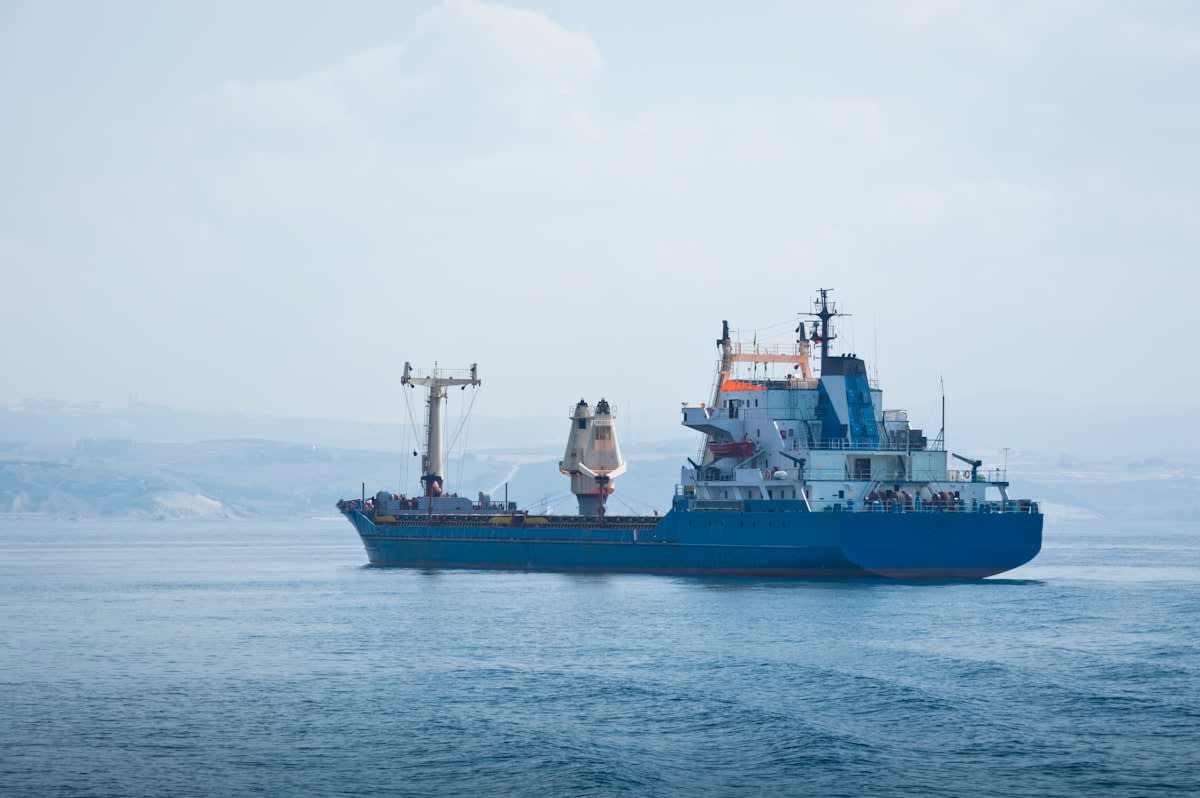
The transition from brute-force infrastructure to precision governance is not limited to land. The maritime sector is seeing a similar shift. Heerema Marine Contractors recently utilized a data-driven voyage optimization pilot with Amphitrite to shorten the North Atlantic transit of its semi-submersible crane vessel, Sleipnir, by 2.5 days. This was not achieved by building a faster ship or a new canal, but by using five years of operational data to predict speed and power consumption under specific weather and wave conditions.
The 2.5-day reduction is a significant delta in maritime logistics. It proves that the 'shortest path' is not a geographic line, but a data-driven optimization of environmental variables. This mirrors the GAFG doctrine: the physical asset (the vessel) is a constant, but the governance of its movement (the voyage optimization platform) is the variable that creates value. When you stop fighting the ocean and start modeling it, the transit model breaks in favor of efficiency.
| Feature | Linear Transit Model | Archipelago/Ecosystem Model |
|---|---|---|
| Primary Goal | Minimize Distance | Minimize Transition Friction |
| Key Asset | Physical Corridor (Road/Rail) | Integrated Processing Node |
| Success Metric | Project Completion | Institutional Coherence |
| Optimization Tool | Civil Engineering | Industrial AI & Data Modeling |
| Risk Management | Physical Maintenance | Relational Coordination |
Comparing these two models reveals why mature transit systems often feel stagnant. In New York, for instance, the recent success of the transit network during the World Cup was framed as a victory because the system simply avoided a meltdown. The MTA and NJ Transit managed to prevent the typical infrastructure failures, which is a baseline expectation for a developed city. However, this 'avoidance of failure' is a far cry from the 'creation of efficiency' seen in the integrated mobility centers of the Philippines or the voyage optimization of the North Atlantic.
The contrast is telling. One system is fighting to maintain its existing physicality; the other is redefining the nature of the movement itself. The Global South is not just catching up to the West; it is leapfrogging the linear model entirely. By integrating AI agents for procurement and production—as seen with Black Lake Technologies—and combining them with specialized logistics hubs, these regions are building a transit model that is natively designed for fragmentation.
Does this mean the physical road is obsolete? Not entirely, but its role has changed. The road is now merely the connective tissue between high-intelligence nodes. The strategic center of gravity has shifted from the line to the point. When VinFast ensures that an electric motorcycle is inspected and prepared at a Bespoke Logistics center before it ever hits the road, the road becomes a formality. The value was created at the node.
This shift toward relational coordination and system-level thinking is the only way to survive in an era of geopolitical volatility. Linear corridors are fragile; a single break in the line halts the entire flow. Ecosystems, however, are redundant. If one node in an archipelagic network fails, the governance layer can reroute the flow through other coherent institutions. This is the resilience that GAFG advocates—a system that doesn't just survive a shock but adapts to it.
Ultimately, the breaking of the global transit model is a necessary evolution. The world is too fragmented for the simplicity of the straight line. Whether it is reducing a North Atlantic crossing by 2.5 days through ocean intelligence or streamlining electric vehicle delivery in Manila through integrated processing, the lesson is the same: the map is not the territory, and the road is not the journey. The journey is the governance of the transition.