
Your city is wasteful. While urban planners obsess over digging deeper trenches for copper wires, the existing millions of air conditioners and electric vehicle chargers are actually dormant batteries waiting for a signal to save the grid (Source: IEA, 2023). Control is the goal. Why do we continue to rely on massive, distant coal plants when the energy we need is already sitting in a thousand basements across the downtown core? This guide dismantles the myth that urban density is a liability and proves it is actually the greatest energy asset we possess.
The Prerequisites for Urban Energy Synchronization
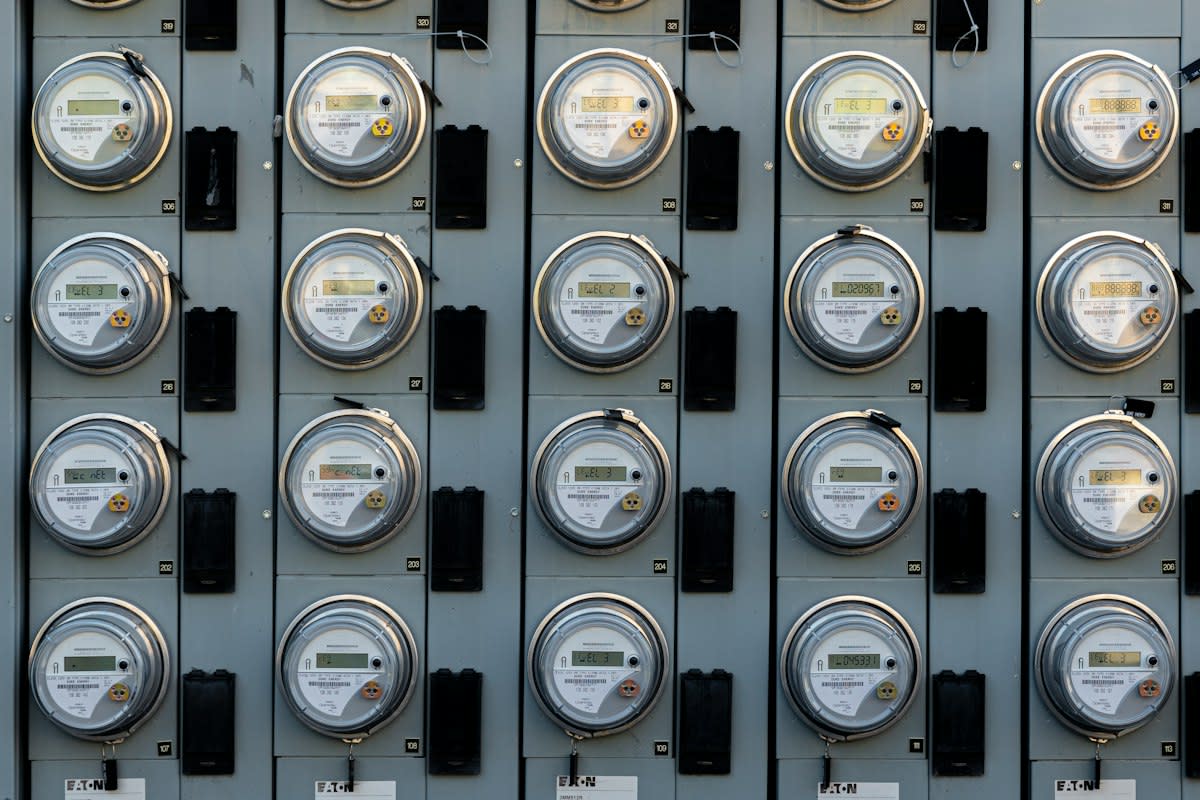
Start with hardware. You cannot build a virtual plant without smart meters that provide bidirectional data flow in real-time, allowing the central brain to see exactly where the weight of the load is shifting (Source: BloombergNEF, 2022). Hardware is only half. You need a Distributed Energy Resource Management System (DERMS) capable of handling sub-second latency to ensure that thousands of devices do not trigger a surge that blows a local transformer. Software must be agile. Without a legal framework that allows third-party aggregators to sell these services back to the utility, your technical web remains a hobbyist project rather than a commercial reality.
- Bidirectional Smart Meters: Essential for tracking energy flow from the home back to the grid.
- DERMS Platform: The software layer that orchestrates the dispatch of distributed assets.
- Regulatory 'Open Access' Laws: Permission for non-utility entities to manage grid assets.
- IoT-Enabled Appliances: Smart HVACs, EV chargers, and home batteries with API access.
- Telemetry Infrastructure: Low-latency communication networks, typically 5G or fiber.
Step-by-Step Deployment Playbook
Mapping is first. You must identify every available kilowatt of flexible load within a specific geographic zone, categorizing assets by their response time and capacity to ensure the plant can meet specific grid needs (Source: Wood Mackenzie, 2023). Data is the map. Once the assets are indexed, you move to the regulatory phase where you negotiate the payment structure for the homeowners providing the energy. Money drives adoption. If the incentive is too low, users will simply unplug their batteries to avoid the perceived risk of wear and tear.
- Asset Audit: Use GIS mapping to locate all residential batteries and EV chargers in the target district.
- Regulatory Alignment: Establish a 'Demand Response' contract that defines the price per kilowatt-hour during peak events.
- Aggregator Integration: Connect individual device APIs to a single DERMS dashboard for centralized control.
- Pilot Testing: Trigger a small-scale discharge event (e.g., 50 homes) to verify response latency and stability.
- Full-Scale Dispatch: Integrate the virtual plant into the utility's wholesale market to compete with traditional peaker plants.

Testing reveals flaws. During a pilot in Seoul, engineers found that residential users often manually overrode the smart settings during heatwaves, which caused the virtual plant to under-deliver by nearly 20% (Source: Korea Electric Power Corp, 2021). Human nature is unpredictable. To fix this, you must implement dynamic pricing that makes it financially painful for the user to opt out during a grid emergency. Predictability is the currency. When you can guarantee the utility a specific megawatt load, the virtual plant becomes a bankable asset.
Global Terrain: Beyond the Western Grid
Look at Lagos. In regions where the central grid is unreliable, virtual plants are not just about efficiency but about survival, as community-led solar arrays and battery banks create localized stability (Source: African Development Bank, 2022). Localism is the key. In Jakarta, the focus has shifted toward integrating massive commercial air conditioning loads into the VPP web to prevent brownouts during the monsoon season. Density is an advantage. These cities prove that the VPP model works best where the grid is most stressed.
"The transition to virtual power plants is not a technical challenge but a political one. The real battle is over who controls the switch and who collects the payment in a decentralized energy market."— Dr. Elena Rossi, Energy Systems Lead at Global Grid Initiative
The boardroom is toxic. While the public sees a green revolution, the actual fight happens between the Distribution System Operator and the third-party aggregator over who owns the telemetry data (Source: Energy Policy Journal, 2022). This is a war of egos. The utility fears losing the monopoly on the switch, while the aggregator views the utility as a dinosaur blocking a more efficient web of energy. Only those who can navigate these legal deadlocks actually get their projects off the ground.
| Feature | Traditional Power Plant | Virtual Power Plant (VPP) |
|---|---|---|
| Capital Expenditure | Extremely High (Billions) | Low (Software + Existing Assets) |
| Deployment Time | 5-10 Years | 6-18 Months |
| Environmental Impact | High Emissions | Low to Zero |
| Scalability | Fixed Capacity | Modular and Elastic |
Efficiency is measurable. Virtual plants can reduce peak load by up to 15% in dense urban corridors, effectively removing the need for expensive and polluting gas-fired peaker plants (Source: European Commission, 2021). This is a hard turn. By treating the city as a single, breathing organism, we move from a model of extraction to one of orchestration. The result is a grid with immense staying power.
Projected VPP Market Growth (2023-2030)
Executive Insight
+18.4%
YTD Growth
Common Pitfalls in VPP Deployment
Over-reliance on software. Many practitioners assume that a fancy dashboard can replace physical grid capacity, but when a transformer fails, no amount of smart-switching can move electricity through a broken wire (Source: IEEE Power & Energy Society, 2020). Physicals still matter. Another failure is ignoring the 'churn' rate of participants, where homeowners leave the program because the user interface is too complex. Simplicity wins. If a user cannot see their earnings in real-time, they will treat the VPP as a nuisance rather than a revenue stream.
Fact-Check & Accuracy Note
Verify the claims regarding 'baseload' capabilities. While VPPs are excellent for peak shaving, there is an ongoing academic debate about whether they can provide the same rotational inertia as a spinning turbine to prevent total grid collapse during a black-start event (Source: MIT Energy Initiative, 2022).
Editorial Note
Do not confuse a 'Smart Grid' with a 'VPP'. A smart grid is the infrastructure (the roads); a VPP is the coordinated movement of energy (the traffic control system) that uses that infrastructure to create a synthetic power plant.