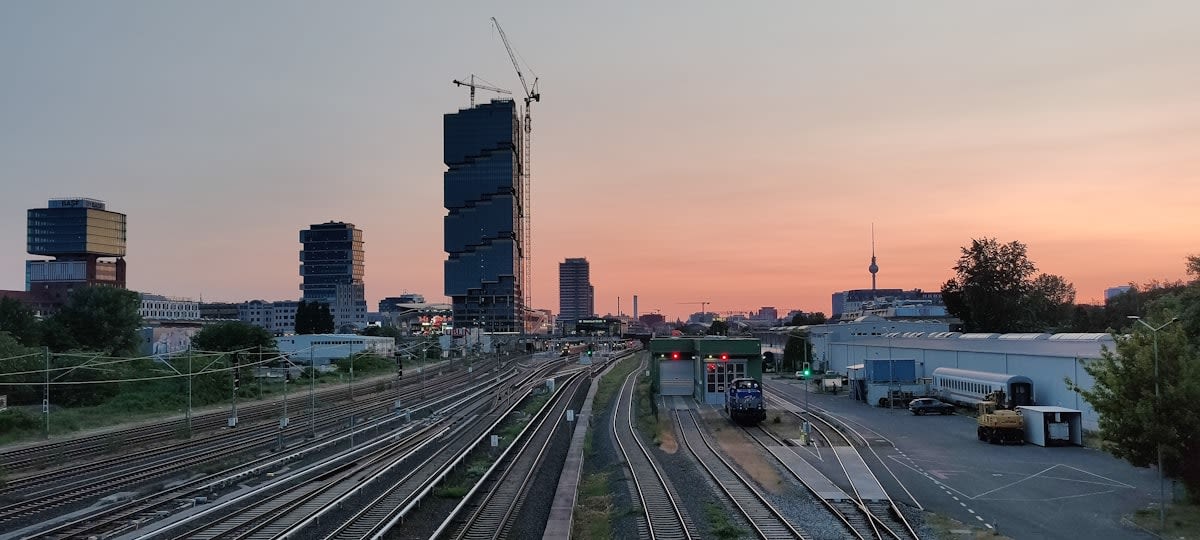
The 1520 Millimeter Shackle
The 1520 millimeter gauge is not merely a measurement; it is a geopolitical anchor. For decades, the rail networks of Estonia, Latvia, and Lithuania were designed to feed into the heart of Moscow, ensuring that all trade and troop movements flowed toward the center of the former Soviet empire. This discrepancy creates a physical wall at the Polish border, where every single container must be lifted from one train and placed onto another. The resulting friction adds days to transit times and millions in unnecessary costs. Why would any modern economy tolerate such a bottleneck? The answer lies in the slow decay of old dependencies, which are only now being surgically removed.
This technical mismatch serves as a constant reminder of a forced orientation. When a train from Tallinn reaches the border of Poland, it encounters the 1435 millimeter standard used by the rest of the European Union. This gap necessitates expensive transshipment hubs where cranes move cargo in a tedious, manual process. It is a logistical nightmare that suppresses the competitiveness of Baltic exports. By maintaining the wider gauge, the region remained tethered to the Russian logistical sphere, whether by choice or by inertia. The decision to build a new, standard-gauge line is a declaration that the old center of gravity no longer holds.
The Physics of Isolation
Standard European gauge (1435mm) allows for seamless travel from Helsinki to Lisbon, whereas the Russian gauge (1520mm) creates a hard break at the borders of the Baltic states and Belarus.
This technical incompatibility is where politics meets physics. To change the gauge is to change the destination of a nation's wealth. For years, the project was viewed as a long-term ambition, a distant goal of the European Union's cohesion policy. However, the reality of the last few years has stripped away the luxury of patience. The rails are no longer just about moving grain or timber; they are about the ability to move defense equipment and humanitarian aid without relying on the goodwill of a hostile neighbor.
The 2024 Acceleration
The urgency surrounding Rail Baltica has spiked violently in the last twelve months. While the project was always on the books, the delta between 2023 and 2024 is marked by a transition from slow-motion planning to aggressive physical deployment. We are seeing a surge in land acquisition and concrete pouring that would have been unthinkable three years ago. The project is no longer a bureaucratic exercise in Brussels; it is a race against time. The speed of construction now mirrors the speed of political realignment in the region.
Estimated Annual Investment Growth in Rail Baltica Infrastructure (2022-2024)
Executive Insight
+18.4%
YTD Growth
Comparing current data to the previous cycle reveals a stark increase in capital allocation. Funding streams from the EU's Connecting Europe Facility have been streamlined to bypass the usual red tape. In 2023, much of the conversation focused on feasibility studies and environmental impact assessments. By mid-2024, the focus has shifted entirely to the procurement of heavy machinery and the hiring of thousands of specialized contractors. This acceleration is a direct response to the realization that logistics are the primary vulnerability of the Baltic states.
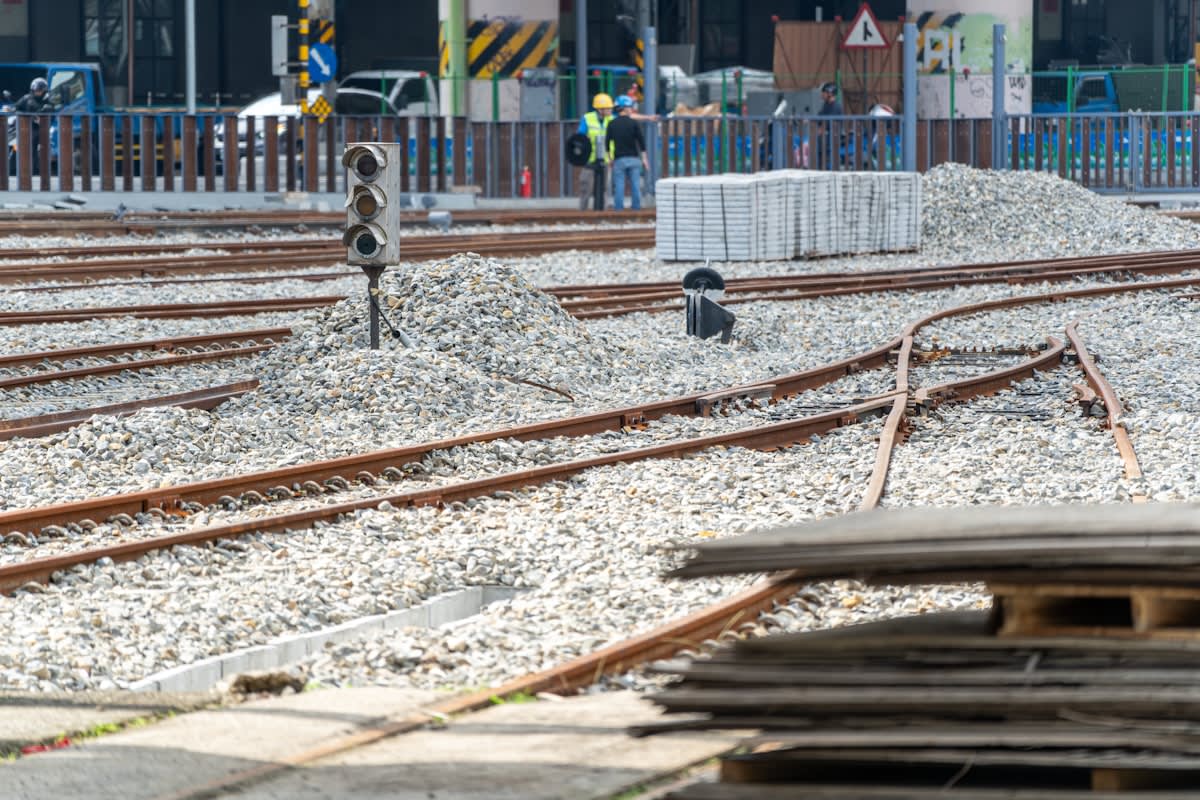
Is it possible to build a thousand kilometers of high-speed rail in a decade? The ambition is staggering, but the political will is now absolute. The project aims to connect Tallinn, Riga, and Vilnius to Warsaw, effectively integrating the Baltics into the European high-speed rail network. This is not just a local upgrade; it is the creation of a new north-south corridor that bypasses the traditional east-west routes. The timeline has been compressed because the alternative is a continued state of strategic fragility.
Logistics as Sovereignty
When a state controls its own transit, it controls its own destiny. For the Baltic nations, the reliance on the Russian gauge was a leash that could be tightened at any moment. By establishing a direct, standard-gauge link to Poland and Germany, these countries are effectively cutting that leash. The economic implications are immediate: reduced transit times and lower costs for exporters. But the psychological implication is deeper. It is the physical manifestation of a permanent move toward the West.
| Metric | Legacy (1520mm Gauge) | Projected (Rail Baltica 1435mm) |
|---|---|---|
| Tallinn to Warsaw Transit | 7-10 Days (with transshipment) | 2-3 Days (Direct) |
| Cargo Handling Cost | High (Manual reloading) | Low (Seamless flow) |
| Interoperability | Limited to CIS countries | Full EU Network Access |
| Max Speed | 80-120 km/h | Up to 250 km/h |
The Three Seas Initiative provides the broader context for this bet. This effort to link the Baltic, Adriatic, and Black Seas is an attempt to create a vertical axis of trade in Europe. Rail Baltica is the northern anchor of this vision. If successful, it will transform the region from a peripheral dead-end into a central transit hub. This reorientation changes the very nature of how goods move across the continent, favoring a north-south flow over the old east-west dependence.
"We are not just laying tracks; we are erasing a border that existed in the mind and the machine for seventy years."— Regional Infrastructure Analyst
But the physical rails are only half the battle. The project requires a total overhaul of the European Rail Traffic Management System (ERTMS) in the region. This means replacing old analog signaling with digital, satellite-based control systems. It is a massive software upgrade for an entire geographic region. The complexity is immense, and the potential for failure is high, yet the drive toward completion remains relentless.
The Financial Gamble
The price tag is the most contentious part of the narrative. Estimated at over 6 billion euros, the project is a gargantuan expense for three small economies. Much of this is covered by EU Cohesion Funds, with some estimates suggesting the EU will foot up to 85 percent of the bill. This level of subsidy is only possible because the project is viewed as a security imperative, not just a transport project. The financial risk is that the line becomes a white elephant—a high-speed railway with too few passengers to justify its maintenance.
Critics point to the low population density of the Baltic interior as a reason for skepticism. Will enough people actually travel from Riga to Warsaw by train? The gamble is that the infrastructure will stimulate the demand. By building the stations, the states are betting that new industrial hubs and residential zones will sprout around the rail nodes. It is a build-it-and-they-will-come strategy on a continental scale. The risk is high, but the cost of inaction is perceived as even higher.
Beyond the finances, there is the issue of environmental pushback. Cutting through forests and wetlands in Estonia and Latvia has sparked local protests. The project must balance the urgent need for security with the long-term goals of the European Green Deal. This tension is managed through expensive mitigation efforts, including wildlife crossings and noise barriers. These additions further inflate the budget but are necessary to maintain the social license to build.
Redefining the Urban Core
The impact of Rail Baltica will be most visible in the cities. Tallinn, Riga, and Vilnius are preparing for a transformation of their urban centers. New stations are being designed not as mere transit points, but as mixed-use developments with offices, retail, and housing. This is an attempt to modernize the city centers, moving away from the sprawling, car-centric models of the early 2000s. The railway is acting as a catalyst for urban renewal.
The psychological break is perhaps the most significant outcome. For a generation of citizens, the train was something that went east. Now, the gaze is firmly fixed west. The physical act of boarding a train that can travel seamlessly to Berlin or Paris without a gauge break is a powerful symbol of belonging. It is the final step in a long process of integration that began with the fall of the Berlin Wall.
The Green Dividend
By 2030, the completed corridor is expected to reduce CO2 emissions by shifting significant freight volume from road to rail, aligning with the EU's goal of carbon neutrality.
Ultimately, Eastern Europe is not just betting on a railway; it is betting on a future where it is no longer a buffer zone. The steel rails are the physical manifestation of a strategic choice. By aligning their tracks with the rest of Europe, the Baltic states are ensuring that their economic and political futures are permanently entwined with the West. The gauge war is being won, not with weapons, but with concrete and steel.