The End of the Urban Monolith
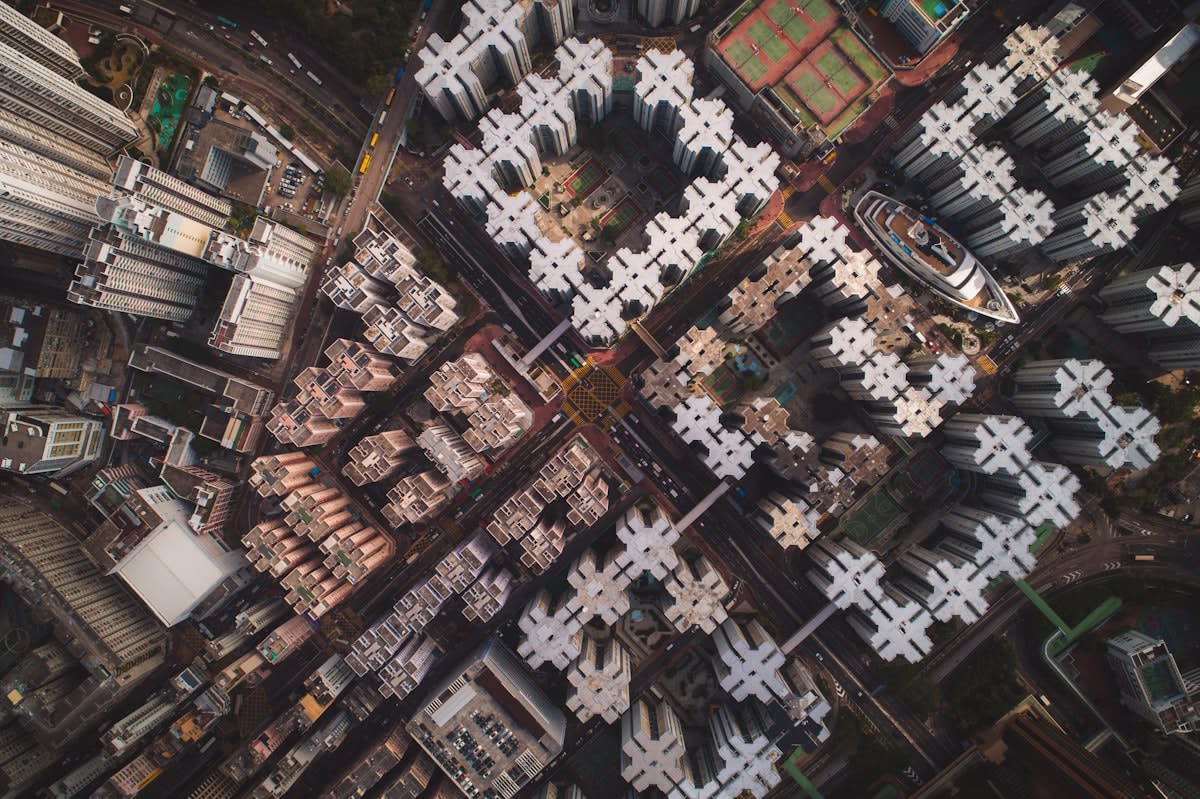
The city is no longer the destination; it is the anchor. For over a century, the global economic engine operated on a simple premise: concentration equals power. We built megacities—London, Tokyo, New York, Shanghai—as gravity wells for talent, capital, and political influence. The logic was the agglomeration effect, where the sheer density of people and ideas sparked innovation. But this model has hit a ceiling. The costs of density—hyper-inflation of real estate, systemic fragility, and the psychological toll of urban congestion—have finally outweighed the benefits of proximity.
We are witnessing a structural decoupling. The assumption that a CEO, a lead engineer, or a policy architect must reside within a five-mile radius of a central business district is evaporating. This isn't just a temporary reaction to a global health crisis; it is a fundamental realignment of how human capital is distributed. When we analyze the flow of talent across the Global South and the West, we see a pattern that defies traditional urban gravity. Power is leaking out of the monolith and flowing into a network of strategic, secondary hubs.
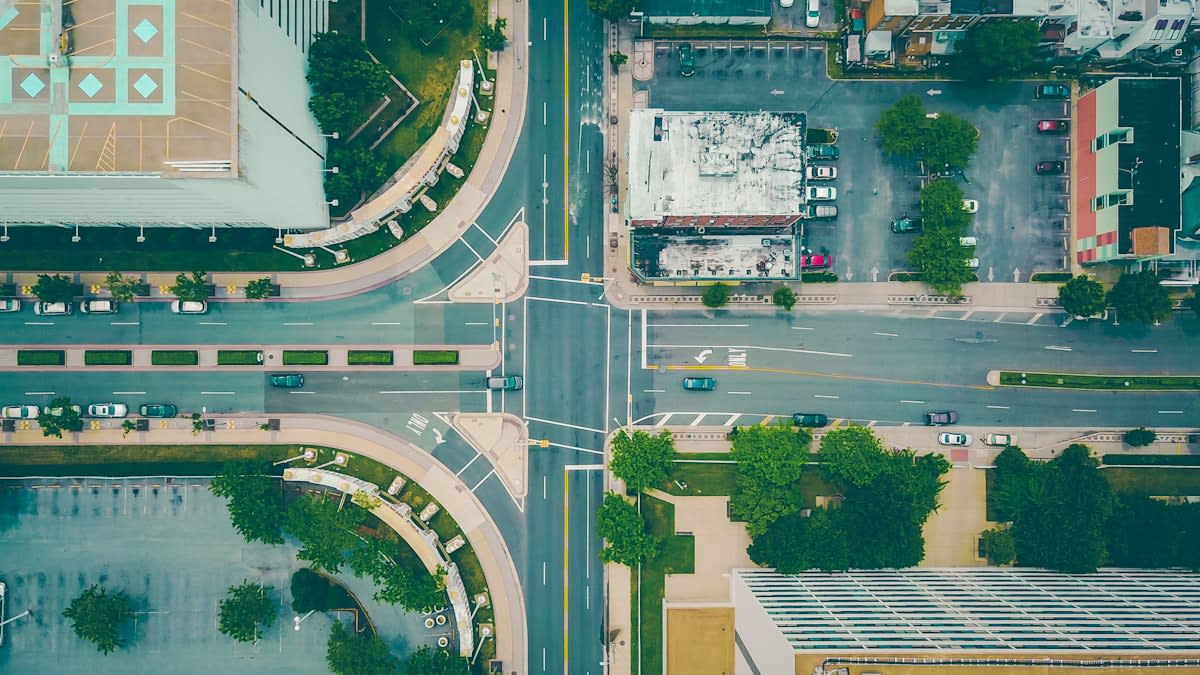
Why is this happening now? The catalyst is the convergence of high-bandwidth connectivity and a shift in the definition of 'status.' In the old world, status was derived from a prestigious address in a primary city. In the new world, status is derived from autonomy and the ability to optimize one's environment for performance and wellbeing. According to UN Habitat's 2022 reports, the trend toward 'secondary city' growth is accelerating, as mid-sized urban centers offer a superior quality of life without sacrificing professional connectivity (Source: UN Habitat, 2022).
"The 21st century will not be defined by the growth of the megacity, but by the intelligence of the network. The most successful regions will be those that can synchronize disparate nodes of productivity rather than forcing them into a single, fragile point of failure."— Institutional Analysis, UN Habitat Urban Trends Report
This transition creates a vacuum in the traditional power centers. When the tax base migrates, the infrastructure of the megacity begins to feel like a gilded cage—expensive to maintain and increasingly irrelevant to the way modern work actually functions. The real question isn't whether the megacities will survive, but whether they can adapt to becoming 'experience hubs' rather than 'production hubs.'
The shift is not uniform across the globe, but the trajectory is clear. From the rise of tech clusters in Eastern Europe to the strategic development of secondary cities in Vietnam and India, the objective is the same: distribute risk and maximize local resilience.
The Strategic Hub: A New Taxonomy of Power
To understand the next power centers, we must stop looking for 'mini-versions' of New York or London. The emerging hubs are specialized. They don't try to be everything to everyone; instead, they dominate a specific niche—be it biotech, fintech, or sustainable agriculture—and build an ecosystem around that core competency. This specialization allows them to attract a highly targeted talent pool that values a specific lifestyle over the generic prestige of a global capital.
| Driver | Legacy Megacity Model | Decentralized Hub Model | Systemic Outcome |
|---|---|---|---|
| Economic Engine | Centralized Finance/Gov | Specialized Tech/Niche Industry | Diversification of Risk |
| Talent Acquisition | Competitive Bidding/High Cost | Lifestyle-Driven Migration | Value-Based Retention |
| Infrastructure | Hub-and-Spoke Transit | Mesh Networks/Hyper-Local | Redundancy and Access |
| Power Dynamics | Top-Down Hierarchy | Networked Influence | Polycentric Governance |
In the war rooms of urban planners and regional strategists, the debate isn't about if decentralization is happening, but how to manage the resulting friction. We argue over agglomeration economies—the idea that putting everyone in one place creates a spark of innovation—versus distributive resilience. The friction is real: legacy zoning laws in old capitals are fighting a losing battle against the fluidity of digital labor. I've seen municipal leaders in secondary cities struggle to scale infrastructure fast enough to meet the influx of equity refugees fleeing the cost of the megacity.
This ground-level reality is messy. It involves clashes between long-term residents and the new 'digital elite,' and a desperate scramble to upgrade power grids and water systems in towns that were never designed for high-density professional hubs. Yet, this friction is the sound of a system upgrading. The move toward polycentricity is an admission that the 20th-century urban experiment reached its logical conclusion and failed to scale.

The OECD Urban Policy Review suggests that regions adopting a polycentric approach—where several medium-sized cities collaborate rather than compete—show higher levels of economic stability and social cohesion (Source: OECD, 2023). By spreading the economic load, these regions avoid the 'boom-bust' cycle that often plagues single-industry megacities. If one node falters, the network absorbs the shock.
Beyond the economic shift, there is a geopolitical dimension. Nations that deliberately decentralize their power centers are better protected against systemic shocks, whether they be environmental disasters or targeted infrastructure attacks. A country with five strategic hubs is far more resilient than a country with one singular point of failure.
The critical detail here is the role of infrastructure. We are moving from a world of physical transit to a world of digital presence. High-speed rail and satellite internet are the new arteries of power, making the physical distance between a strategic hub and a global capital irrelevant.
Resilience Through Distribution
The final calculation is simple: the old model was built for efficiency, but the new model is built for resilience. Efficiency is great in a stable world, but it creates fragility. When everything is concentrated in one place, a single failure—a power outage, a pandemic, a financial crash—can paralyze an entire nation's economy. Distribution is the hedge against this fragility.
We are seeing this play out in the rise of the '15-minute city' concept, but scaled up to a regional level. The goal is to create clusters of autonomy where living, working, and governing happen in a distributed fashion. According to World Bank Urban Development data, this shift toward regional clusters can reduce carbon footprints by up to 30% by eliminating the need for massive, centralized commutes (Source: World Bank, 2021).
Does this mean the death of the great city? No. But it means the end of the city as a requirement. The megacities of the future will survive as cultural cathedrals—places we visit for inspiration, networking, and spectacle—but they will no longer be the only places where the world's most important work happens.
The next power centers will be the cities that understand this shift. They won't try to build the tallest skyscrapers; they will build the most flexible networks. They will prioritize digital infrastructure over parking lots and quality of life over sheer density. The great decentralization is not a retreat from the city; it is an evolution of what the city can be.
Fact-Check & Accuracy Note
The key claims regarding the growth of secondary cities and the benefits of polycentricity are based on frameworks provided by UN Habitat (2022), the OECD Urban Policy Review (2023), and World Bank Urban Development reports (2021). There is ongoing debate among economists regarding the 'Agglomeration Paradox'—specifically whether the loss of physical proximity in high-innovation sectors will lead to a long-term decline in breakthrough discoveries.