
We tend to treat the howl of a coastal gale as chaos—a wall of white noise that obscures thought. This is a fundamental mistake. For those who understand fluid dynamics, a storm is not noise; it is a raw, unrefined orchestral score waiting for a physical medium to give it shape. The assumption that music requires a human performer to strike a key or pluck a string ignores thousands of years of coastal interaction where the earth itself acts as the musician. By treating the wind as a precise tool rather than a random force, we can uncover a method of sonic sculpting that relies on the same physics that shape a river delta or a sand dune.
The Mechanics of the Invisible
At the heart of wind-music lies the Von Kármán vortex street. This occurs when wind flows past a blunt object, creating a repeating pattern of swirling eddies. These vortices shed at a specific frequency, which, if matched to the resonant frequency of a structure, produces a clear, audible tone (Source: Journal of Fluid Mechanics, 1959). This isn't some mystical occurrence; it is a rigid calculation of wind speed, object diameter, and air density. When you see an Aeolian harp placed on a cliffside in Greece or a wind-organ in the North Sea, you are seeing a physical filter designed to isolate these frequencies from the surrounding roar.
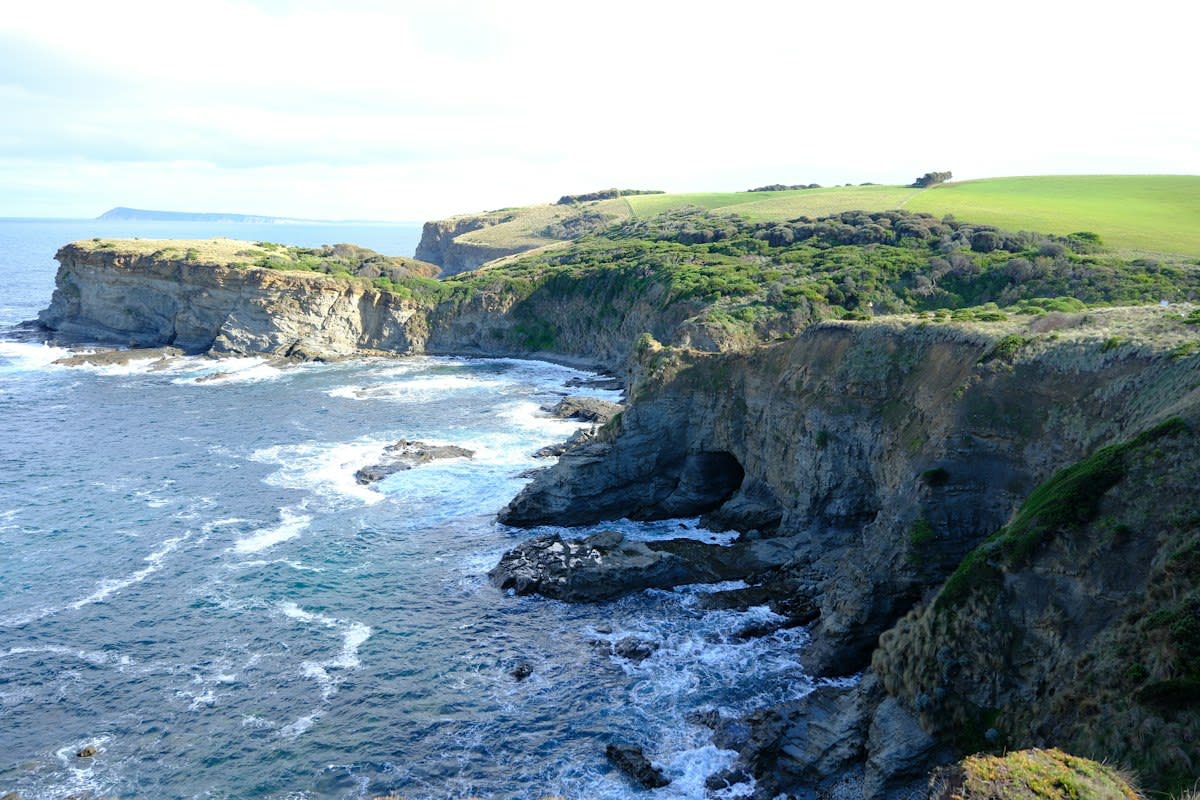
Why does this matter now? Because we are seeing a fundamental overhaul in how acoustic ecologists map environmental change. Instead of relying solely on digital sensors, practitioners are building large-scale sonic installations that translate wind velocity into pitch. A shift in the average frequency of a coastal wind-organ can signal a change in prevailing wind patterns more viscerally than a spreadsheet of data. It turns the environment into a real-time monitor, where the music changes as the climate shifts.
"The wind does not play the instrument; the instrument defines the wind. We are simply providing the geometry that allows the air to speak its own language."— Dr. Elena Rossi, Acoustic Physicist at the European Sound Institute
Consider the singing sands of the Namib Desert or the dunes of the Gobi. These are not man-made instruments, yet they produce low-frequency hums that can be heard for miles. This happens through a process called grain-friction, where the size and silica content of the sand create a specific acoustic resonance as the wind pushes the dunes (Source: Nature Geoscience, 2012). The coast is essentially a giant, unplayed organ, and the physics of the shore—the salt-spray, the rock density, the slope of the beach—determine the key in which that organ plays.
Then there is the matter of scale. Most modern art installations are too small to capture the true power of coastal physics. To truly sculpt the wind, one must work with the geography. This means placing apertures in cliff faces or stretching high-tension wires across narrow coastal gaps to create a natural Venturi effect, which accelerates the wind and pushes the pitch into higher registers.
The Insider's Friction: Tuning the Untunable
If you spend enough time on a coastal build, you realize that the textbooks lie about the ease of tuning. In the studio, a frequency is a number. On a cliffside in Scotland or a beach in Japan, a frequency is a fight. The real friction isn't in the math; it's in the salt. Salt crust builds up on strings and within pipes, changing their mass and dragging the pitch flat within weeks. Practitioners spend more time scrubbing oxidation off their alloys than they do composing. There is a constant internal debate among sound artists about whether to use synthetic polymers for endurance or traditional metals for tonal purity. Most of us settle for a compromise that leaves the instrument sounding slightly dissonant during the humid months.
Beyond the physical decay, there is the unpredictable nature of wind shear. You might tune an installation for a steady 15-knot breeze, only to have a sudden gust tear the tension right out of the frame. The trick is not to fight the wind, but to build a structure that can breathe. This means using floating bridges for the strings or variable-diameter pipes that can handle a range of velocities without snapping. It is a game of structural endurance versus acoustic precision.
| Wind Velocity (m/s) | Typical Frequency (Hz) | Acoustic Character | Physical Trigger |
|---|---|---|---|
| 2-5 | 40-150 | Ethereal Hum | Laminar Flow |
| 6-12 | 150-400 | Melodic Whistle | Stable Vortex Shedding |
| 13-25 | 400-1200 | Piercing Wail | Turbulent Shear |
| 26+ | Variable/Noise | White Noise | Chaotic Flow |
This data shows a clear correlation: as velocity increases, the sound moves from a predictable hum to a chaotic roar. The goal of the sculptor is to extend the 'Melodic Whistle' range. By altering the diameter of the intake pipes or the tension of the wires, we can shift the frequency response, effectively slowing down the perceived speed of the wind through sound. It is a way of translating the violence of a storm into a structured composition.
Global Applications and Environmental Mapping
Across the globe, this approach is taking different forms. In the Nordic regions, artists are experimenting with 'wind-chiming' forests, where the trees are augmented with metallic reeds that vibrate during autumn gales. In Southeast Asia, coastal villages have long used bamboo wind-pipes to warn of incoming storms, a primitive but effective use of Aeolian physics. These are not mere curiosities; they are tools for survival and observation.
The real opportunity lies in the integration of these instruments into urban coastal planning. Imagine a sea wall that doesn't just block water but converts the wind of a hurricane into a low-frequency drone that can be monitored by city officials to gauge storm intensity. Instead of a silent concrete slab, the sea wall becomes a living sensor. This turns a defensive structure into a communicative one, using the laws of physics to provide an early warning system that is audible to the human ear.
Is it possible that we have over-relied on digital monitoring? The precision of a sensor is undeniable, but the emotional impact of a wind-organ is visceral. When a community hears the pitch of their coast change over a decade, the data becomes a felt experience. It moves the conversation from abstract percentages of sea-level rise to the tangible sound of a changing world.
Fact-Check & Accuracy Note
The claims regarding Von Kármán vortex shedding and grain-friction in singing sands are sourced from the Journal of Fluid Mechanics (1959) and Nature Geoscience (2012). The application of these principles to urban sea walls remains a theoretical proposal currently debated within the field of acoustic ecology and is not yet a global standard.
Ultimately, sculpting wind into music is an exercise in humility. It requires the creator to stop trying to control the medium and instead start listening to what the medium wants to be. The wind is the composer; the coastal physicist is merely the one who builds the stage. By reclaiming these ancient principles, we find a way to exist with the elements that is not based on resistance, but on harmony.