Israel elections 'stolen by Arab parties that support terrorism': Netanyahu
Source Entity
KANCHAN YADAV
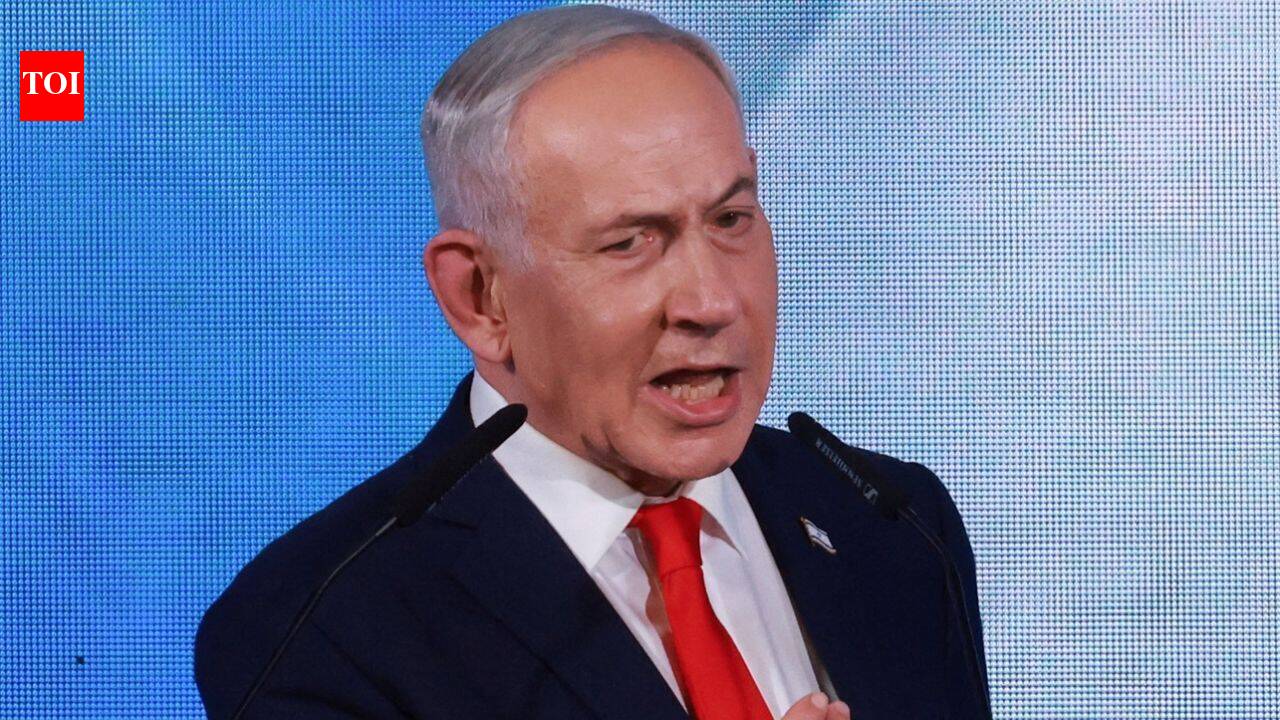
Israel faces a pivotal election on October 27, pitting incumbent Benjamin Netanyahu against former army chief Gadi Eisenkot. The contest reflects deep national divisions following the security failures of the October 7 Hamas attack.
The Defining Election: Netanyahu vs. Eisenkot
Israel stands at a critical political juncture as the nation prepares for elections on October 27. This vote represents perhaps the most significant test of Prime Minister Benjamin Netanyahu’s career, as the long-standing leader attempts to navigate a landscape fundamentally altered by the October 7, 2023, Hamas attack. For years, Netanyahu has successfully cultivated the image of "Mr. Security," but that narrative has faced unprecedented scrutiny following the security failures associated with the onset of the current conflict.
The Erosion of the 'Mr. Security' Brand
Netanyahu’s political longevity has been largely predicated on his ability to convince the electorate that he is the only leader capable of safeguarding the state. However, the events of October 7 shattered this perception, leading to widespread public questioning regarding the government's accountability. The subsequent regional instability, including confrontations with Hezbollah and ongoing military engagements, has forced Netanyahu to rely on his traditional political playbook, yet the efficacy of this strategy is being tested in a way it has not been in decades.
The Rise of Gadi Eisenkot
Emerging as the primary challenger is Gadi Eisenkot, the 66-year-old former chief of staff of the Israeli army. Eisenkot’s ascent from polling in the single digits just a year ago to commanding significant support for his Yashar party represents a seismic shift in Israeli political sentiment. With recent polls projecting the Yashar party to secure 20 to 23 seats in the 120-member Knesset—potentially outperforming Netanyahu’s Likud—Eisenkot has positioned himself as a formidable alternative rooted in military experience and systemic reform.
Breaking Barriers and Political Realignment
Beyond the tactical rivalry, Eisenkot’s candidacy carries historical weight as the son of Moroccan immigrants. Should he succeed, he would become Israel’s first Mizrahi prime minister, a milestone that could reshape the country's social and political demographics. His background as a career soldier, serving as chief of staff under Netanyahu from 2015 to 2019, provides him with a unique internal perspective on the government's previous security policies, which he is now leveraging to appeal to voters weary of the status quo.
The Mathematical Reality of the Knesset
Despite the polling momentum, the path to governance remains fraught with complexity. The Israeli parliamentary system requires a coalition of at least 61 seats to form a majority, and current polling data indicates that neither the Netanyahu-led bloc nor the opposition bloc led by figures like Eisenkot is currently on track to achieve this threshold. This suggests that even after the results are tallied on October 27, the nation may face a period of intense coalition negotiations and potential political gridlock.
Future Implications for Israeli Policy
The outcome of this election will serve as a referendum not only on Netanyahu's leadership but on the future direction of Israel’s security and social policies. As the country balances the trauma of the October 7 attacks with the necessity of navigating a volatile regional environment, the electorate is tasked with choosing between a familiar, albeit challenged, leadership style and a new, military-tested alternative. The results will ultimately dictate how Israel addresses its internal divisions and its ongoing regional security challenges in the years to come.
Multiple Citing Sources