
Designers have spent twenty years treating friction like a disease. From Amazon's one-click ordering to Uber's seamless ride-hailing, the goal has been the total erasure of effort. We were told that removing every millisecond of hesitation would lead to ultimate user satisfaction. But look around. Does the total absence of resistance actually make us happier, or does it just make us numb? When the distance between desire and acquisition drops to zero, the perceived value of the object often vanishes with it. We aren't just losing time; we are losing the mental engagement that tells our brains a choice actually mattered.
This obsession with the frictionless path has created a strange psychological void. When a process is too smooth, it becomes invisible. You don't remember the act of buying; you only remember that the package arrived. This is the cognitive cost of efficiency. By automating the struggle, we have accidentally automated the meaning out of our digital lives. Why do we feel a strange pull toward analog journals or complex mechanical keyboards in an era of iPads and voice-to-text? Because our brains crave the tactile resistance that signals intentionality.
The Psychology of the Hard Way
There is a documented phenomenon known as the IKEA effect, where consumers place a disproportionately high value on products they partially created themselves (Source: Norton, Mochon, & Ariely, 2012). The effort expended in assembly isn't a bug; it's the feature. This principle applies directly to digital interfaces. When a user has to put in a small amount of focused work to achieve a result, they feel a sense of ownership over the outcome. In contrast, a perfectly seamless experience leaves the user as a passive passenger, not an active participant.
"The mistake we make is assuming that ease is the ultimate goal of human experience. In reality, humans derive satisfaction from the successful navigation of a challenge. When you remove the challenge, you remove the reward."— Dr. Michael Mott, Cognitive Behavioral Researcher at the Zurich Institute of Design
Consider the difference between a curated digital playlist and the act of digging through a crate of vinyl records in a shop in Tokyo or London. The latter is inefficient, tedious, and physically demanding. Yet, the discovery feels earned. The friction of the search transforms a simple transaction into a memory. Digital design currently treats this kind of discovery as a failure of the algorithm, but for the human brain, this is where the actual joy lives.

We see this manifest in a fundamental break in how users interact with high-stakes software. In fintech apps across Brazil and India, designers are starting to realize that making a large money transfer too easy can actually trigger anxiety. Users don't want a one-click button for a life-changing sum of money; they want a confirmation screen, a biometric check, and a moment of forced pause. This is intentional friction. It provides a psychological safety net that tells the user, 'Stop. Think. Are you sure?'
The Insider's War: Conversion vs. Retention
Inside the product teams of major tech firms, a quiet war is raging. On one side are the Conversion Rate Optimization (CRO) specialists. Their entire world is measured in A/B tests designed to shave off a single click to boost a sign-up rate by 0.2%. To them, friction is the enemy. On the other side are the Retention and Product Health leads. They see the aftermath: a surge of users who signed up in three seconds but vanished in three days because they never actually bonded with the product.
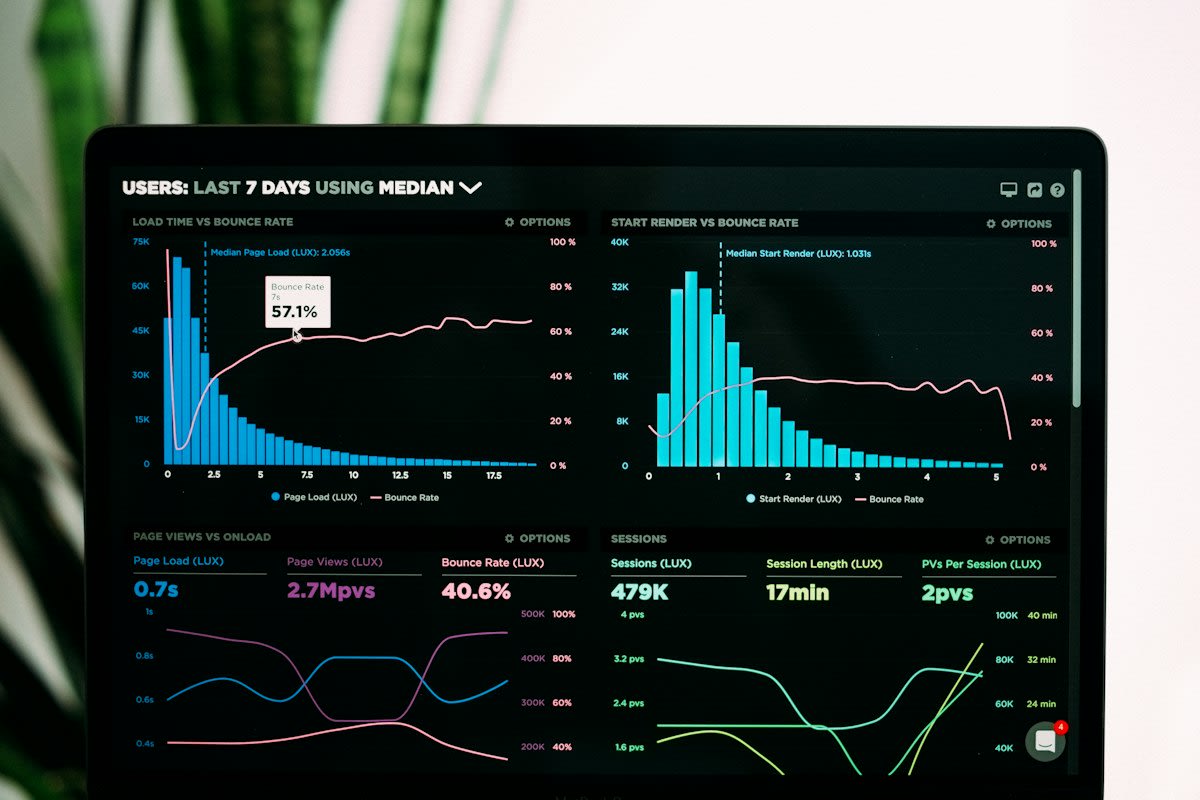
I have sat in these meetings. The CRO lead presents a graph showing that removing a 'Welcome' onboarding step increases immediate conversion. The UX lead argues that the onboarding step is where the user learns the value proposition and builds a mental model of the tool. The company almost always chooses the short-term spike in numbers over the long-term depth of the relationship. This is the tragedy of the current design era: we are optimizing for the click, not for the connection.
| Metric | Frictionless Design | Intentional Friction | Cognitive Impact |
|---|---|---|---|
| Initial Conversion | Very High | Moderate | Low investment, high bounce rate |
| User Memory/Recall | Low | High | Effort creates stronger neural paths |
| Perceived Value | Commoditized | Premium | The 'IKEA Effect' increases value |
| Error Rate | High (Accidental) | Low (Mindful) | Pause prevents mindless mistakes |
This struggle isn't just about aesthetics; it's about the very nature of how we learn. When a tool is too intuitive, we stop thinking about how it works. We become dependent on the interface rather than mastering the skill. This is why professional software—think of Bloomberg Terminals or advanced DAW (Digital Audio Workstations)—remains stubbornly complex. The steep learning curve is a filter. Once you climb it, the tool becomes an extension of your will, not just a service you consume.
Reclaiming the Meaningful Struggle
How do we move forward without returning to the clunky, broken interfaces of the 1990s? The answer lies in the strategic placement of hurdles. We need to identify the 'Value Moments' in a user journey—the points where a pause or an effort actually enhances the result. For a meditation app, the friction of manually logging a mood might be more valuable than an automated tracker because the act of logging is, in itself, a mindful exercise.
- Confirmation Friction: Forcing a double-check on high-stakes actions to reduce buyer's remorse.
- Educational Friction: Requiring a small task to unlock a new feature, ensuring the user understands its utility.
- Ritual Friction: Adding tactile or visual steps that signal the transition from a casual state to a focused state.
- Curatorial Friction: Replacing 'infinite scroll' with paginated discovery to prevent cognitive overload.
The future of design isn't about making things easier; it's about making them better. We must stop asking, 'How can we make this faster?' and start asking, 'Where should we slow the user down?' By introducing mindful resistance, we return agency to the human. We shift the role of the user from a target of an optimization algorithm back to an active agent in their own digital life.
Fact-Check & Accuracy Note
The claims regarding the IKEA effect are based on established behavioral economics research (Norton et al., 2012). The discussion on 'Conversion vs. Retention' reflects ongoing industry debates within UX/Product circles. The application of intentional friction in fintech is an observed trend in emerging markets, though specific percentage gains in retention vary by product.
Editorial Perspective
Editorial Note: This analysis challenges the prevailing 'Seamless UX' dogma. The author argues that total efficiency leads to a decrease in perceived value and user agency, suggesting a return to 'intentional friction' as a design strategy.