'Election Commission Can't Modify Forms 6, 7 And 8': Supreme Court During Delhi SIR Hearing
Source Entity
NDTV News Search Records Found 1000
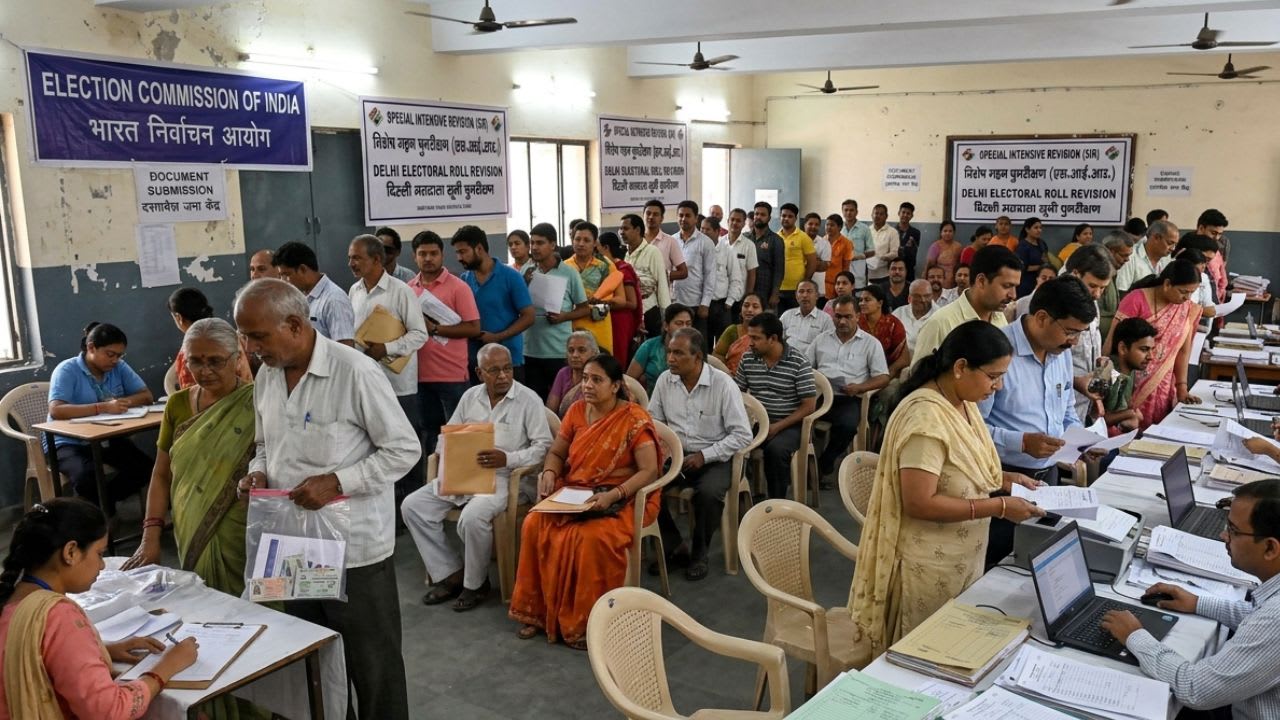
The Supreme Court has directed the Election Commission of India to extend deadlines and simplify enrollment for Delhi's Special Intensive Revision (SIR). The court emphasized that while it is reviewing the process, it has not yet ruled on the constitutionality of 'logical discrepancy' as a ground for voter deletion.
Supreme Court Intervenes in Delhi Electoral Roll Revision
The Supreme Court of India, led by Chief Justice Surya Kant and Justices Joymalya Bagchi and V. Mohana, has taken a proactive stance regarding the Special Intensive Revision (SIR) of electoral rolls in Delhi. The court’s intervention underscores the critical balance between maintaining accurate voter registries and ensuring that legitimate citizens are not disenfranchised through administrative hurdles.
The Controversy of 'Logical Discrepancy'
At the heart of the legal challenge is the concept of 'logical discrepancy,' a criterion used by the Election Commission of India (ECI) to identify and potentially remove voters from electoral rolls. The Supreme Court clarified that it has not yet adjudicated on the constitutionality of this practice. While the court previously handled a similar case involving the Bihar SIR, it explicitly stated that it did not judicially review the validity of this specific discrepancy mechanism in that instance, nor did it set a binding precedent for the current Delhi proceedings.
Administrative Hurdles and Form 6
One of the primary concerns raised by the bench involves the requirement for individuals already present on electoral rolls to re-enroll using Form 6. The court questioned the necessity and logic behind this administrative burden, which risks removing existing voters if they fail to comply with complex re-enrollment requirements. The court highlighted that Form 6, alongside Forms 7 and 8, appears to be 'cast in stone,' limiting the ECI’s flexibility in modifying these documents to better suit the needs of the electorate.
Demands for Simplification and Extension
In response to the difficulties faced by voters, the Supreme Court has directed the ECI to extend the deadlines for the SIR process in the capital. The original deadline for submitting enumeration forms had passed on August 17, leaving many potential voters in a state of limbo. The court’s directive aims to allow those who were deleted from draft rolls—but were unable to complete the required paperwork—a renewed opportunity to submit their documentation and restore their voting rights.
Broader Implications for Electoral Integrity
This case highlights the ongoing tension between maintaining high-quality, 'clean' electoral rolls and the fundamental right to vote. The court’s cautious approach—allowing 'logical discrepancy' as an interim measure in cases like West Bengal while reserving judgment on its constitutional validity—reflects a desire to avoid disrupting electoral administration while still holding the ECI accountable for procedural fairness.
Future Trends in Election Management
Looking forward, this hearing signals that the judiciary will continue to scrutinize the ECI’s technical processes. As the ECI moves toward more digitized and data-driven methods of voter verification, the Supreme Court is positioning itself as a safeguard against algorithmic or administrative errors that could disproportionately affect marginalized voters. The outcome of the Delhi SIR case will likely establish a clearer framework for how the ECI handles voter list maintenance in future national and state-level exercises.
Verification Required?