
The financial world just hit a tipping point. On July 31, 2026, the Bank for International Settlements (BIS) revealed that Project Agorá successfully settled $1 million in tokenized cross-border payment trials. This wasn't a theoretical exercise in a controlled lab. These were real-value transactions involving Swiss francs, euros, pounds sterling, Japanese yen, South Korean won, and US dollars. The most staggering detail? The average settlement time clocked in at roughly 80 seconds. For decades, the global movement of money has been a sluggish relay race of correspondent banks and manual checks. Now, the relay is over; the money is simply there.
Why does an 80-second window matter? Because it eliminates the gap. In the traditional system, the time between initiating a payment and its final settlement is a void filled with counterparty risk and liquidity traps. When money is in transit, it is effectively dead—unusable by the sender and unavailable to the receiver. By utilizing tokenized commercial bank deposits and central bank reserves, Project Agorá has proven that atomic settlement is no longer a fintech dream but a functional reality for wholesale payments.
Moving Beyond the Sandbox
The shift we are seeing this month is a fundamental transition from 'sandboxed' prototypes to live-value testing. Lloyds Bank recently completed its own live tokenized payments under the BIS-convened Project Agorá initiative. This marks a critical delta in the timeline of financial evolution. Twelve months ago, the conversation focused on whether tokenization could work in a simulated environment. Today, the conversation has shifted to how quickly these rails can be scaled across the global banking fleet.
"The live multi-currency transactions mark a shift from sandboxed prototypes to real-value testing under the BIS-convened Project Agorá initiative."— Peter Left, Head of Digital and Markets Innovation at Lloyds
This transition is not happening in a vacuum. It is the result of a deliberate alignment of technology and policy. While the tokenization provides the speed, the underlying messaging standard provides the language. Without a common tongue, these high-speed rails would simply crash into the walls of legacy systems. That is where the strategic implementation of ISO 20022 enters the frame.

The Rosetta Stone of Finance: ISO 20022
If tokenization is the engine, ISO 20022 is the fuel. In November 2025, this standard became the sole globally recognized format for financial messaging after a multi-year migration of the SWIFT network. This was the prerequisite for everything happening now. By requiring detailed data with every transaction—including remittance info, purpose of payment, and tax deductions—ISO 20022 turns a simple transfer of value into a rich data packet.
| Message Type | Primary Function | Strategic Impact |
|---|---|---|
| pacs.008 | Customer Credit Transfer | Standardizes how retail payments move across borders |
| pacs.009 | Financial Institution Credit Transfer | Optimizes wholesale settlement between banks |
| camt.053 | Bank-to-Customer Statement | Provides real-time liquidity visibility for treasurers |
The brilliance of this approach lies in its lack of friction. A tokenized future that required banks to tear out their existing infrastructure would have faced insurmountable adoption barriers. Instead, the new rails layer directly onto ISO 20022. Banks can connect to tokenized settlement systems using the same formats they already use for traditional messaging. This removes the 'switching cost' that has historically protected inefficient, high-fee payment monopolies.
Does this mean the old system vanishes overnight? No. But it means the old system is now the slow lane. Modern ERP systems are already processing this rich data to reconcile payments and close invoices automatically, bypassing the need for manual human intervention. When the data moves as fast as the money, the 'cost' of a transaction drops toward zero.
Atomic Settlement and the Death of the Middleman
The Core Concept
Atomic settlement is a mechanism where the transfer of an asset is contingent upon the simultaneous transfer of the payment. It is an 'all-or-nothing' transaction: either both sides happen instantly, or neither happens. There is no 'pending' state.
In Project Agorá's implementation, once compliance checks are complete, a payment instruction is submitted. For dual-currency transactions, a cross-currency provider confirms the amount, triggering a locking of funds on a shared ledger. This process is what allows the 80-second window. By removing the need for a chain of intermediary banks to each verify and hold funds, the system eliminates the fees associated with those middlemen.
This is a massive win for B2B liquidity. Treasurers no longer have to guess their cash positions across five different time zones. They get a real-time view of liquidity through APIs, allowing them to optimize capital instead of leaving it idle in nostro/vostro accounts. This is the 'invisible plumbing' at work—the infrastructure is changing, but the result is simply a world where money moves as fast as an email.
But scaling this globally is a Herculean task. Creating bespoke links between every country's domestic real-time payment (RTP) scheme would be a logistical nightmare. This is why the BIS is developing Project Nexus.
Project Nexus: The Multilateral Gateway
Project Nexus aims to serve as a multilateral hub that connects various domestic RTP schemes. Instead of a web of a thousand different connections, a domestic scheme simply connects to the Nexus hub. Because every participant uses ISO 20022, interoperability is guaranteed. It is the difference between having to buy a different charger for every electronic device you own and having a single, universal USB-C standard.
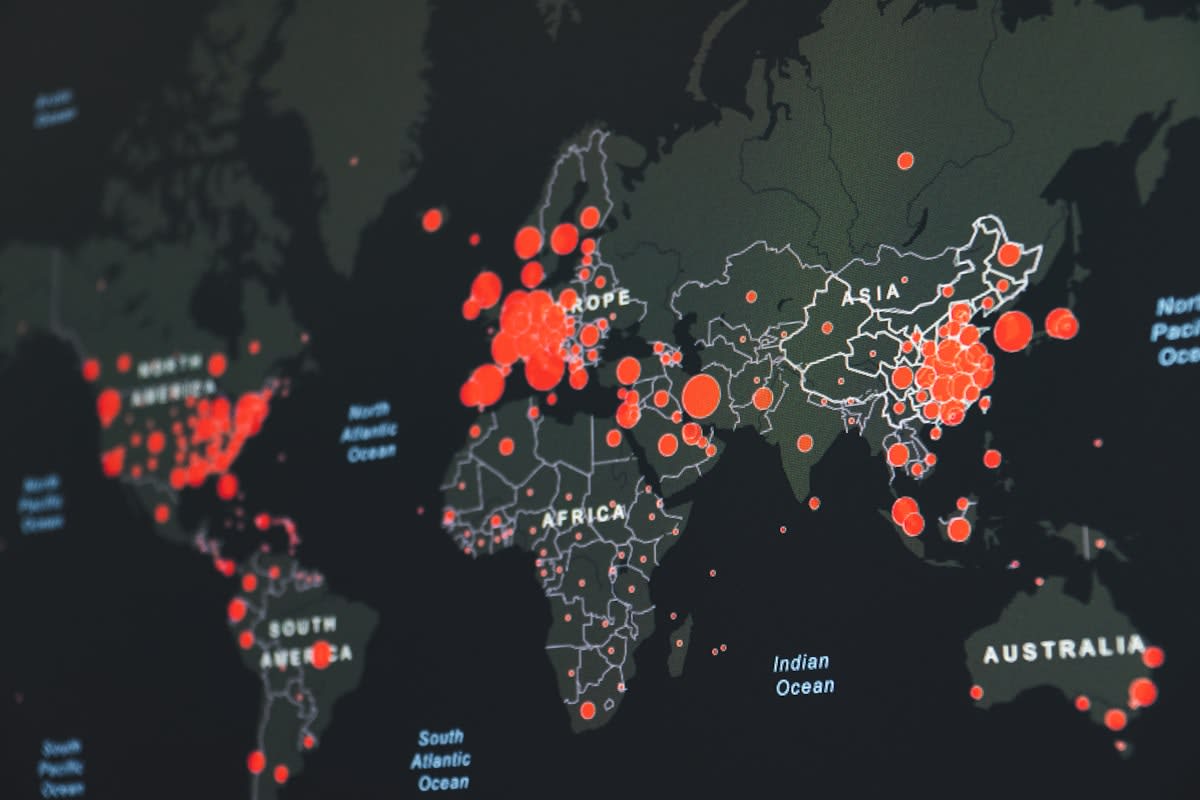
We are seeing this philosophy of frictionless movement extend beyond just the technical rails. Look at the Canada-Ukraine Free Trade Agreement (CUFTA). Amendments enacted on July 1, 2024, and further expanded by January 1, 2025, have pushed more than 99% of mutual import tariff lines to be duty-free, including financial services. When you combine trade liberalization with payment liberalization, the barriers to global commerce don't just lower—they evaporate.
In the United States, the shift is manifesting through APIs. Banks are increasingly exposing their real-time payment capabilities to the open market, allowing corporate clients to trigger payments directly from their own software. The goal is a seamless loop: an invoice is generated, an API triggers a tokenized payment via an ISO 20022 rail, and the funds settle in 80 seconds. The human is no longer in the loop; they are just the supervisor.
The era of the high-fee international transfer was built on inefficiency and information asymmetry. Banks charged for the 'risk' of the gap and the 'effort' of the manual reconciliation. When the gap is closed by atomic settlement and the effort is eliminated by ISO 20022, the justification for those fees vanishes. The plumbing is now invisible, but the flow is unprecedented.