RAF pilots who ejected moments before crash expected to make full recovery
Source Entity
BBC News
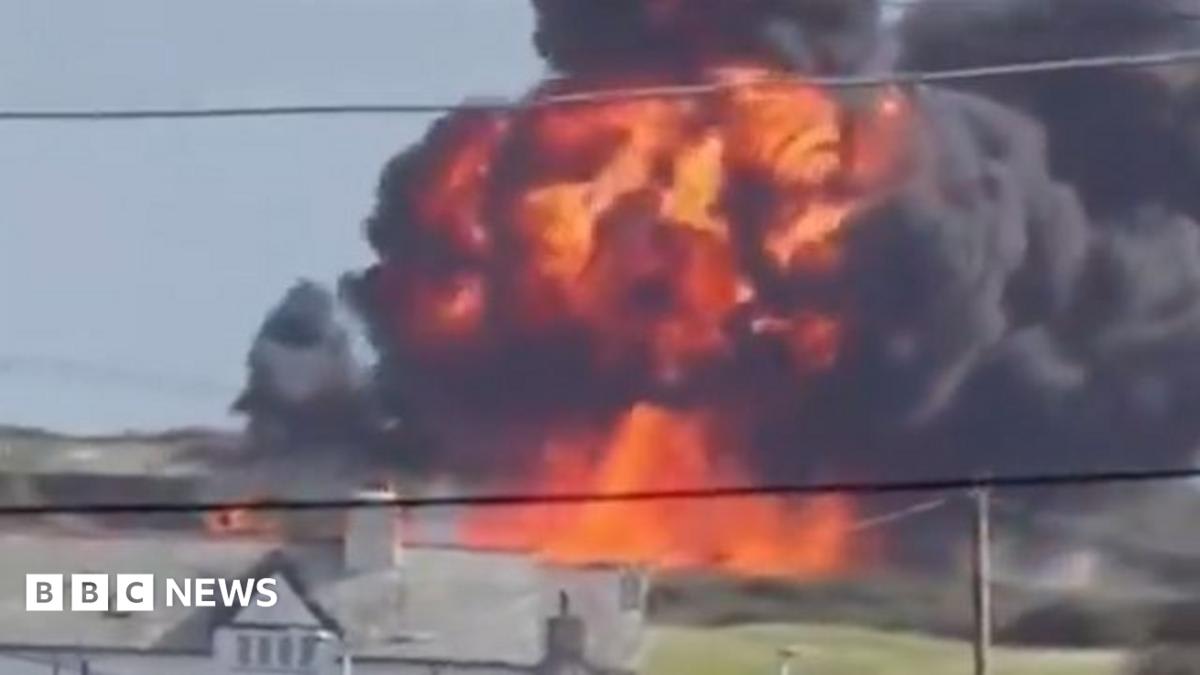
Two RAF pilots safely ejected before their Hawk T2 training jet crashed near RAF Valley in Wales. The RAF has temporarily paused all Hawk operations, including those of the Red Arrows, while an investigation into the technical failure is conducted.
Analysis of the RAF Hawk T2 Incident near RAF Valley
The Incident Overview
On Wednesday, a Royal Air Force (RAF) Hawk T2 training aircraft experienced a significant technical failure shortly after takeoff from RAF Valley in Anglesey, north Wales. The aircraft, which serves as a primary platform for advanced jet training, suffered an inflight emergency that forced the two pilots to eject. The plane subsequently plummeted into the Pencarnisiog area, narrowly missing residential properties before bursting into flames upon impact. Both pilots were recovered and are reported to be in good condition, expected to make a full recovery from their minor injuries.
The Ejection System: A Critical Lifesaver
Video evidence captured by onlookers provides a stark perspective on the severity of the crash. The footage shows the aircraft nosediving toward the ground while the two pilots successfully utilize their ejection seats. Security experts have described the successful ejection as "quite remarkable," highlighting the engineering sophistication of the Hawk T2’s emergency systems. The T2 platform is equipped with ejection mechanisms that allow for individual deployment, a feature that proved vital in this instance as the crew faced a rapidly deteriorating flight profile.
Immediate Operational Response
The RAF’s response has been swift and precautionary. By declaring a temporary pause on all Hawk T2 operations, the military is prioritizing safety over training continuity. This pause is broad in scope, extending even to the iconic Red Arrows aerobatics display team, which utilizes the Hawk T1 variant. Such a move is standard procedure in aviation safety, ensuring that if a systemic technical fault is identified, no other aircraft are at risk while the investigation proceeds.
Investigating the Cause
While the RAF has officially stated that an investigation is underway without providing specific details on the cause, the timing of the incident—shortly after takeoff—suggests a critical failure in the engine or flight control systems. The proximity of the crash site to residential zones in Pencarnisiog underscores the inherent risks of flight training and the immense pressure placed on pilots to steer malfunctioning aircraft away from populated areas during the critical moments before ejection.
Broader Implications and Future Trends
This incident highlights the ongoing challenges of maintaining older airframes and the rigorous demands placed on training aircraft. As the RAF analyzes the flight data recorder and wreckage, the findings will likely influence future maintenance schedules and possibly the retirement or upgrade timelines for the Hawk fleet. The fact that the pilots survived with only minor injuries serves as a testament to the effectiveness of the Hawk's safety systems, yet the loss of the airframe remains a significant setback for the RAF's training pipeline.
Conclusion
The successful survival of both pilots is the most positive outcome of this dangerous event. As the investigation continues, the aviation community will be watching closely to see if the technical issues found in the T2 fleet necessitate a wider grounding or structural overhaul. For now, the temporary cessation of flights remains the most prudent path to ensuring the long-term safety of RAF personnel and the public living near base flight paths.