The recent memorandum of understanding between Argentina, Brazil, Chile, and Paraguay represents a rare moment of regional alignment. Peter Cerda, CEO of the Latin American and Caribbean Air Transport Association, rightly notes that while this agreement is a welcome step toward a more integrated aviation ecosystem, the real test lies in implementation. This hesitation is not misplaced. For decades, Latin American markets have mistaken regulatory paperwork for actual integration. A signed document can suggest a single market, but it cannot eliminate the deep-seated friction of capital movement, asset verification, and cross-border ownership that continues to stifle the region.
Why does a treaty fail where a protocol succeeds? Because traditional integration relies on the goodwill of bureaucracies. In contrast, the tokenization of Real-World Assets (RWA) moves the trust mechanism from the political layer to the cryptographic layer. When we look at the struggles of the Guatemalan book market, as highlighted by Marifé Boix Garcia of the Frankfurter Buchmesse, the problem is not a lack of demand but a failure of distribution. The 'familiar challenges' she describes are essentially a liquidity and logistics problem. If intellectual property and distribution rights were tokenized, the metadata—which Garcia identifies as a critical tool for business intelligence—would become the actual vehicle for value transfer, bypassing the physical bottlenecks of antiquated supply chains.

Brazil offers the most potent case study for this transition. The Topcon report on precision agriculture adoption reveals a tension between immense productive capacity and the barriers to technological scaling. V. Mondo of the Brazilian Agricultural Research Corporation (Embrapa) argues that technologies reducing complexity and improving interoperability are central to expanding adoption. Currently, a farmer in Mato Grosso might have the land and the will, but the capital required for high-end precision tech is often locked behind rigid banking structures. Tokenizing the output or the equipment itself transforms a massive capital expenditure into a fractionalized, liquid asset.
"Technologies that reduce complexity, improve interoperability, demonstrate clear return on investment, and support decision-making at the farm level are likely to play a central role in expanding adoption across different production systems."— V. Mondo, Embrapa
This is where the conversation shifts from mere 'digitization' to systemic scaling. If Brazilian precision agriculture is tokenized, the asset is no longer just a tractor or a plot of land; it is a yield-bearing digital instrument accessible to a global pool of investors. This eliminates the reliance on local credit markets which are often volatile or prohibitively expensive. It creates a direct pipeline from global capital to the soil, removing the middleman tax that has historically hampered the region's agricultural evolution.
The Core Thesis
The friction in Latin American markets isn't just about bad laws; it is about the lack of a common, trustless layer for asset ownership. Tokenization provides that layer.
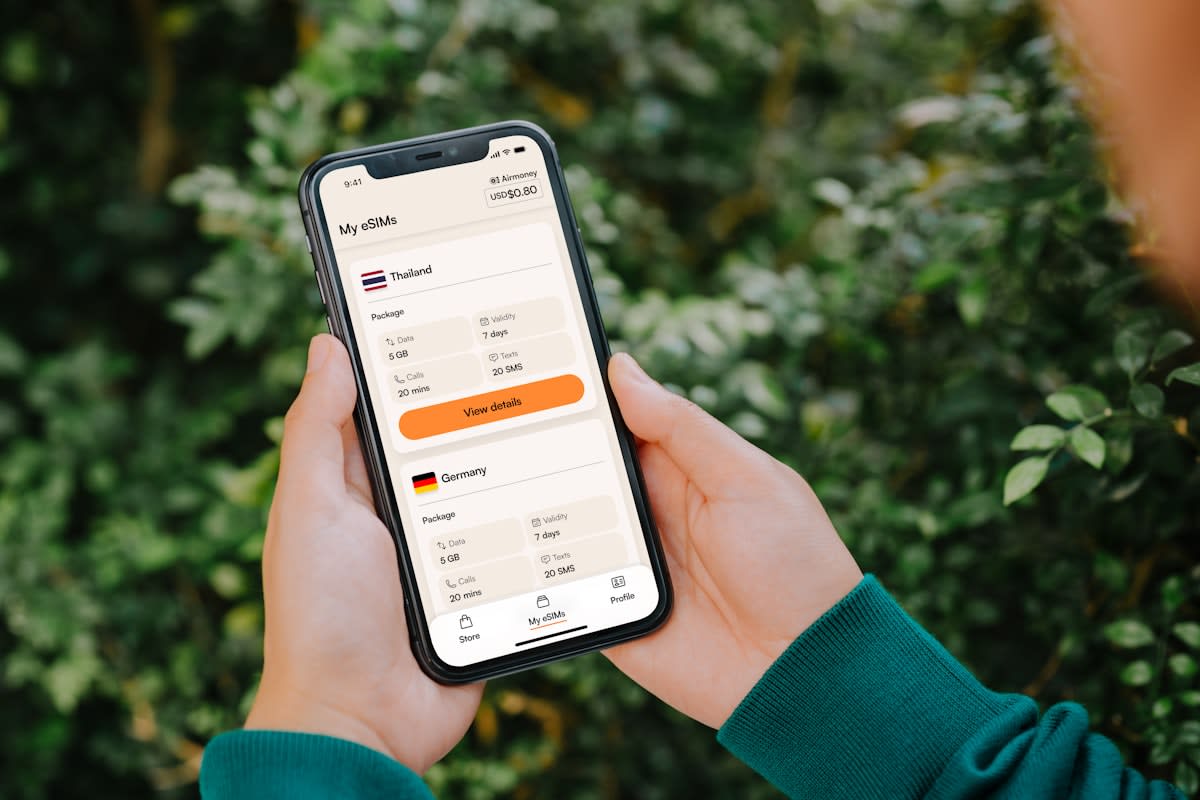
The infrastructure for this transition is already appearing. The emergence of platforms like Thanos Wallet, which emphasizes self-custody and multi-chain access, provides the necessary plumbing. For RWA tokenization to work, users must own their assets without relying on a single centralized entity that could be subject to local political instability. The ability to manage assets across multiple blockchain ecosystems ensures that a tokenized share of a Brazilian farm or a Chilean aviation route remains liquid and secure, regardless of the jurisdiction of the holder.
Is it possible to scale these markets without this shift? The evidence suggests not. The outbound travel surge mentioned by Danielle Roman indicates a growing, connected, and affluent middle and upper class in Latin America. These individuals are increasingly global in their habits and their wealth. However, their assets remain largely local and illiquid. As this demographic grows, the demand for assets that are as portable as their travel habits will intensify. A wealthy traveler from São Paulo should be able to leverage their tokenized real estate holdings to secure liquidity in the Caribbean or Europe instantly.
| Asset Class | Traditional Scaling Barrier | Tokenized Scaling Solution | Expected Outcome |
|---|---|---|---|
| Aviation/Infrastructure | Bilateral MOUs and Regulatory Friction | Fractionalized Route/Slot Ownership | Increased Financial Viability |
| Precision Ag-Tech | High CapEx and Local Credit Gaps | Yield-Bearing Asset Tokens | Rapid Tech Adoption |
| Cultural IP/Books | Fragmented Physical Distribution | Metadata-Linked Smart Contracts | Globalized Revenue Streams |
| Private Wealth | Jurisdictional Lock-in | Multi-chain Self-Custody | Global Asset Portability |
The psychological catalyst for this shift is already in place. The regional pride and visibility brought by events like the 2026 World Cup final, where Argentina faces Spain, serve as more than just sporting milestones. They are signals of the region's capacity to compete on a global stage. But sporting victory is a narrative; economic victory requires a structural overhaul. The same passion and connectivity driving the region's cultural exports must be applied to its financial architecture.
We must ask: why continue to rely on the slow machinery of diplomatic treaties when we can implement programmatic trust? The aviation MOU is a signal of intent, but tokenization is the execution. By converting the 'integrated aviation ecosystem' Peter Cerda envisions into a series of programmable assets, the region can bypass the 'implementation test' entirely. The protocol becomes the regulator.
Ultimately, the goal is the elimination of the regional discount. Latin American assets are often undervalued because of the perceived risk of ownership and the difficulty of exit. Tokenization solves the exit problem. When an asset is liquid, the risk premium drops. When the risk premium drops, the cost of capital falls. This creates a virtuous cycle where Brazilian farmers, Guatemalan authors, and regional airlines can finally scale based on their actual productivity rather than their geographic misfortune.
The transition will not be seamless, but the alternative is stagnation. The region can continue to sign MOUs and hope for the best, or it can build a digital layer that makes borders irrelevant for capital. The tools—from Embrapa's precision data to Thanos Wallet's custody—are already on the table. The only remaining question is whether the region's financial leadership has the courage to stop managing fragmentation and start deleting it.