Mallikarjun Kharge writes to PM Modi, seeks all-party meeting on delimitation
Source Entity
India Latest News: Top National Headlines Today & Breaking News | The Hindu
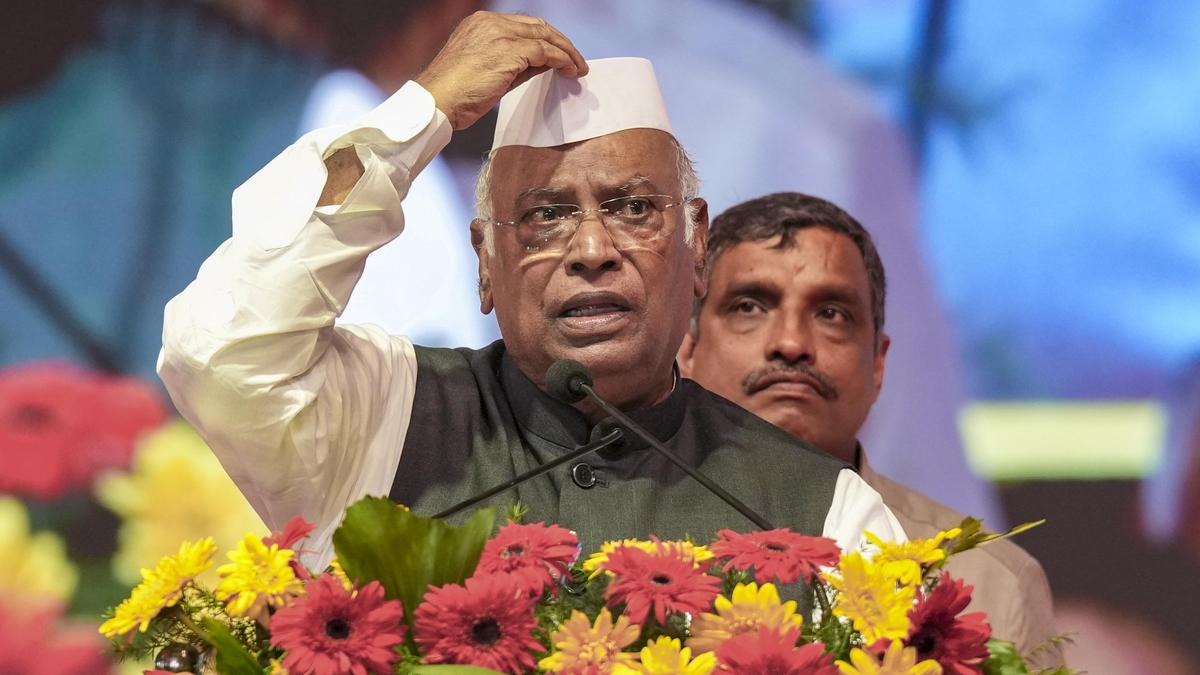
Congress President Mallikarjun Kharge has written to PM Narendra Modi requesting an all-party meeting on delimitation, seeking more time for the Opposition to study the proposals before they are introduced in Parliament.
Analysis of Mallikarjun Kharge's Request for All-Party Meeting on Delimitation
In a significant political move, Congress President Mallikarjun Kharge has formally written to Prime Minister Narendra Modi, urging the government to convene an all-party meeting regarding the sensitive issue of delimitation. Kharge's primary contention is that the Opposition requires adequate time to thoroughly study and analyze the proposals before they are formally introduced in Parliament. This request underscores the deep-seated concerns within the opposition camp regarding how the redrawing of electoral boundaries might reshape the democratic landscape of India.
The Mechanics and Stakes of Delimitation
Delimitation is the process of redrawing the boundaries of Lok Sabha and State Assembly seats to ensure that each seat represents a roughly equal population, adhering to the principle of "one person, one vote." However, this process is not merely a mathematical exercise; it is a high-stakes political event. Because seat allocation is tied to population figures, states with higher population growth stand to gain more parliamentary representation, while states that have successfully managed population growth may see their influence dwindle. Kharge's insistence on an all-party meeting suggests that the Opposition fears a lack of transparency or a potential bias in the proposed framework.
The North-South Political Divide
At the heart of the delimitation debate is a growing tension between Northern and Southern India. Southern states, such as Kerala, Tamil Nadu, and Karnataka, have made significant strides in population control and socio-economic development. Conversely, Northern states like Uttar Pradesh and Bihar have seen massive population surges. If delimitation is carried out strictly on a population basis, the South risks losing significant political leverage in the Lok Sabha, effectively penalizing states for their success in implementing national family planning goals. This creates a federal friction point that the Opposition is keen to address before any legislation is tabled.
Federalism and the Democratic Balance
The request for a consultative process reflects a broader struggle to maintain the balance of Indian federalism. The Opposition's demand for "adequate time to study" is a strategic move to ensure that the interests of smaller or more developed states are not sidelined. By seeking an all-party meeting, the Congress party is attempting to build a consensus-based approach, arguing that a change as fundamental as the distribution of political power should not be pushed through via a simple parliamentary majority without wide-ranging deliberation.
Historical Context and the 2026 Deadline
Historically, delimitation was frozen via the 84th Amendment to the Constitution, which stipulated that the number of seats in the Lok Sabha would remain fixed until the first census taken after the year 2026. As this deadline approaches, the anticipation and anxiety surrounding the process have intensified. The current political climate, characterized by a strong central government and a consolidated opposition bloc, makes the timing of Kharge's letter critical. It signals that the Opposition is preparing for a protracted battle over the rules of engagement for the upcoming redistribution of seats.
Future Trends and Potential Outcomes
Looking forward, the government's response to Kharge's request will be a litmus test for its willingness to engage in consultative governance on contentious issues. If the government agrees to an all-party meeting, it may mitigate some of the regional backlash from Southern states. However, if the proposals are introduced abruptly, it could lead to widespread political unrest and accusations of "majoritarianism" in seat allocation. The eventual resolution will likely require a complex compromise, perhaps involving an increase in the total number of seats in Parliament to avoid stripping any specific region of its current representation.
Summary
Mallikarjun Kharge's outreach to PM Modi is a calculated effort to prevent a unilateral decision on delimitation. By emphasizing the need for study and consultation, the Opposition is highlighting the potential for regional imbalance and the risk to federal harmony. The outcome of this request will significantly influence the political trajectory of India as it moves toward the post-2026 delimitation cycle.
Verification Required?