
The Industrial Inertia of the Big Dig
The global economy is currently trapped in a cycle of industrial inertia. We treat the earth as an infinite vending machine, believing that the solution to mineral scarcity is simply to dig deeper and spend more. Look at the Kingking project in Davao de Oro. The Villar group, through KMC, is pouring $5.13 billion (approximately P307.8 billion) into a copper-gold expansion. It is a massive bet on primary extraction, leveraging direct shipping access to Southeast Asian markets. But this project also serves as a cautionary tale about the fragility of the traditional mining model.
Why did a project of this magnitude stall? The answer lies in the collision between capital and regulation. A 2017 open-pit mining ban, combined with the operational paralysis of the 2020-2022 pandemic, effectively froze the project's economic viability for years. It took the lifting of the moratorium in December 2021 and a sustained spike in gold and copper prices to make the gamble attractive again. This is the inherent risk of primary mining: billions of dollars in capital are held hostage by local regulatory whims and global health crises.
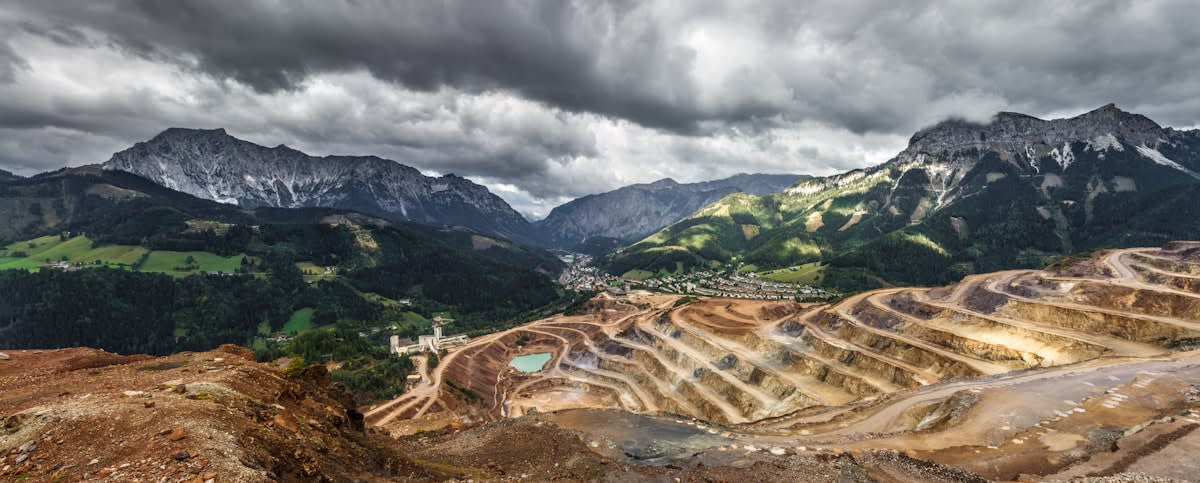
Can we actually afford to rely on this volatile cycle? The scale of the energy transition suggests we cannot. While gold remains a hedge, trading rangebound around $4,000 an ounce, the real strategic battle is not over precious metals but over the industrial minerals that power the future. The current obsession with finding the next 'big' deposit is a mirage that ignores the mountains of resources we have already extracted and discarded.
The Math of the Green Transition
The numbers driving the shift toward urban mining are staggering. According to World Bank estimates, lithium and graphite mining must expand by nearly 500% to support the infrastructure required for a low-carbon world. This is not a gradual increase; it is an industrial explosion. A single electric vehicle (EV) requires roughly six times the critical minerals of a conventional gasoline car. When you scale this across global fleets and add grid-scale battery storage in Europe, North America, and Asia, the pressure on primary ores becomes unsustainable.
Projected Critical Mineral Demand Increase (2024-2040)
Executive Insight
+18.4%
YTD Growth
The energy sector's demand for critical metals and graphite could rise by up to six times by 2040. If we rely solely on primary extraction, we are essentially betting that we can find, permit, and build mines faster than the climate collapses. It is a race against time where the odds are skewed. The geopolitical risk is equally acute; when production is concentrated in a few jurisdictions, supply chains become weapons of diplomacy rather than conduits of commerce.
The Material Paradox
The transition to clean energy is not a shift from 'fuel' to 'no fuel,' but a shift from 'fuel-intensive' to 'material-intensive' energy systems.
This realization is forcing a systemic pivot. The question is no longer 'Where can we dig?' but 'What have we already dug?'
Urban Mining: The Strategic Hedge
Enter urban mining. In regions like India, this is not just an environmental initiative; it is a strategic imperative. By harnessing 'urban ores'—discarded electronic devices, end-of-life vehicles, and construction debris—nations can reduce their vulnerability to global supply chain disruptions. India's dependence on imports for lithium, cobalt, nickel, copper, graphite, and rare earth elements (REEs) has created a strategic vacuum that urban mining is designed to fill.
"Urban mining offers an opportunity to respond to the pressing environmental and economic challenges by harnessing urban ores, transforming waste into wealth and operationalising a circular economy."— Strategic Analysis on India's Resource Security
The logic is simple: the highest concentration of rare earths is often not in the ground, but in the landfill. Why spend $5 billion on a single mine in Davao de Oro when millions of tons of e-waste are circulating in global cities? The transition to a circular economy allows countries to decouple their economic growth from the volatility of primary mineral markets.
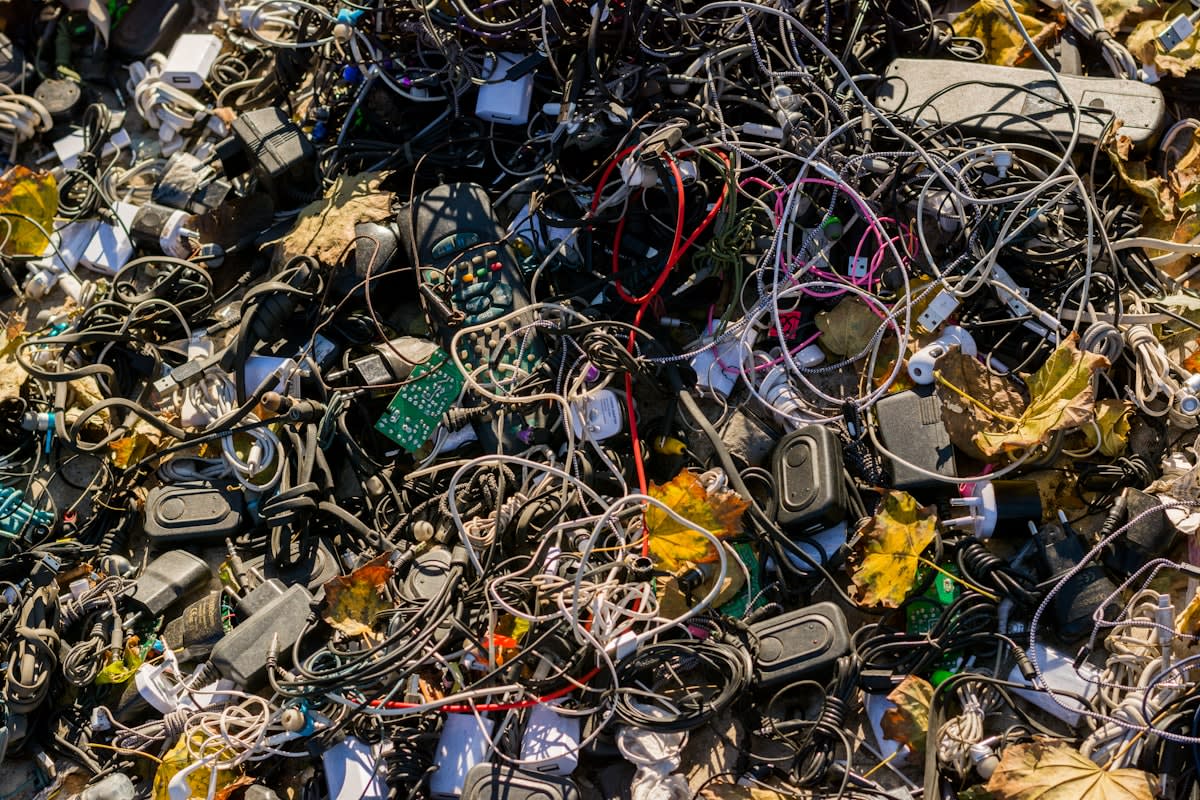
However, urban mining is not a magic bullet. The feasibility of recovery depends entirely on the material. Lithium, cobalt, and nickel are the 'low-hanging fruit' of the circular economy. These can be extracted from end-of-life battery materials through hydrometallurgical processes with reasonable efficiency. They are the most amenable to closed-loop recovery at a commercial scale.
The real challenge lies with graphite and rare earth elements. These materials present significant technical and economic hurdles that make recycling less attractive than primary mining in the short term. This creates a tiered recovery system where some minerals are 'circular' and others remain 'linear,' keeping us tethered to the traditional mining model for the most critical components of wind turbines and defense systems.
The Waste Paradox: Coal and Beyond
If urban mining is the future, why aren't we already there? The European experience with coal waste provides a stark example of the 'recovery barrier.' Researchers have found that European coal waste contains rare earth elements, but translating this discovery into commercial viability is a different story. Issues with deposit tonnage, spatial variability, and product purity have prevented these wastes from becoming primary substitutes.
The lesson here is that 'presence' does not equal 'profitability.' While coal waste can support resource diversification and aid in mine rehabilitation, it cannot yet replace the sheer volume of primary ores. This creates a dangerous gap: we know the minerals are there, but we lack the economic framework to extract them efficiently.
| Feature | Primary Mining (e.g., Kingking) | Urban Mining (Circular) |
|---|---|---|
| Capital Intensity | Extremely High ($5.13B+) | Moderate to High (Tech-dependent) |
| Regulatory Risk | High (Bans, Moratoriums) | Low to Moderate (Environmental laws) |
| Lead Time | Decades (Exploration to Production) | Short (Collection to Recovery) |
| Material Focus | Bulk Ore (Copper, Gold) | Specialized (Li, Co, Ni, REEs) |
| Strategic Value | Resource Expansion | Supply Chain Resilience |
The shift toward urban mining is not about abandoning the earth; it is about optimizing what we have already taken. The race for rare earths is moving away from the geologist's map and toward the materials scientist's lab. The nations that master the hydrometallurgical recovery of cobalt and nickel will hold the real leverage in the 2040 economy.
In the end, the 'Mineral Mirage' is the belief that we can solve a systemic resource crisis with the same linear logic that created it. The transition from the big dig to the urban harvest is not just an environmental choice—it is the only strategic move left on the board.