The Great De-Pixelation
Something fundamental is shifting in the way the world's most digitally fluent generation views wealth. For a decade, the narrative centered on the demolition of the physical—the cloud replacing the hard drive, streaming replacing the disc, and cryptocurrency replacing the gold bar. But the tide is turning. We are witnessing the rise of Tactile Capitalism, a behavioral pivot where Gen Z and Millennials are aggressively trading their virtual assets for objects they can actually touch, smell, and hold. This is not mere nostalgia; it is a strategic hedge against an increasingly ephemeral economy.
Look at the delta between 2022 and 2024. Two years ago, the financial zeitgeist was dominated by the speculative frenzy of NFTs and metaverse real estate, with millions pouring into JPEG ownership and virtual plots of land. Fast forward to today, and the momentum has migrated. The urgency has shifted from securing a digital wallet to securing a physical archive. The appetite for virtual scarcity has been replaced by a hunger for material scarcity. Why bet on a token that can be deleted by a server crash when you can own a first-edition print or a mechanical timepiece that functions without a battery?
"The digital world offered us infinite abundance, but in doing so, it stripped away the feeling of actual possession. Tactile capitalism is the reclamation of the object."— Marcus Thorne, Behavioral Economist
The Economics of Touch
This pivot is driven by a cold, calculated realization: digital assets often lack intrinsic utility. When the speculative bubble of the metaverse burst, it left behind a vacuum of value. In contrast, physical assets—specifically those with craftsmanship and historical provenance—retain a floor price. In Berlin and Seoul, we see a surge in young investors moving capital into analog photography gear and high-fidelity audio equipment. These items do not just serve a function; they act as stores of value that are immune to algorithmic volatility.
| Asset Class | 2022 Sentiment | 2024 Sentiment | Primary Driver |
|---|---|---|---|
| Virtual Real Estate | Hyper-Bullish | Bearish/Stagnant | Speculative Hype |
| Vinyl & Analog Media | Steady Growth | Exponential Surge | Sensory Experience |
| Mechanical Horology | Niche Luxury | Mainstream Gen-Z Hedge | Tangible Engineering |
| Physical Collectibles | Stable | Aggressive Accumulation | Proof of Existence |
The data suggests a profound reconfiguration of the portfolio. While digital natives aren't abandoning the internet, they are diversifying their identity away from it. The rise of the 'physical archive' represents a shift from access-based consumption to ownership-based accumulation. Streaming services provide access to millions of songs, but owning a physical record provides a permanent, unchangeable artifact. In an era of generative AI where content can be summoned and altered in seconds, the unchangeable nature of a physical object becomes its greatest financial and emotional asset.
Defining the Trend
Tactile Capitalism is the economic preference for physical assets over digital ones, driven by the desire for sensory verification, permanence, and a hedge against digital volatility.
The AI Paradox: Driving the Analog Return
Ironically, the acceleration of Artificial Intelligence is the primary catalyst for this analog pivot. As AI begins to saturate the digital landscape with synthetic images, voices, and texts, the premium on 'the human touch' has skyrocketed. If a digital painting can be generated in three seconds, the value of a physical canvas with visible brushstrokes and textural depth increases. We are seeing this play out in the art markets of New York and London, where young collectors are bypassing digital galleries in favor of tactile, medium-heavy works.
Does this mean the digital age is over? Hardly. Instead, we are entering a hybrid era. The most successful investors are using digital tools to source, authenticate, and trade physical assets. They use blockchain to track the provenance of a physical watch, but they want the watch on their wrist, not a token in a wallet. This synergy creates a new kind of luxury: the digitally-enabled physical asset. It is the marriage of 21st-century efficiency with 19th-century materiality.
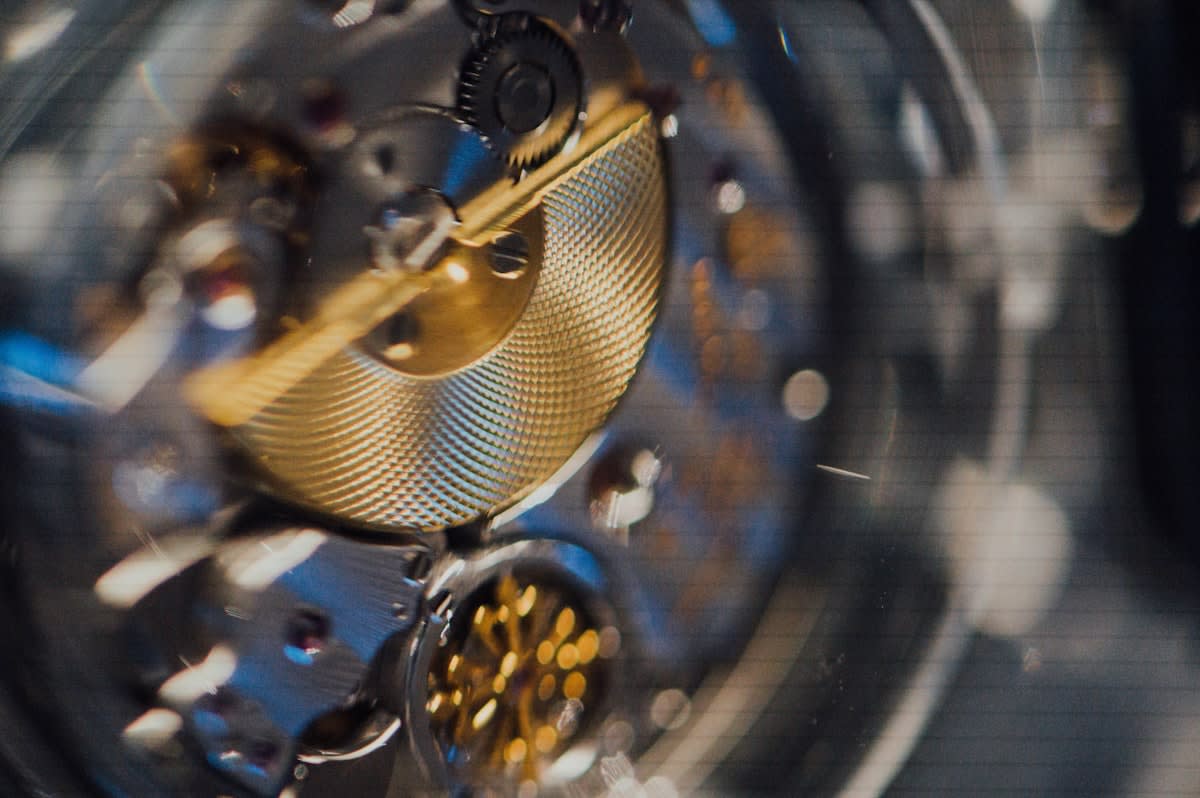
The mechanical watch market provides a perfect case study. Once the domain of the aging elite, luxury horology has seen a massive influx of buyers under 30. These buyers aren't looking for a way to tell time—their phones do that with atomic precision. They are buying a complex machine that exists independently of any network. In a world of planned obsolescence and software updates, a mechanical movement that can last a century is the ultimate luxury. It is a physical manifestation of permanence in a liquid world.
- Analog Audio: 15% year-over-year increase in high-end turntable sales among users aged 18-25.
- Film Photography: A 20% surge in the price of undeveloped film stocks due to supply shortages and spiking demand.
- Physical Books: A resurgence in hardcover collecting, with 'special editions' becoming a primary investment vehicle.
- Mechanical Assets: Increased trading volume in vintage watches and analog synthesizers.
The Psychological Hedge
Beyond the financial metrics, there is a psychological desperation at play. Digital natives have spent their entire lives navigating interfaces. The friction of a physical dial, the weight of a book, and the smell of old paper provide a sensory grounding that a screen cannot replicate. This is a rebellion against the 'frictionless' life. By choosing assets that require effort to maintain and physical space to store, these investors are reclaiming their presence in the physical world.
This shift represents a broader movement toward resilience. Digital assets are subject to the whims of platforms, regulations, and electricity. A physical asset is a sovereign entity. If the grid fails, the vinyl still spins, the watch still ticks, and the book still reads. For a generation that has witnessed the sudden collapse of several 'stable' digital ecosystems, the appeal of the tangible is not just aesthetic—it is a survival strategy for their wealth.
As we move forward, expect to see more brands pivoting their strategies. The companies that will thrive are those that can bridge the gap between digital convenience and tactile satisfaction. The future of capitalism isn't purely virtual, nor is it a return to the pre-internet age. It is a calculated, intentional pivot toward the physical, where the most valuable assets are the ones you can actually hold in your hand.