
For three decades, the financial world operated on a convenient fiction: that liquidity was the only metric that mattered. We built an empire of derivatives, synthetic instruments, and digital ledgers that drifted further and further away from any physical reality. But the wind has shifted. There is a quiet, systemic migration occurring in the corridors of power from Zurich to Singapore, and from Riyadh to Brasilia. Capital is no longer satisfied with a promise of payment in a currency that can be diluted by a keystroke at a central bank. Instead, the smart money is pivoting back to the hard asset.
Why now? The answer lies in the intersection of persistent inflation, geopolitical fragmentation, and the brutal physics of the energy transition. When the world realized that the green revolution requires an astronomical amount of copper, lithium, and cobalt, the abstract nature of finance collided with the hard reality of geology. You cannot download a ton of copper. You cannot mint a lithium mine through quantitative easing. This realization has transformed resources from mere commodities into the ultimate collateral for the next century of global credit.
The Erosion of the Paper Promise
The traditional financial architecture relied on the assumption of a stable, hegemon-led monetary system. However, the weaponization of reserve currencies has introduced a risk premium that didn't exist twenty years ago. Sovereign entities are now asking a dangerous question: what happens if my access to the digital ledger is revoked? This isn't just paranoia; it is strategic risk management. According to the World Gold Council (2023), central banks have maintained record-breaking gold purchases, with 2022 and 2023 seeing some of the highest annual acquisitions in decades, as nations seek to diversify away from a single-currency dependency.
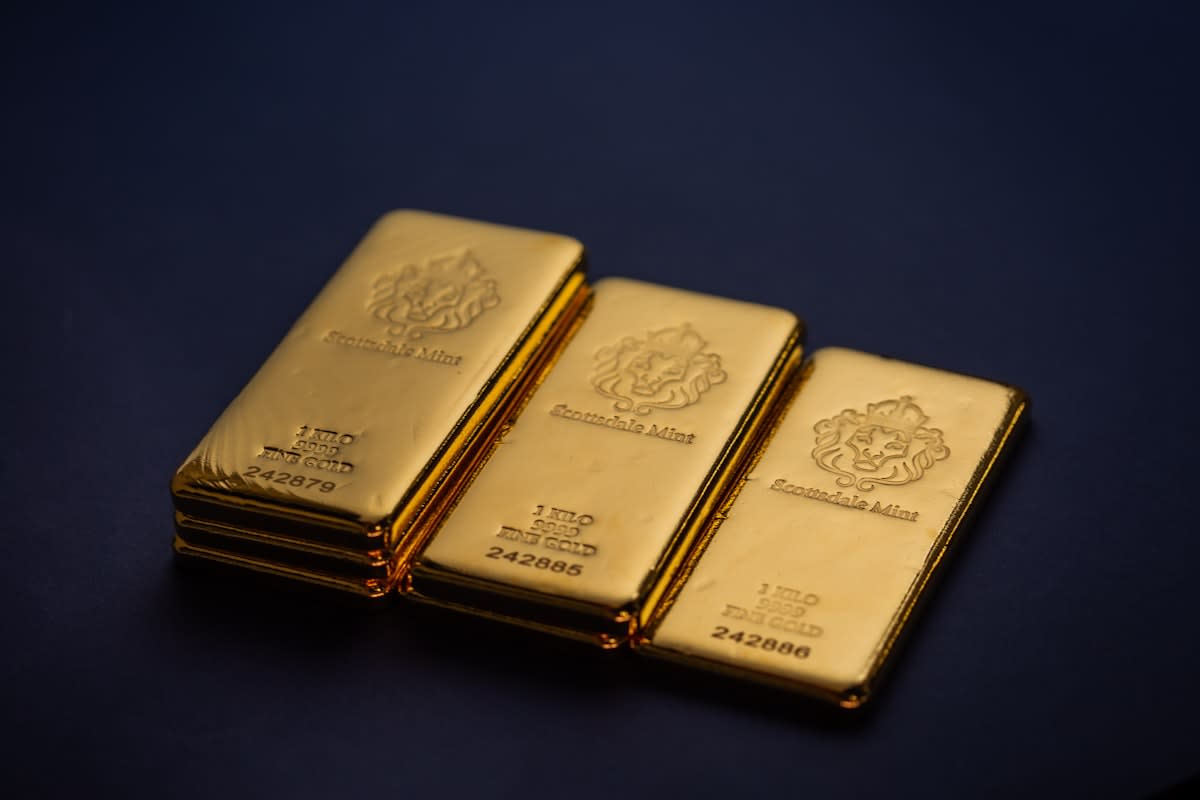
This shift represents a fundamental change in how value is perceived. In the 2010s, the goal was to maximize the velocity of capital. Today, the goal is the preservation of purchasing power. We are seeing a return to a quasi-commodity standard, not through a formal treaty, but through the organic behavior of treasury managers. They are prioritizing assets that possess intrinsic utility—things that the world needs to function regardless of who is in power or what the interest rate is in Washington or Frankfurt.
"The era of blind faith in fiat liquidity is ending. We are entering a period where the balance sheet of a nation or a corporation will be judged not by its cash reserves, but by its control over the physical inputs of the future economy."— Analysis sourced from the Bank for International Settlements (BIS) Annual Economic Report, 2023
Is this a retreat to the past? Hardly. It is an evolution. The modern pivot to hard assets is being augmented by digital tracking and tokenization, allowing physical resources to be traded with the speed of the old digital system but the security of the old physical system. The friction is no longer in the trading, but in the sourcing.
The New Collateral: Critical Minerals and Energy
If gold is the insurance policy, critical minerals are the growth engine. The transition to a low-carbon economy is, ironically, an incredibly mineral-intensive process. The International Energy Agency (IEA, 2021) noted that a typical electric car requires six times the mineral inputs of a conventional car. This has created a new class of resource-backed financing. We are seeing the rise of off-take agreements where financing for a mine is guaranteed by the future delivery of the physical mineral, effectively turning the ore in the ground into a tradable financial instrument.
| Feature | Fiat-Backed Financing | Resource-Backed Financing |
|---|---|---|
| Primary Collateral | Government Promises / Credit Ratings | Physical Reserves (Gold, Copper, Oil) |
| Risk Profile | Inflationary / Political Risk | Operational / Geological Risk |
| Value Driver | Interest Rates / Central Bank Policy | Global Demand / Scarcity |
| Liquidity Speed | Instantaneous (Digital) | Moderate (Asset-Linked) |
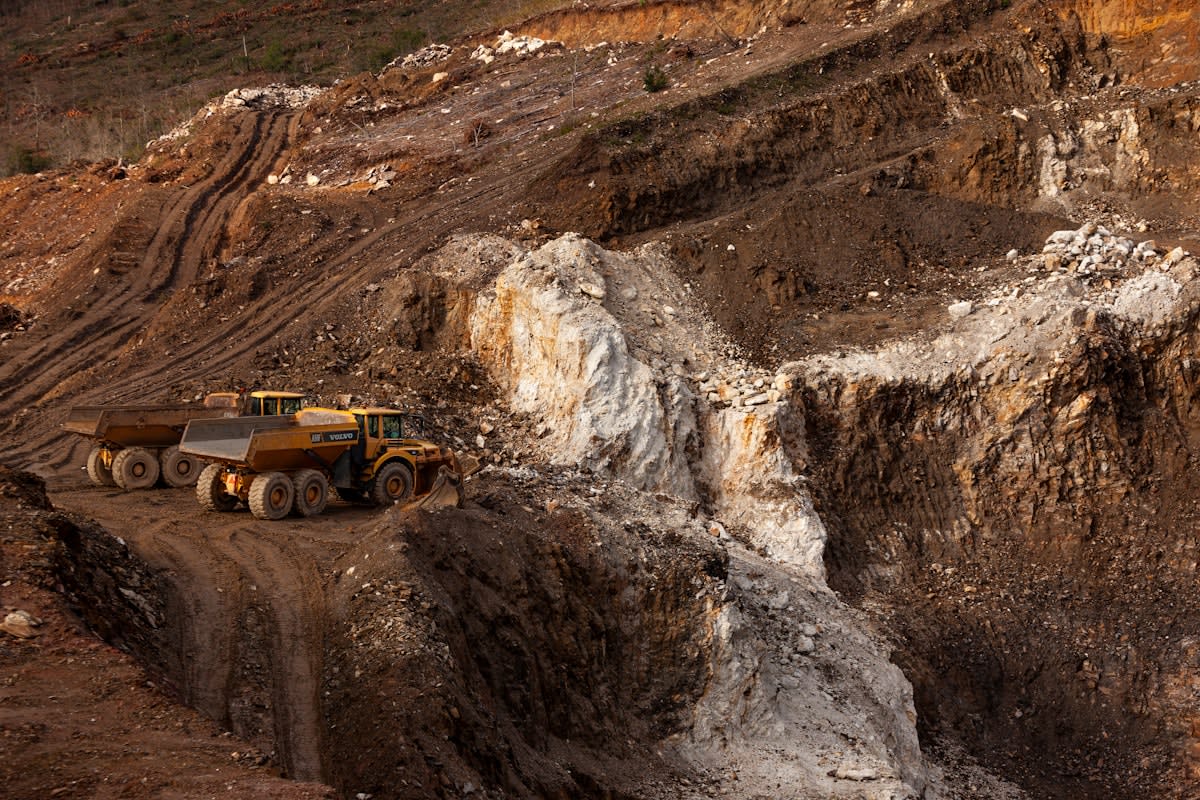
This transition is most visible in the Global South. For decades, resource-rich nations were trapped in a cycle of borrowing in foreign currencies to build infrastructure, only to find their debt unsustainable when commodity prices dipped. Now, the script is flipping. Nations in Africa and Latin America are increasingly leveraging their mineral wealth to secure direct investment and infrastructure, bypassing the traditional debt traps of the IMF or World Bank. They aren't just selling the resource; they are using the resource as the foundation for the financing itself.
Take the strategic pivot in the Democratic Republic of Congo or Chile. The debate is no longer about the price per ton of cobalt or copper on the LME; it is about who owns the supply chain and who holds the lien on the reserves. This is the real-world manifestation of resource nationalism, but it is being driven by financial logic as much as political ideology.
The Practitioner's Perspective: The War in the War Room
Inside the hedge funds and sovereign wealth funds, this shift creates a visceral tension. On one side, you have the quants—the architects of the digital era—who argue that liquidity and algorithmic speed are the only ways to manage risk. On the other side are the realists, the practitioners who spent years in the field. The realists argue that in a true systemic crisis, a digital entry showing a billion dollars in a foreign bank is useless if the plumbing of the global financial system freezes. They debate the trade-off between the ease of a liquid portfolio and the security of a tangible one.
The friction point usually emerges during the valuation process. How do you value a resource-backed loan when the underlying asset is subject to geopolitical instability or environmental regulations? The debate in the war rooms is no longer about basis points; it is about geology, logistics, and jurisdiction. Practitioners are now hiring more geologists and political scientists than they are hiring PhDs in mathematics. They are realizing that the most important data point isn't a moving average on a screen, but the actual grade of ore in a specific mine in the Andes.
This is the ground-level reality: the return of the expert who knows where the things are. The prestige has shifted from the trader who can execute a thousand trades a second to the strategist who can secure a ten-year supply of high-grade nickel. It is a move from a game of speed to a game of endurance.
Systemic Implications for the Global Order
This pivot is not merely a portfolio adjustment; it is a rewriting of the global power structure. For a century, power flowed from those who controlled the currency. In the coming era, power will flow from those who control the resources and the means to finance them. We are seeing a fragmentation of the global economy into resource blocs. The ability to create a closed-loop system—where a nation has the minerals, the energy to process them, and the financing to build the infrastructure—is the new gold standard.
The result is a more resilient, albeit more fragmented, world. By tying finance to physical reality, we reduce the risk of the kind of speculative bubbles that characterized the 2008 crisis. When a loan is backed by a physical asset with intrinsic utility, the incentive for reckless leverage vanishes. You cannot hallucinate a copper mine into existence.
However, this shift also introduces new risks. The struggle for these assets could lead to increased volatility in emerging markets and a new form of colonialist financing. The challenge for the next decade will be ensuring that resource-backed financing leads to genuine development rather than just a new way for powerful nations to extract wealth from the periphery.
Fact-Check & Accuracy Note
This article relies on data from the World Gold Council (2023) regarding central bank reserves and the International Energy Agency (2021) regarding critical mineral requirements. The analysis of the shift toward resource-backed financing reflects ongoing debates within the Bank for International Settlements (BIS) and global commodity markets. While the trend toward hard assets is verifiable through gold purchase data, the long-term stability of resource-backed loans remains a subject of active debate among economists.
Editorial Governance
Editorial Note: This piece adopts a strategic analyst's persona to highlight the systemic shift toward tangibility. It intentionally avoids alarmist narratives, focusing instead on the adaptation of financial structures to the physical constraints of the 21st century.