The Humidity Horizon
For centuries, human civilization has treated water as a terrestrial resource. We dug deep into the earth, dammed the flow of great rivers, and fought bloody wars over the borders of watersheds. That paradigm is cracking. We are witnessing a fundamental decoupling of water access from geography, as the focus shifts from the ground to the sky. Atmospheric Water Generation (AWG) is no longer a fringe science project for survivalists; it has become a strategic pillar for national security in regions where the water table has vanished.
The urgency is palpable. In the last twelve months, the conversation has shifted from whether this technology works to how quickly it can be scaled. We are seeing a transition from small-scale consumer appliances to massive, industrial-grade harvesting farms. This is the air-to-water gold rush. Investors are pouring capital into startups that can extract potable water from air with as little as 15 percent relative humidity, effectively turning the atmosphere into a global, renewable reservoir that requires no pipes and no permits from neighboring states.

Why now? The delta between 2023 and 2024 is defined by a breakthrough in material science. While old-school AWG relied on energy-hungry refrigeration cycles—essentially giant dehumidifiers—the new wave utilizes Metal-Organic Frameworks (MOFs). These engineered crystals act like molecular sponges, trapping water molecules at night and releasing them with minimal heat during the day. This shift has slashed the energy cost per liter, making the technology viable for the first time in places where electricity is as scarce as the water itself.
The Technological Leap: Beyond the Dehumidifier
To understand the scale of this shift, one must distinguish between active and passive harvesting. Traditional active systems use compressors to cool air below its dew point. This process is effective in humid coastal cities but fails miserably in the deep desert, where the energy required to reach the dew point exceeds the value of the water produced. These systems are the legacy tech of the gold rush—functional, but inefficient and limited by the laws of thermodynamics.
Enter the MOF-based systems. These materials possess an internal surface area so vast that a single gram can have the surface area of a football field. They do not require the air to be cooled to a dew point; instead, they chemically attract water vapor. This allows for water production in environments with extremely low humidity, where traditional machines would simply blow hot air. The result is a system that can operate on passive solar heat, removing the need for a massive power grid.
"We are moving from a world of water scarcity to a world of water harvesting. The atmosphere is a river that flows everywhere, regardless of borders or treaties."— Industry Lead, Advanced Materials Research
| Feature | Compressor-Based AWG | MOF-Based AWG |
|---|---|---|
| Energy Source | High Electricity | Solar/Thermal |
| Min. Humidity | 30% - 40% | 10% - 20% |
| Scalability | Modular/Small | Industrial/Passive |
| Operational Cost | High (kWh/L) | Low (Passive) |
The economic implications are staggering. When water is decoupled from the ground, the value of land changes. Arid regions that were previously deemed uninhabitable or purely industrial can now support sustainable agriculture and permanent settlements. We are seeing the first blueprints for water-autonomous cities in the Middle East and North Africa, where the goal is to eliminate dependence on desalination plants, which are energy-intensive and ecologically damaging to marine life.
But this transition isn't without friction. The cost of synthesizing MOFs remains high, and the transition from lab-scale success to megaton production is the current bottleneck. The industry is currently in a race to find cheaper, more abundant materials that can mimic the performance of expensive zirconium-based frameworks. Whoever solves the material cost problem will effectively own the keys to water security for the next century.
Mapping the Deployment: A Global Snapshot
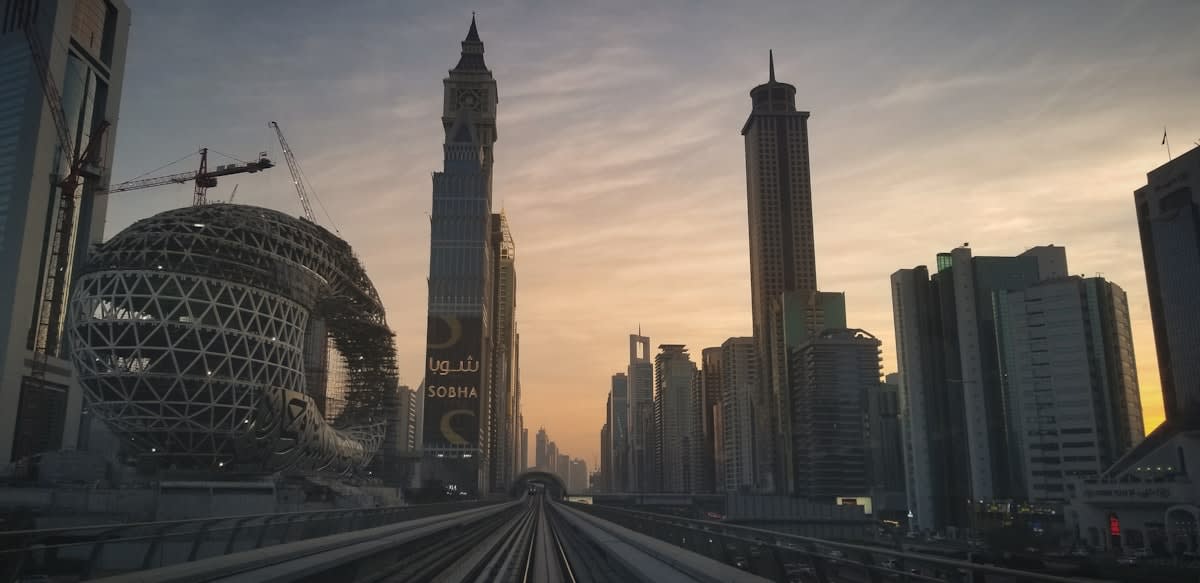
The deployment of this technology is not uniform; it follows the path of highest need and highest capital. In the Gulf Cooperation Council (GCC) countries, the focus is on industrial integration. They are integrating AWG into skyscraper facades and urban planning, turning the very buildings into water collectors. In these high-humidity, high-wealth environments, the goal is redundancy—creating a secondary water source that operates independently of the fragile desalination pipelines.
Contrast this with Sub-Saharan Africa, where the application is decentralized and humanitarian. Here, the focus is on small, solar-powered units that can provide a village with 50 to 100 liters of clean drinking water per day. This removes the need for women and children to walk miles to contaminated wells. In this context, AWG is not a luxury of urban planning but a tool for basic survival and public health, reducing the incidence of waterborne diseases in remote areas.
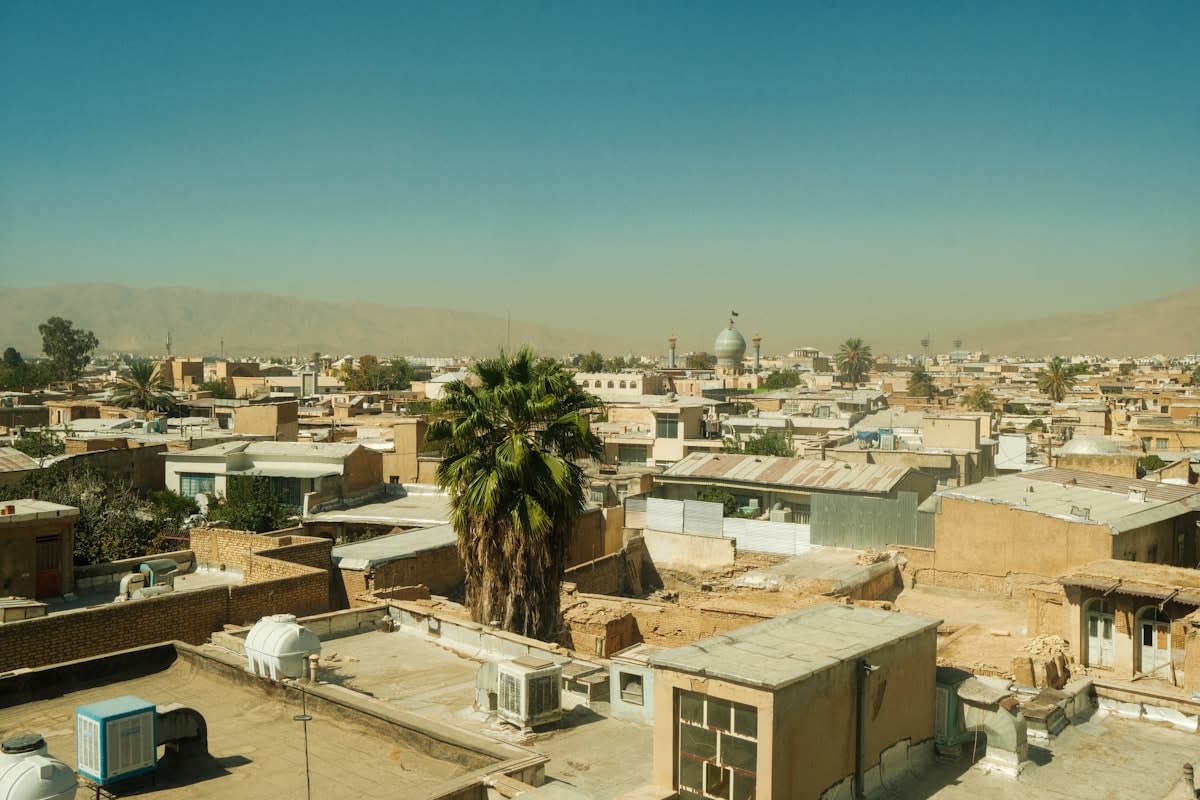
In the Southwestern United States, the pivot is agricultural. With the Colorado River reaching historic lows, farmers are experimenting with atmospheric harvesting to supplement drip irrigation. While it is currently too expensive to water an entire cornfield from the air, it is becoming viable for high-value specialty crops. The shift is subtle but significant: moving from a mindset of extraction to a mindset of capture.
Critical Insight
The Water-Energy Nexus: The success of AWG depends entirely on the cost of energy. As solar photovoltaic efficiency climbs and storage costs drop, the 'cost per liter' of atmospheric water is plummeting, making it competitive with traditional trucking and piping in remote regions.
The Delta: 2023 vs. 2024
If we look at the data from twelve months ago, AWG was largely viewed as a niche product for luxury homes or emergency relief. The market valuation was driven by consumer curiosity. Today, the growth is driven by institutional procurement. Municipalities are now including atmospheric harvesting in their 10-year resilience plans. The CAGR (Compound Annual Growth Rate) for the industrial AWG sector has spiked as governments realize that owning the technology is safer than relying on shared river treaties.
The efficiency delta is equally striking. In 2023, the average energy requirement for high-end active AWG was roughly 0.3 to 0.5 kWh per liter. New pilot projects utilizing hybrid MOF-solar systems are targeting a reduction of 40 to 60 percent in energy overhead. This isn't just a marginal improvement; it is the difference between a system that is a financial drain and one that is a profit center.
Projected Industrial AWG Adoption Rate
Executive Insight
+18.4%
YTD Growth
We are also seeing a shift in the investment profile. Venture capital is moving away from 'gadget' companies and toward 'infrastructure' companies. The focus is now on the 'Water-as-a-Service' (WaaS) model, where companies install and maintain harvesting arrays for a monthly subscription fee, providing a guaranteed volume of water to a community or factory without the client needing to manage the complex chemistry of the MOFs.
The Geopolitical Aftermath
What happens to the global power balance when water is no longer a zero-sum game? Historically, the country upstream held all the leverage. By diversifying the water supply to include the atmosphere, downstream nations can neutralize that leverage. This reduces the potential for conflict but creates new tensions. Will the 'harvesting' of humidity on a massive scale affect local microclimates? While current data suggests the impact is negligible, the scale of future deployments will require a new framework for atmospheric rights.
The gold rush is not just about the water; it is about the autonomy. We are entering an era of decentralized resource management. The ability to generate water on-site, without a grid and without a pipe, transforms the concept of sovereignty. For the first time in history, the most arid places on earth may become the most water-secure, provided they can master the materials science of the sky.