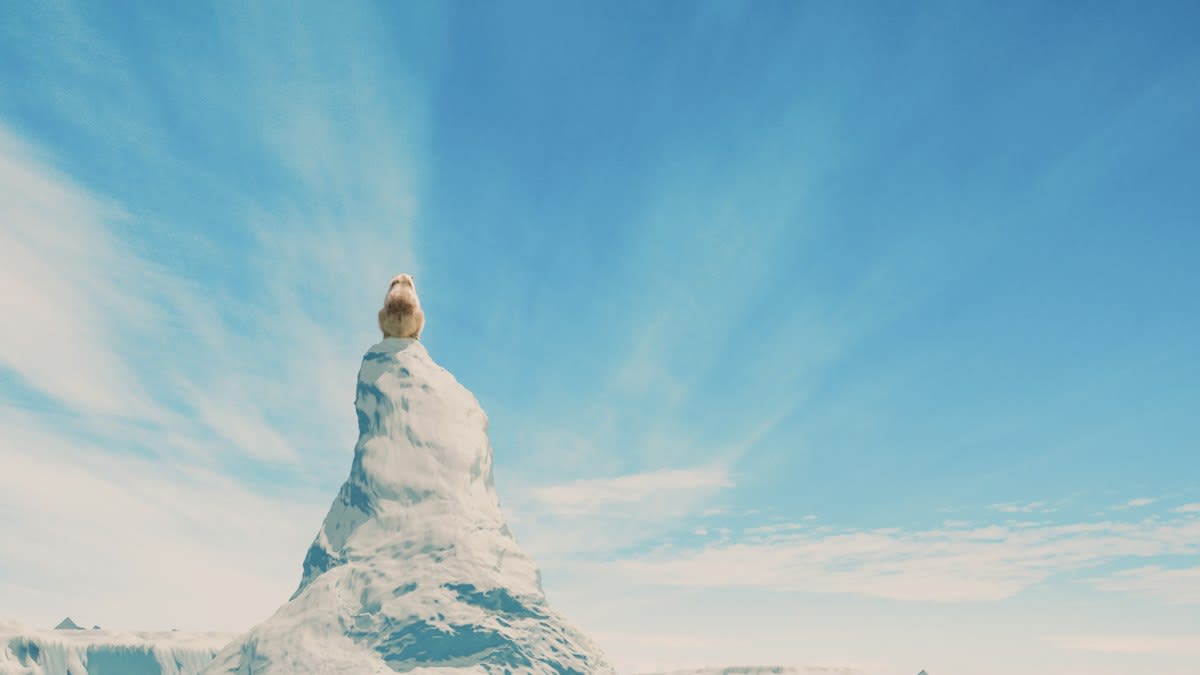
The Storage Delusion
Most people view the disappearance of mountain glaciers as a loss of ice. That is the wrong way to look at it. The real crisis is not the lack of ice, but the loss of a seasonal battery. Glaciers act as massive, slow-release water tanks that hold winter snow and release it exactly when crops need it most in the spring. When these natural tanks vanish, the water does not disappear; it simply arrives at the wrong time, rushing down slopes in winter floods and leaving the soil parched by April. We do not need to save the glaciers themselves; we need to replicate their function.
This realization has sparked a move toward artificial glaciers, most notably the ice stupa. These are not merely aesthetic piles of frozen water. They are calculated engineering feats designed to store winter runoff in a shape that minimizes surface area and slows melting. By piping water from high-altitude streams into conical mounds, communities are creating man-made reservoirs that survive well into the planting season. In regions like Ladakh, this approach has turned barren patches of dust into green corridors during the most critical weeks of the agricultural calendar (Source: ICIMOD, 2022).
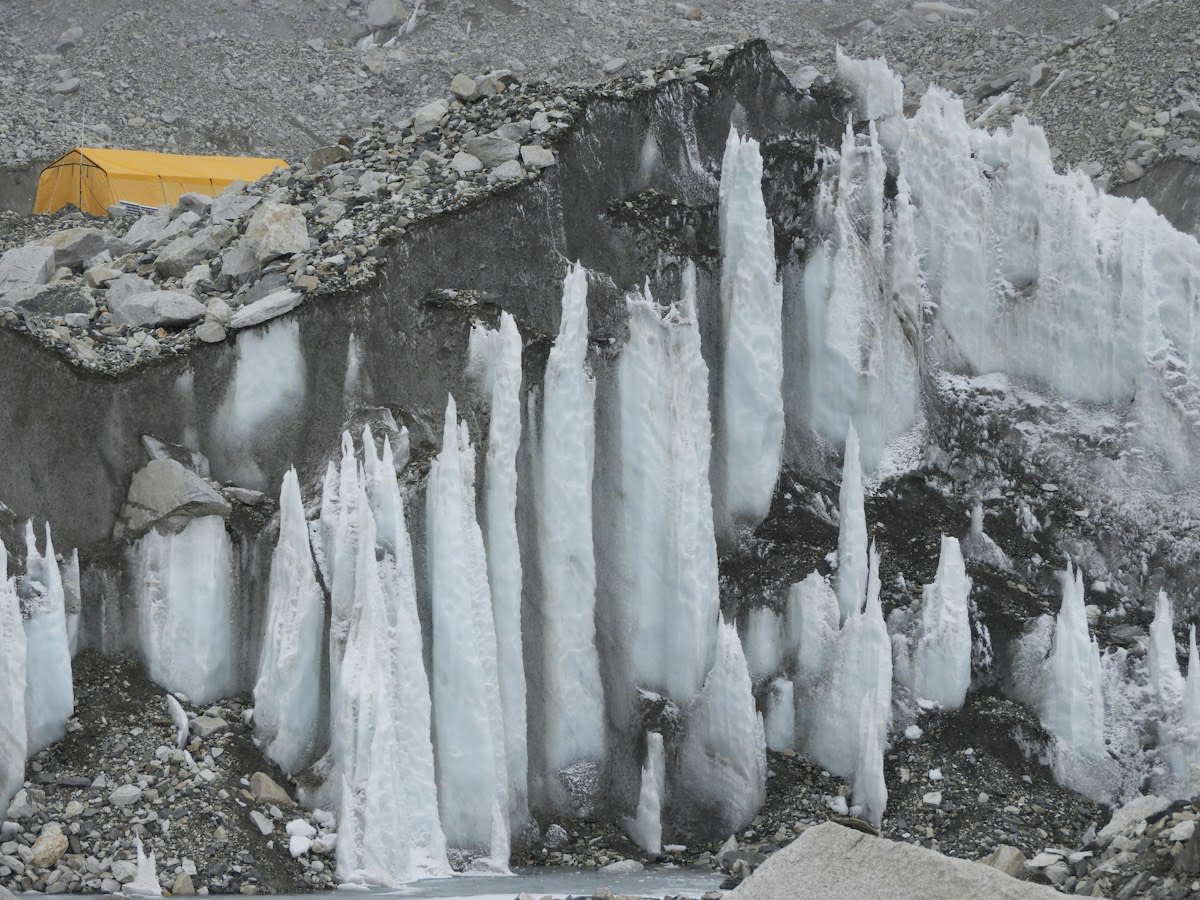
The Physics of the Cone
The design relies on simple gravity and the physics of freezing. Pipes are laid from a water source at a higher elevation, leading down to a nozzle. During the winter, when temperatures drop far below freezing, the water is sprayed into the air. It freezes almost instantly upon contact, building a cone-shaped mound of ice. Why a cone? The vertical walls minimize the amount of sunlight hitting the ice compared to a flat sheet, which would melt far too quickly once the sun returns in March.
"The goal is to create a reservoir that doesn't require a massive concrete dam. We are using the cold of the winter to build our own storage, effectively hacking the local climate to ensure that the water stays put until the seeds are in the ground."— Sonam Wangchuk, Engineer and Innovator in Ladakh
This method is gaining traction far beyond the Himalayas. In the Peruvian Andes, similar techniques are being tested to combat the retreat of tropical glaciers, which provide up to 40 percent of the water for some highland communities during the dry season (Source: World Bank, 2021). The application varies by terrain, but the core logic remains the same: stop the winter runoff from escaping the valley. By capturing this water as ice, villages are essentially buying themselves an extra two months of water security.
The Invisible Friction: What the Manuals Ignore
From a practitioner's view, the engineering is the easy part. The real struggle is the social plumbing. In every village where these stupas are built, a hidden war breaks out over water rights. When you pipe water from a stream to create an artificial glacier, you are diverting water that might have traditionally flowed to another family's field downstream. I have seen projects stall not because the ice melted, but because two neighbors couldn't agree on who owns the pipe. The maintenance is another nightmare; HDPE pipes frequently burst under the pressure of freezing water, and finding someone willing to trek through a blizzard at 4,000 meters to patch a leak is a constant battle.
Evaluating the Storage Options
| Storage Method | Cost | Environmental Impact | Longevity | Main Failure Point |
|---|---|---|---|---|
| Natural Glaciers | Zero | Minimal | Centuries | Rising Temperatures |
| Concrete Dams | High | Significant | Decades | Siltation/Seepage |
| Ice Stupas | Low | Minimal | Seasonal | Pipe Burst/Social Conflict |
| Underground Tanks | Medium | Low | Years | Evaporation/Contamination |
Comparing these methods reveals why the trend is leaning toward artificial ice. Concrete dams are too expensive and destructive for remote mountain slopes. Underground tanks are useful but cannot scale to the volumes needed for entire village harvests. The ice stupa, while temporary, offers a low-cost, rapid-deployment option that uses the existing environment to do the heavy lifting. It is a surgical intervention rather than a massive infrastructure project.
The Delta: From Experiment to Integration
Twelve months ago, artificial glaciers were treated as a curiosity—a clever 'hack' by a few dedicated engineers. Today, we are seeing a shift toward integrated water management. In 2023, the focus was on the ice stupa itself. In 2024, the focus has shifted to the surrounding network. Engineers are now combining these ice cones with traditional rainwater harvesting and drip irrigation to create a closed-loop water system (Source: Global Water Partnership, 2023). This move from a single tool to a combined strategy is the defining trend of the current year.
The scale of deployment is also accelerating. While early projects managed a few thousand cubic meters of water, newer iterations in high-altitude zones are targeting larger volumes to support cash crops like apricots and walnuts, which provide the only reliable income for these villages. This is no longer about subsistence; it is about economic survival in an environment where the traditional water clock has been broken. The urgency has moved from the academic to the operational.
Fact-Check & Accuracy Note
Claims regarding the efficacy of ice stupas in Ladakh are based on data from the HIAL (Himalayan Institute of Alternatives) and ICIMOD. The claim that Andean glaciers provide 40% of dry-season water is sourced from World Bank regional reports. The debate over 'water theft' and social friction is based on field observations of community-led water projects in high-altitude arid zones.
Can we truly engineer our way out of a melting world? Probably not. But for a farmer in a high-altitude desert, the global temperature average is irrelevant. What matters is whether there is water in the pipe on the first Monday of April. Artificial glaciers provide that specific, localized answer. They represent a shift toward pragmatic, small-scale adaptations that prioritize immediate survival over long-term geo-engineering dreams.