US-Japan's Joint Missiles Production Plan Against China's Aggression In Asia
Source Entity
NDTV News Search Records Found 1000
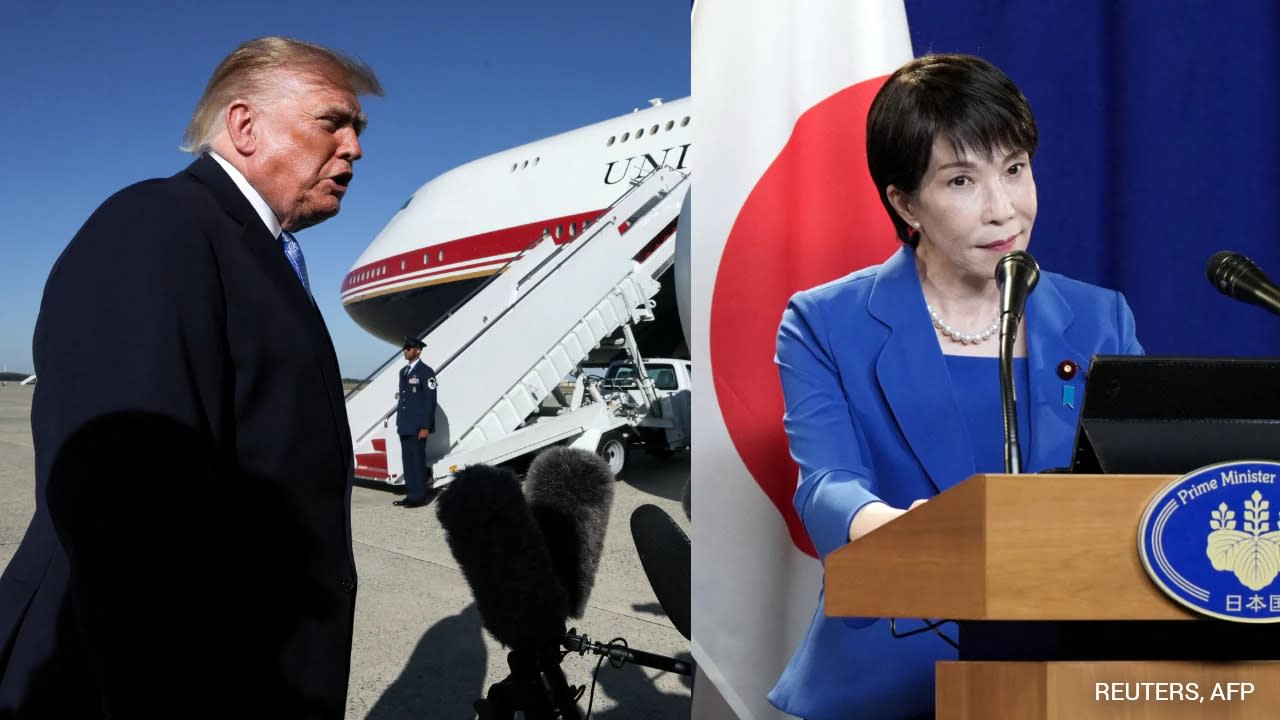
The Trump administration has reaffirmed its commitment to deter regional aggression through a collaborative missile production initiative with Japan. This strategic partnership aims to bolster defense capabilities in the face of rising tensions in Asia.
Strengthening the U.S.-Japan Security Architecture
The recent announcement regarding a joint missile production plan between the United States and Japan marks a significant evolution in the long-standing security alliance between the two nations. By moving beyond traditional defense procurement and into collaborative manufacturing, both countries are signaling a commitment to deepening their industrial and military integration. This initiative, reinforced by Hegseth’s recent assurances of the Trump administration's dedication to deterring regional aggression, serves as a cornerstone for maintaining stability in the Indo-Pacific.
The Strategic Rationale for Joint Production
The primary driver behind this collaborative effort is the need to address the shifting power dynamics in Asia. As regional threats evolve, the U.S. and Japan are recognizing that localizing the production of critical defense assets is essential for maintaining supply chain resilience and rapid response capabilities. By co-producing missiles, the alliance reduces dependence on long-distance logistics and ensures that Japan remains equipped with cutting-edge defensive technology to counter potential escalations.
Historical Context of the U.S.-Japan Alliance
Historically, the U.S.-Japan Security Treaty has been the bedrock of peace in the Pacific since the post-World War II era. While the alliance has traditionally focused on U.S. base access and intelligence sharing, the modern era demands a more proactive approach to deterrence. Hegseth’s renewal of the Trump administration's commitment echoes a decades-long policy trajectory that prioritizes a 'Free and Open Indo-Pacific,' ensuring that international norms and territorial integrity are upheld against encroachment.
Implications of Deterrence Strategies
This move is not merely a logistical agreement; it is a clear deterrent signal aimed at regional actors who may be considering aggressive territorial expansion. By hardening the collective defensive posture of the U.S. and Japan, the administration aims to stabilize the region through 'peace through strength.' This strategy relies on the belief that a well-armed and interoperable alliance is the most effective way to prevent conflict before it begins, thereby maintaining the status quo in sensitive maritime zones.
Future Trends in Regional Defense
Looking ahead, this joint production initiative is likely to set a precedent for future bilateral defense cooperation. As technology in missile defense becomes increasingly sophisticated, we can expect to see further integration of R&D and manufacturing sectors between the U.S. and its Pacific allies. The focus will likely remain on technological superiority and the ability to project power in a way that discourages aggression, ensuring that the U.S.-Japan partnership remains the primary guarantor of security in the region for the foreseeable future.
Verification Required?