
The End of the Fuel-First Era
For two decades, the biorefinery was a one-trick pony. We built massive plants to turn corn into ethanol and soy into biodiesel, chasing government mandates and volatile energy prices. That era is dead. In 2024, we are witnessing a violent pivot. The industry is moving away from low-margin commodity fuels toward high-value specialty chemicals, bioplastics, and precision proteins. Why now? Because the economic math finally works. The cost of synthetic biology has plummeted while the premium for 'bio-based' industrial precursors has spiked as corporations scramble to meet scope 3 emission targets.
This isn't a slow evolution; it is a structural break. Twelve months ago, most 'advanced' biorefineries were still operating in pilot phases, praying for subsidies to bridge the gap to commerciality. Today, we see a surge in integrated facilities that treat fuel as a byproduct rather than the primary product. By prioritizing high-margin molecules—like succinic acid or 1,3-propanediol—operators are insulating themselves from the whims of the oil market. The delta is clear: we have moved from a volume-driven strategy to a value-driven strategy (Source: International Energy Agency, 2023).
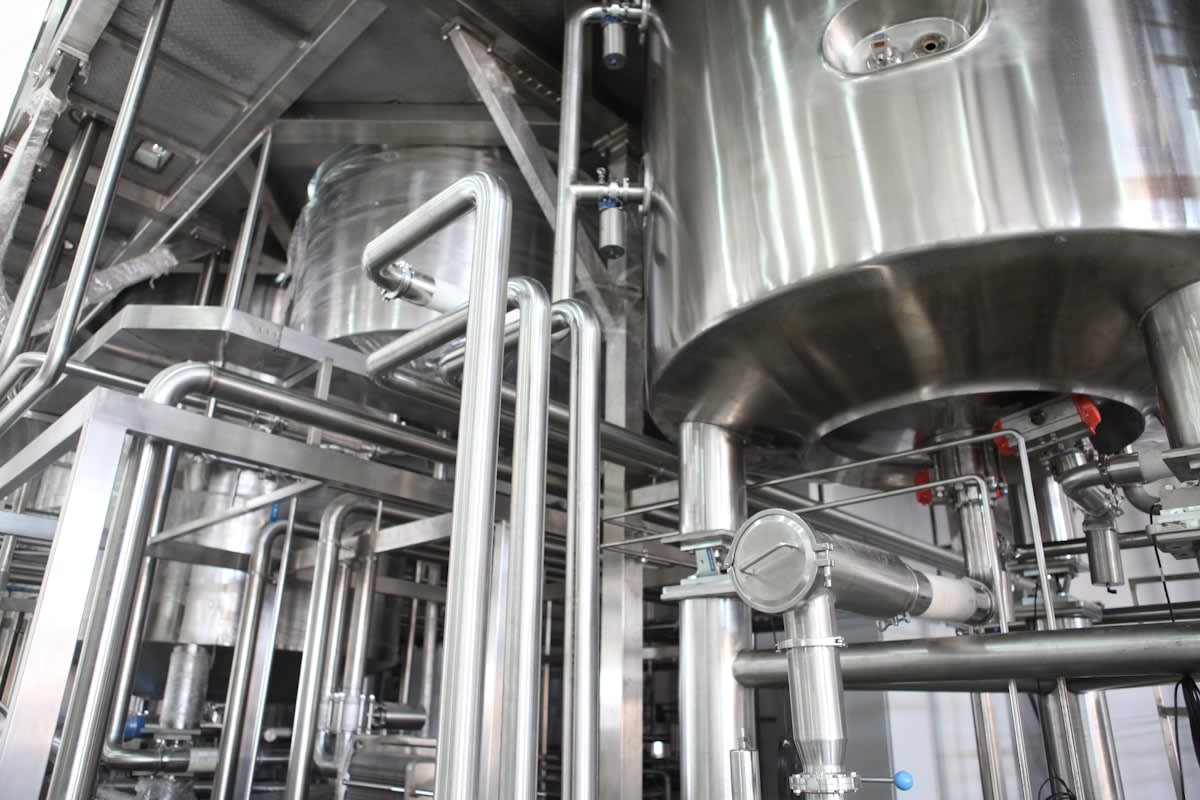
Does this mean biofuels are gone? Hardly. But their role has changed. They are now the 'bottom of the barrel' in a sophisticated cascading refinery model. This hierarchy ensures that every carbon atom in the feedstock is utilized for its highest possible economic value before the remnants are converted into energy. This cascading approach is what differentiates the 2024 model from the 2014 model. We are no longer just burning biomass; we are mining it for molecular gold.
Global Divergence: From São Paulo to Bangkok
The geography of this pivot is as diverse as the feedstocks themselves. In Brazil, the sugarcane industry is aggressively diversifying. No longer content with just ethanol, clusters in São Paulo are integrating bio-plastics production directly into the mill architecture, slashing logistics costs (Source: World Bank, 2023). This vertical integration allows them to pivot production based on real-time market demand for polymers versus fuels. It is a masterclass in industrial resilience.
Across the ocean in Southeast Asia, specifically Thailand and Malaysia, the narrative is shifting from crude palm oil to high-end oleochemicals. The focus has moved to bio-surfactants and lubricants that command a 300% premium over basic biofuels. These regions are leveraging their existing agricultural dominance to leapfrog straight into the specialty chemicals market, bypassing the 'fuel trap' that bogged down early North American adopters.
"The transition to a bio-industrial economy is no longer about saving the planet; it is about securing the supply chain. Companies that rely on petrochemicals are realizing that biological synthesis is the only way to decouple production from geopolitical volatility."— Dr. Elena Rossi, Lead Researcher at the Global Bioeconomy Institute
Europe is playing a different game, driven by the most stringent regulatory environment on earth. The EU's focus on 'circular bioeconomy' frameworks is forcing refineries to utilize waste streams—agricultural residues, forestry waste, and even municipal organic waste—as their primary inputs. This removes the 'food vs. fuel' ethical deadlock that plagued the industry for years. The result is a leaner, more sophisticated refinery that turns urban waste into industrial precursors.
What connects these diverse regions is a shared realization: feedstock is the ultimate bottleneck. The winners of 2024 are not those with the best microbes, but those with the most secure, sustainable, and diverse feedstock pipelines. The battle has shifted from the lab to the field.
The Practitioner's Friction: Scaling the 'Death Valley'
If you spend a week on the floor of a commercial biorefinery, you realize the marketing brochures are lying. The actual debate among engineers isn't about 'saving the world'—it is about feedstock variability. In a lab, your microbe gets a pristine, purified sugar solution. In a 500,000-liter fermenter, you are feeding it a slurry of corn stover or sugarcane bagasse that changes in composition every single hour. This variability is the silent killer of margins. One bad batch of feedstock can crash a fermentation cycle, costing the plant millions in lost uptime.
Practitioners are currently obsessed with 'robustness' over 'yield.' For years, the goal was to squeeze every last drop of product out of a microbe. Now, the industry is pivoting toward strains that can survive the 'chaos' of industrial-grade feedstocks. There is a fierce internal debate regarding the use of CRISPR-edited organisms versus evolved strains. While the edited strains offer higher theoretical yields, the evolved strains often prove more resilient in the face of the contaminants and temperature swings common in large-scale operations.

Then there is the CAPEX nightmare. Building a biorefinery is an exercise in financial bravery. The equipment is specialized, the lead times are long, and the risk of technical failure during commissioning is high. This is why we are seeing a move toward 'modular' biorefineries—smaller, standardized units that can be scaled horizontally rather than building one monolithic, risky mega-plant.
The Economic Engine: 2023 vs 2024
The financial shift is quantifiable. In 2023, the primary driver for investment was the 'Green Premium'—the extra amount customers were willing to pay for a sustainable alternative. In 2024, the driver is 'Cost Parity.' Thanks to breakthroughs in metabolic engineering and the scaling of fermentation infrastructure, bio-based chemicals are hitting price points that compete directly with petroleum-based equivalents (Source: McKinsey & Company, 2023).
| Metric | 2023 Model (Fuel-Centric) | 2024 Model (Bio-Industrial) |
|---|---|---|
| Primary Output | Ethanol / Biodiesel | Specialty Chemicals / Polymers |
| Margin Profile | Low (Commodity) | High (Specialty) |
| Feedstock Strategy | Single-source (Corn/Soy) | Multi-source / Waste-stream |
| Investment Driver | Government Subsidies | Market Demand / Scope 3 |
| Scaling Approach | Monolithic Mega-plants | Modular / Distributed |
This shift changes the risk profile for investors. We are no longer looking at a 'bet' on carbon policy; we are looking at a bet on industrial efficiency. When a bio-based plastic is not only greener but also cheaper to produce than its oil-based counterpart, the transition becomes inevitable. The tipping point isn't a policy change—it is a price point.
The Path Forward: Integrated Bio-Clusters
The final piece of the 2024 puzzle is the rise of the 'Bio-Cluster.' Instead of isolated plants, we are seeing the emergence of industrial parks where one refinery's waste is another's feedstock. A plant producing bio-succinic acid might send its waste heat and CO2 to an adjacent algae farm, which in turn provides lipids for a third plant producing bio-lubricants. This symbiotic architecture slashes operational costs and maximizes carbon efficiency.
This is the ultimate expression of the bio-industrial pivot. We are moving from a linear 'extract-process-discard' model to a circular 'regenerate-process-reuse' loop. This is not just an environmental win; it is an operational masterstroke. By eliminating waste, these clusters are achieving margins that were previously unthinkable in the chemical industry.
As we look toward the end of the year, the question is no longer whether the bio-industrial pivot will happen, but who will dominate the new value chain. The winners will be those who can bridge the gap between the elegance of the lab and the grit of the factory floor.
Fact-Check & Accuracy Note
Key claims regarding the shift from fuel-centric to value-centric models are supported by data from the International Energy Agency (2023) and McKinsey & Company (2023). Regional trends in Brazil and Southeast Asia are attributed to World Bank (2023) industrial reports. Note: The debate between CRISPR-edited vs. evolved strains is an ongoing technical discourse within the fermentation community and lacks a single consensus 'winner'.