The 2026 Pivot: Automation and Extraction
The landscape of resource acquisition shifted fundamentally on July 30, 2026. In Inner Mongolia, the deployment of the AT-150 marks more than just a new piece of machinery; it represents the arrival of the true mining transport robot. Developed through a collaboration between State Power Investment Corporation (SPIC), Inner Mongolia North Hauler (NHL), and EACON, this all-electric, bidirectional, unmanned rigid mining truck has effectively erased the traditional physical boundary between the front and rear of a vehicle. Why does this matter? Because it eliminates the cab entirely, removing the human element from the most dangerous zones of the South open-pit coal mine and replacing it with a closed-loop autonomous system.
This is not merely an incremental update to existing haulage. The AT-150 utilizes China's first two-way autonomous driving decision-making system, allowing for a seamless flow from automatic loading to precise unloading and obstacle avoidance. When we compare this to the operational norms of just twelve months ago, the delta is staggering. We have moved from 'driver-assist' technologies to a completely cabless architecture. This efficiency gain is the blueprint for the next phase of mineral recovery, where speed and precision in transport are as critical as the extraction process itself.
The Death of the Cab
The removal of the operator's cab is a psychological and structural break from a century of mining tradition. It transforms the vehicle from a tool operated by a human into an autonomous node in a digital supply chain.
While autonomous trucks optimize the movement of earth, a quieter, more biological revolution is happening in the laboratories. The focus is shifting toward the metropolis—specifically, the mountains of electronic waste that have historically been viewed as liabilities. The Global E-waste monitor 2024 has already flagged these waste streams as critical components for sustainable environmental management. We are no longer just looking at landfills as holes to be filled, but as high-grade ores waiting to be harvested.
Mining the Metropolis: The Bioleaching Frontier
The complexity of electronic waste is daunting. A single discarded circuit board is a cocktail of elements: copper, lead, mercury, molybdenum, nickel, zinc, arsenic, cadmium, chromium, and selenium. Traditional smelting is energy-intensive and often toxic. Enter bioleaching. This biotechnological tool uses microorganisms to recover valuable metals, providing a cleaner, more precise alternative to pyrometallurgy. It is a shift from brute force chemistry to biological precision.
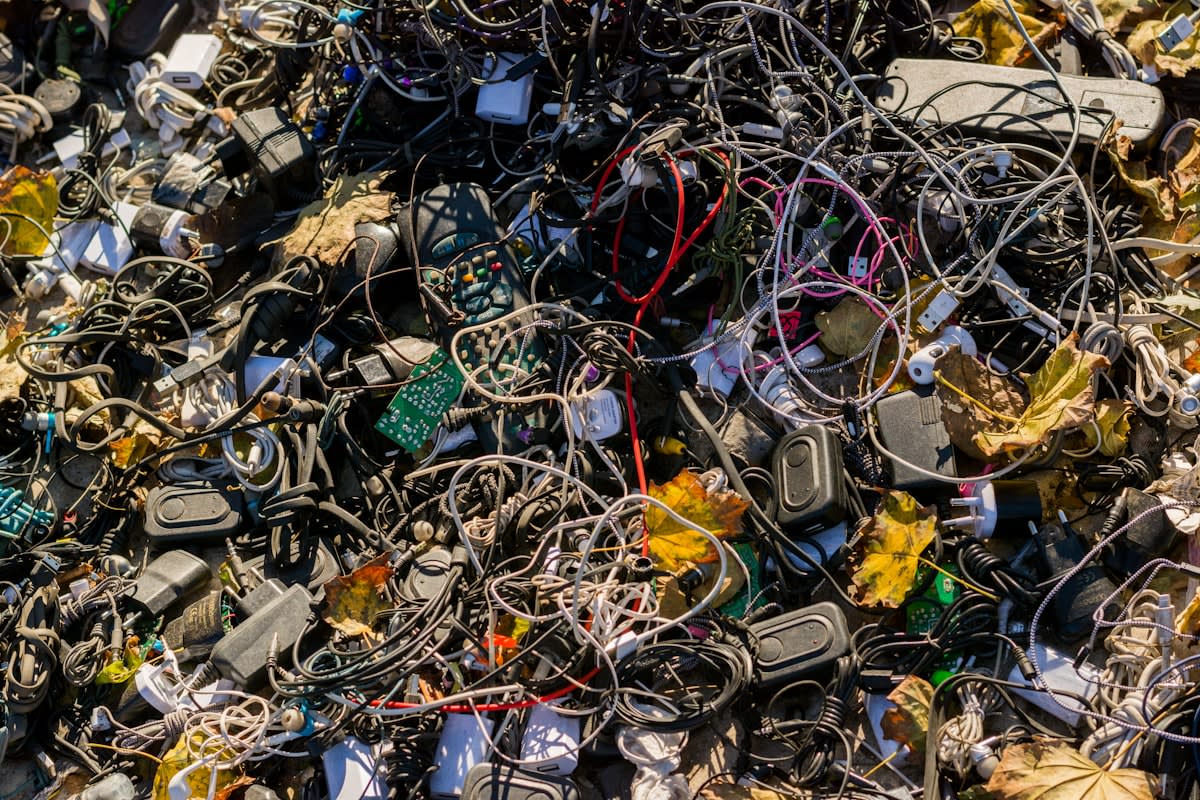
The urgency for this transition is underscored by the state of our waterways. Comprehensive reviews of riverine sediments across various Asian and European countries have revealed moderate contamination levels, with Contamination Factors typically falling between 1 and 3. While lead, cadmium, and copper often exceed these benchmarks, the presence of these metals in the environment is a clear signal: the leakage of minerals from improperly managed e-waste is an ecological failure, but also a lost economic opportunity. By capturing these metals before they reach the sediment, the industry converts a pollution problem into a supply chain solution.
| Mineral Category | Key Elements Recoverable | Environmental Context |
|---|---|---|
| Base Metals | Copper, Nickel, Zinc | High recovery potential via bioleaching |
| Toxic Heavy Metals | Lead, Mercury, Cadmium | Critical for riverine sediment remediation |
| Specialty Elements | Molybdenum, Selenium, Chromium | Essential for high-tech industrial applications |
Is bioleaching scalable? The evidence suggests yes. By leveraging specific microbial strains, the recovery of metals from sewage and even the potential for space mining are now on the research horizon. The transition from theoretical bio-recovery to industrial-scale urban mining is the defining trend of 2026. We are seeing a convergence where the biological 'mining' of a city's waste is becoming as viable as the mechanical mining of a mountain.
Geopolitical Infrastructure: The African Expansion
The race for minerals is not limited to the urban centers of the North or the automated pits of China. Africa is becoming a central hub for the next generation of mineral characterization. DISA Technologies has recently expanded its reach through a strategic partnership with LightDeepEarth (LDE) in South Africa. This is not a simple sales agreement; it is the commissioning of a HPSA™ pilot unit at LDE’s South African facility.
The HPSA™ technology allows for advanced mineral characterization and metallurgical test work at a pilot scale. This enables regional mining projects to validate their processes locally rather than shipping samples across oceans. By deepening its presence in the African market through localized testing infrastructure, DISA is helping to shift the value chain. Instead of simply exporting raw ore, the focus is moving toward precise metallurgical validation and optimized recovery on-site.

When you connect the dots—the bidirectional autonomous trucks in Inner Mongolia, the bioleaching of e-waste in European and Asian cities, and the HPSA™ characterization in South Africa—a clear pattern emerges. The global mineral race has evolved. It is no longer about who can dig the biggest hole, but who can most efficiently identify, recover, and transport the smallest, most critical atoms.
The Delta: 2025 vs. 2026
To understand the velocity of this shift, we must look at the delta between last year and today. In 2025, the conversation was dominated by the 'crisis' of mineral scarcity and the slow rollout of electric haulage. In 2026, the narrative has shifted to resilience and adaptation. We have moved from talking about the potential of e-waste to implementing bioleaching as a proven biotechnological tool. We have moved from conceptual autonomous trucks to the operational reality of the AT-150.
The most significant change is the integration of these disparate technologies. The 'mining transport robot' is the physical manifestation of a digital-first approach to resources. Simultaneously, the shift toward urban mining reduces the geopolitical pressure on traditional mining regions. The metropolis is no longer just a consumer of minerals; it is becoming the primary producer.
This is the new era of resource security. By diversifying the sources of critical minerals—from the deep earth of South Africa to the circuit boards of a discarded laptop—the global economy is building a more resilient foundation. The race is on, and the winners will be those who can master the intersection of biology, automation, and metallurgy.