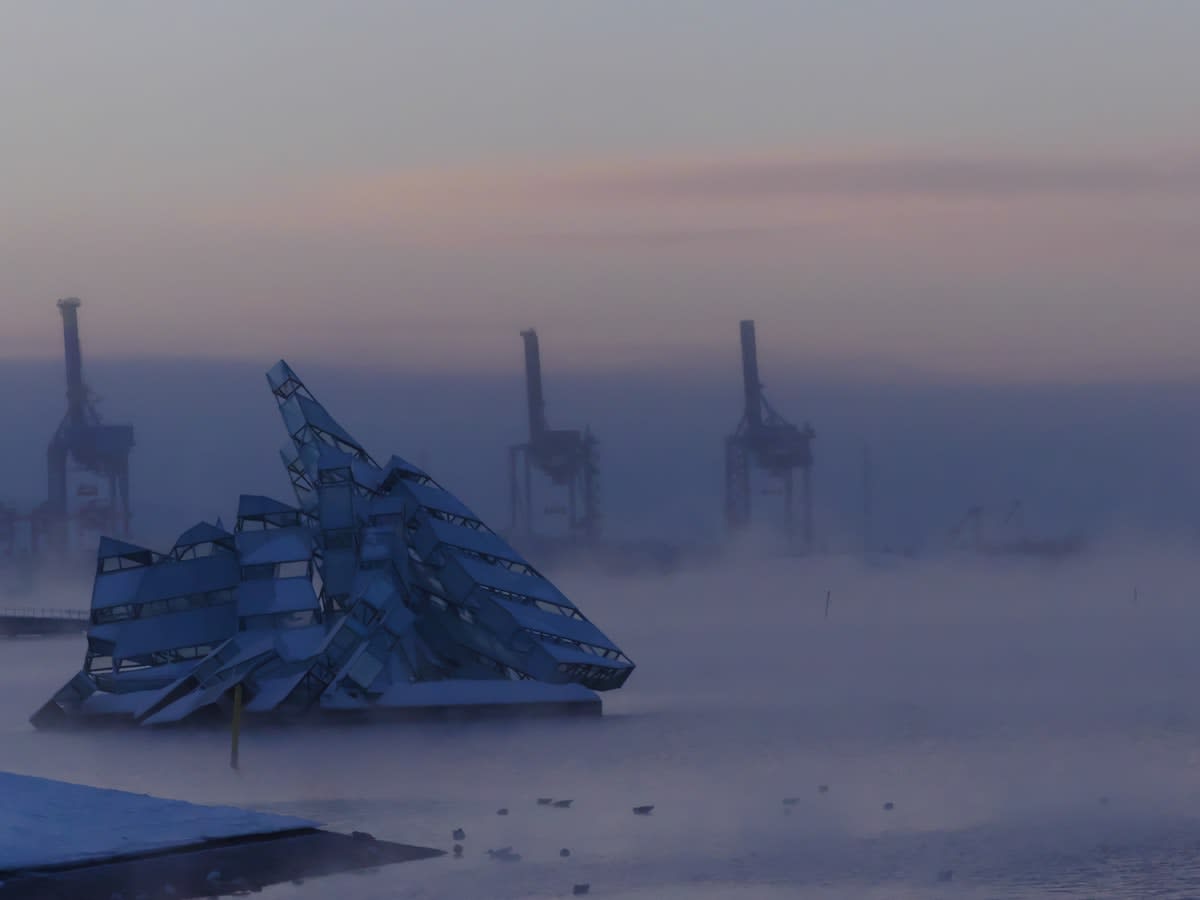
The energy transition has spent a decade obsessed with the 'install.' We measured success in gigawatts of solar panels deployed and the number of wind turbines piercing the horizon. But as the world's most aggressive green grids mature, they are colliding with a physical reality known as Dunkelflaute—the dark doldrums. This isn't a failure of technology, but a failure of imagination in grid design. When the wind stops blowing and the sun dips for weeks across an entire continent, the conversation shifts instantly from decarbonization to survival. The real challenge is no longer about how much green energy we can produce, but how we manage the silence between the gusts.
European grids are currently the primary laboratory for this struggle. Research by Kittel, Roth, and Schill (2026) highlights a critical systemic gap: the desperate need for long-duration electricity storage (LDES) to cope with these extended periods of low renewable output. Most current storage solutions are designed for diurnal shifts—storing noon-day sun for evening peaks. However, a windless winter demands a different architectural philosophy. We are seeing a shift in strategy where the goal is no longer just climate mitigation, but the alignment of energy security with that mitigation, as explored by Lal et al. (2026).
The Speed Trap: Deployment vs. Stability
Poland provides a cautionary tale regarding the tension between speed and resilience. The rush to decarbonize power generation through photovoltaic development has been rapid, yet as Lew et al. (2021) suggest, the influence of PV on decarbonization is only as effective as the grid's ability to absorb it. When a nation prioritizes the speed of the transition over the resilience of the infrastructure, it creates a fragility that Dunkelflaute events ruthlessly expose. The question for strategic planners is simple: does adding more capacity actually increase security, or does it merely increase the scale of the eventual shortfall?
"Renewable energy is a forever fuel, our transition to it is a great investment. We get forever jobs from it and we also get energy security from it - there is none in fossil fuels."— Dale Vince
While the 'forever fuel' narrative is powerful, it often ignores the temporal asymmetry of renewables. Energy security in a fossil-fuel world was about access to the molecule; in a renewable world, it is about the mastery of time. The security Dale Vince speaks of is a long-term geopolitical win, but the short-term operational reality remains that wind and solar are intermittent. To turn 'forever fuel' into 'forever power,' the grid must evolve from a delivery pipe into a strategic buffer.
The Storage Gap: Why 4 Hours Isn't Enough
Industry benchmarks often hide the Dunkelflaute risk in the fine print. Lazard's LCOE+ analysis, for example, assumes storage configurations of 50% of PV or wind capacity with a 4-hour discharge duration. While 4-hour storage is an excellent tool for managing peak load periods, it is functionally useless against a two-week windless stretch in January. This discrepancy reveals a dangerous misalignment between financial modeling and physical reality. We are building grids for the average day, not for the extreme event.
| Storage Type | Typical Duration | Primary Purpose | Dunkelflaute Utility |
|---|---|---|---|
| Short-term BESS | 2-4 Hours | Peak Shaving / Frequency Regulation | Negligible |
| Mid-term Storage | 12-48 Hours | Diurnal Balancing | Low |
| LDES (Long Duration) | Days to Weeks | Seasonal Resilience | Critical |
| Strategic Reserves | Months | Systemic Shock Absorption | Essential |
India is attempting to leapfrog this limitation by scaling aggressively. Companies like JSW Energy and NTPC Ltd are not just bidding for megawatts; they are securing GWh-scale storage projects. The shift toward hybrid renewable and storage parks indicates a realization that generation and storage must be co-located and scaled proportionally. By expanding into long-duration energy storage solutions, India is treating the grid as a strategic asset rather than just a utility, recognizing that scale alone cannot solve the intermittency problem.
Energy Security as Strategic Autonomy
The conversation is now shifting from 'energy' to 'autonomy.' The IISD's analysis of the 'Tyranny of the Landlocked' suggests that energy security, industrial strength, and strategic autonomy have merged into a single pursuit: the pursuit of options. When a grid is terrified of a windless winter, it is not just worried about the lights going out; it is worried about the collapse of the industrial ecosystem. If the power fails, the ability to produce essential chemicals and fertilizers vanishes.
This vulnerability is most evident in nitrogen production. As the Hormuz crisis demonstrated, the closure of strategic maritime choke points exposes the fragility of global food systems that rely on gas-based fertilizers. The strategic opportunity here is to pivot toward green ammonia and nitrogen production powered by resilient, renewable grids. However, this requires a grid that can provide consistent, baseload-like power even during a Dunkelflaute. Without LDES, the dream of 'green fertilizer' remains hostage to the weather.
The Autonomy Shift
Strategic autonomy is no longer about owning the resource, but about owning the options. The goal is an industrial ecosystem capable of weathering shocks, whether those shocks are geopolitical (like the Hormuz crisis) or meteorological (like Dunkelflaute).
The path forward requires rethinking the EU's transition strategies amid rising energy prices, as advocated by Meng et al. (2026). The obsession with the lowest LCOE (Levelized Cost of Energy) must be replaced by a focus on the 'System LCOE'—the total cost of keeping the lights on during the worst possible week of the year. This means valuing resilience over raw efficiency. It means accepting that the greenest grid is not the one with the most panels, but the one with the most robust buffers.
Ultimately, the Dunkelflaute dilemma is a catalyst for a more sophisticated version of the energy transition. We are moving away from a simplistic 'swap fossil fuels for renewables' model toward a complex 'ecosystem' model. This new era prioritizes the construction of industrial buffers and long-term storage, transforming the grid from a fragile web of intermittency into a fortress of strategic autonomy. The wind will eventually stop blowing; the goal is to ensure that the world keeps turning when it does.