
The Architecture of Temperature
For decades, the way we heated our homes and cooled our offices was a lonely endeavor. Each building operated its own boiler or chiller, a fragmented system of fossil-fuel dependence that prioritized individual control over systemic efficiency. That era is ending. We are witnessing a quiet but aggressive rewiring of urban centers, moving toward a model where thermal energy is treated as a utility—a service delivered via a network rather than a product generated in a basement. This shift is not merely an environmental choice; it is a logistical necessity driven by the explosive growth of AI and the rapid electrification of the global fleet.
The catalyst for this acceleration is often invisible, hidden in the server racks of high-performance computing centers. AI data centers are creating a thermal crisis of their own, demanding high-conductivity materials to prevent systemic meltdown. According to IndexBox, the global gap-filling thermal compound market is poised for sustained expansion, with an estimated valuation between USD 1.2 billion and USD 1.5 billion by 2026. This growth, characterized by a compound annual growth rate of 7-9%, reveals a critical truth: our ability to move heat is now as important as our ability to generate power.

Why does this matter for the average citizen? Because that waste heat, once vented uselessly into the atmosphere, is becoming the fuel for the next generation of urban heating. Companies like Veolia are already pioneering district heating networks that recover residual heat from industrial processes, sanitation systems, and those very same data centers. In Europe, where heat accounts for 50% of final energy consumption and nearly 70% of that demand still relies on fossil fuels, the transition to centralized thermal loops represents the single most effective lever for rapid decarbonization.
The TaaS Logic
The shift is moving from 'ownership' of heating hardware to 'subscription' to a thermal grid. This reduces the capital burden on the homeowner and places the efficiency burden on the utility provider.
This systemic pivot extends beyond the city grid and into the vehicles we drive. The transition from internal combustion engines (ICE) to electric vehicles (EVs) has fundamentally changed the thermal requirements of the car. In 2024, electric car sales topped 17 million worldwide, accounting for over 20% of new car sales. By 2025, this is projected to climb above 20 million. Unlike ICE vehicles, EVs require complex multi-loop architectures to manage batteries, motors, and power electronics, creating a massive opening for specialized thermal fluid-transfer systems.
The market delta here is stark. While ICE specialists are slow to pivot, focused thermal startups are capturing the highest per-vehicle content uplift by qualifying dielectric-compatible coolant lines early. A prime example occurred in November 2025, when Gates Corporation introduced a halogen-free liquid-cooling hose specifically for high-density data centers, signaling a convergence of skills between EV battery cooling and urban data infrastructure. The boundary between how we cool a car and how we cool a city is blurring.
But the path to this thermal utopia is not without friction. The transition relies heavily on policy, and when policy wavers, the market crashes. Look at Germany in 2024: heat pump sales plummeted by 48% due to subsidy confusion. This volatility proves that consumers will not shoulder the risk of a systemic transition alone. They need the certainty provided by long-term targets, such as those found in the REPowerEU initiative, or the massive industrial commitments seen in Viessmann's EUR 1 billion investment in production capacity.
| Thermal Source | Application | Primary Driver | Current Status |
|---|---|---|---|
| Data Center Waste | District Heating | AI Computing Growth | Scaling |
| Geothermal/Subsoil | Urban Grids | Energy Independence | Mature/Expanding |
| Multi-loop EV Systems | Transport | Battery Efficiency | Rapid Growth |
| Industrial Waste Heat | District Heating | Process Decarbonization | Integration Phase |
While the macro-scale networks are being built, the micro-scale engineering is undergoing a revolution. The materials we use to move heat are becoming cleaner and more efficient. Over 60% of new thermal compound product launches in 2024-2025 are RoHS 3 and IEC 61249-2-21 compliant, a figure expected to cover 80-90% of the market volume by 2030. We are moving toward a world where the chemical makeup of our cooling systems is as scrutinized as the energy they save.
Innovation is also emerging from the most unlikely places. To solve the problem of bulky, expensive synthetic adsorbents in heat pumps, researchers have begun using waste coffee grounds to create monolithic activated carbon adsorbents. This allows for more efficient performance in district heating networks, proving that the circular economy is not just a buzzword but a functional component of thermal engineering. It is a marriage of waste management and energy efficiency.
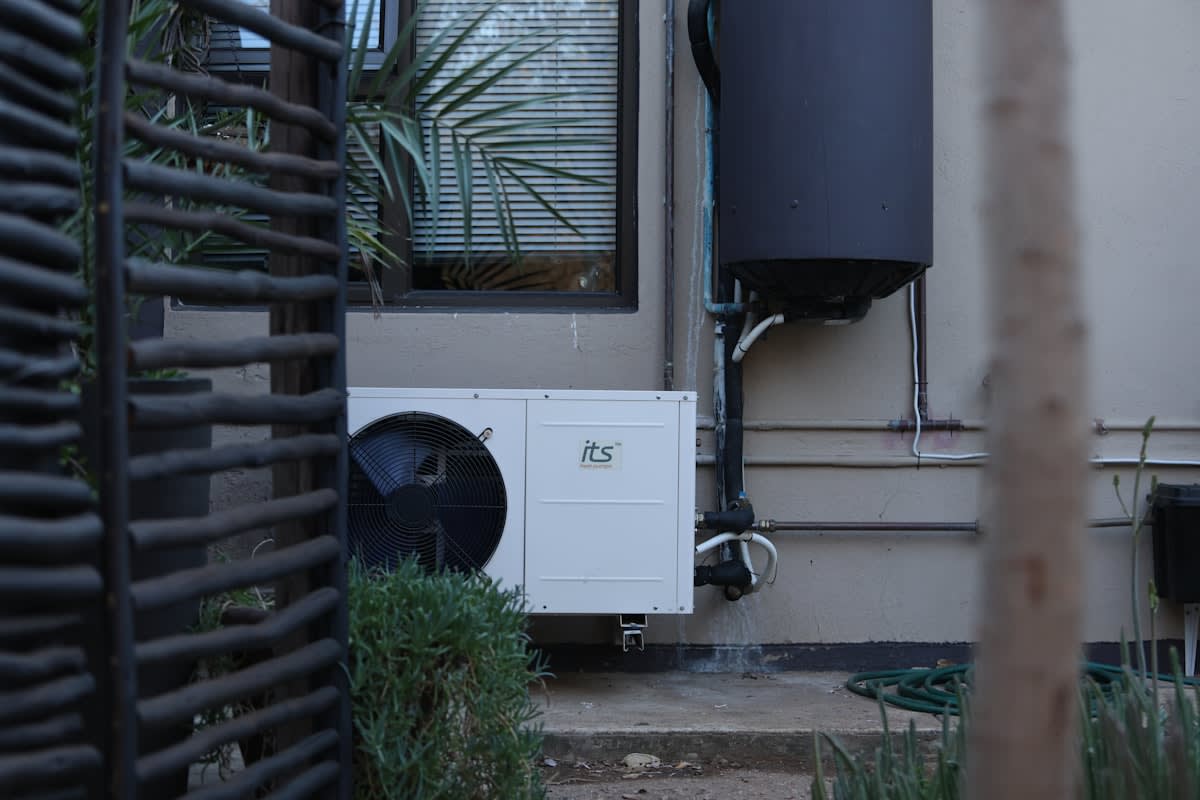
Yet, the 'Thermal-as-a-Service' model faces a significant technical hurdle: adaptability. Conventional air-source heat pumps (ASHPs) struggle in extremely cold environments, where energy efficiency drops significantly and defrosting becomes a constant battle. To counter this, the industry is diversifying. The future of district heating in 2036 will likely not rely on a single technology but on a hybrid mix of electric resistance technology, geothermal energy, and recovered waste heat to ensure continuity and control.
"The challenge is not whether to decarbonise, but how to do it in a way that is practical, scalable, and dependable."— Chromalox Industry Analysis
The risk now lies in the supply chain. The concentration of high-purity alumina and boron nitride fillers in a few specific countries creates a fragile bottleneck. A disruption in these regions can lead to cost spikes of 10-20% within just two quarters. For an industry trying to scale rapidly to meet 2030 climate goals, these volatility spikes are a dangerous variable. The rewiring of our cities is dependent on a very small number of specialized minerals.
Ultimately, the rise of Thermal-as-a-Service represents a fundamental shift in how we perceive the city. We are moving away from the image of the city as a collection of isolated energy consumers and toward a vision of the city as a single, breathing thermal organism. In this new model, the heat from a GPU processing a complex AI query in a data center becomes the warmth in a residential apartment three blocks away. It is an elegant, closed-loop system that turns a liability—waste heat—into a primary asset.
The window for incumbents to adapt is closing. As we have seen in the EV sector, those who under-invest in the new thermal architectures—like dielectric hoses and quick-connect lines—will be displaced by focused startups. The same will happen in urban heating. The companies that win will be those that stop selling hardware and start selling the service of temperature management.