The End of the Photosynthetic Monopoly
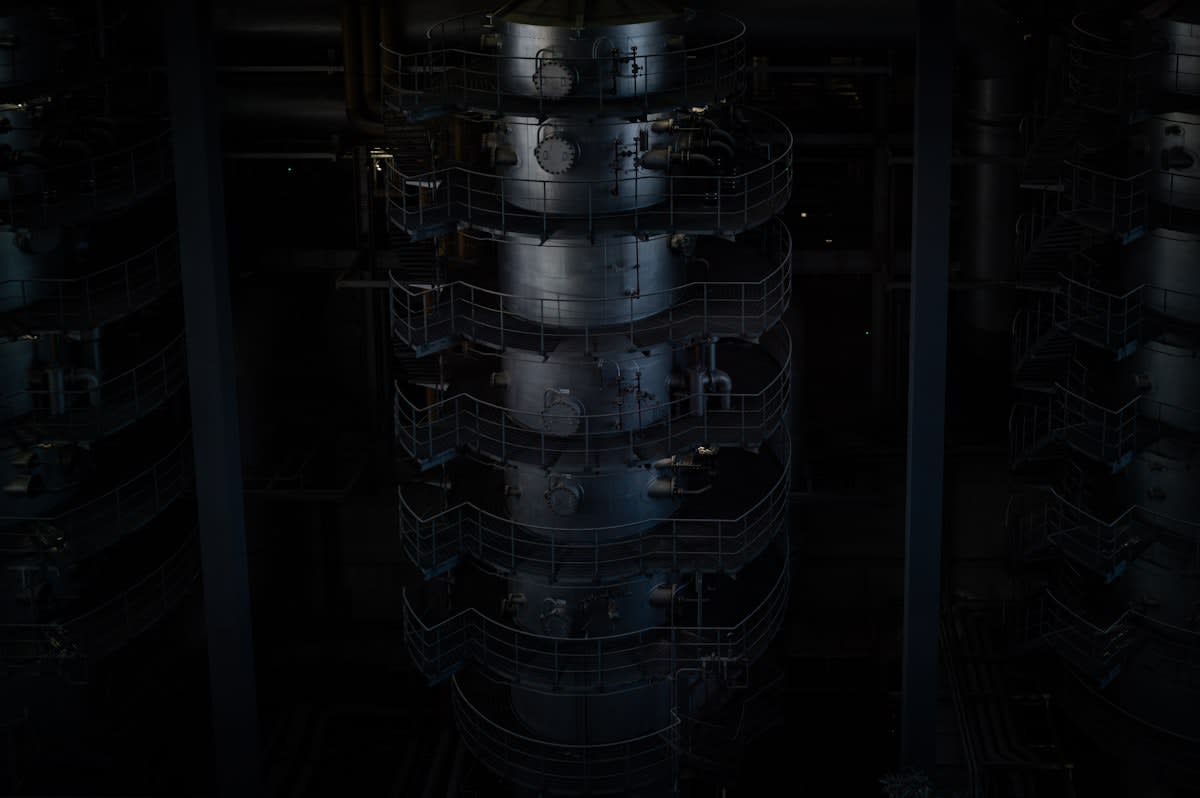
For ten thousand years, human survival has been a hostage to the sun and the soil. Every calorie we consume—whether it comes from a stalk of corn or a slice of beef—is essentially captured sunlight processed through photosynthesis. But that monopoly is breaking. A new class of industrial biotechnology is emerging that treats the atmosphere not as a waste dump for carbon, but as a primary feedstock. We are moving from an era of farming to an era of molecular assembly, where protein is brewed in steel tanks using electricity, water, and air.
Twelve months ago, air-to-protein was largely viewed as a laboratory curiosity or a venture capital fever dream. Today, the delta has shifted toward industrial viability. We have moved from 'proof of concept' to 'pilot scale,' with companies now focusing on the brutal realities of CAPEX and energy efficiency rather than just the biology. The conversation has shifted from 'Can we do this?' to 'How fast can we build the bioreactors?' This urgency is driven by a global realization that our current land-use models are mathematically unsustainable.
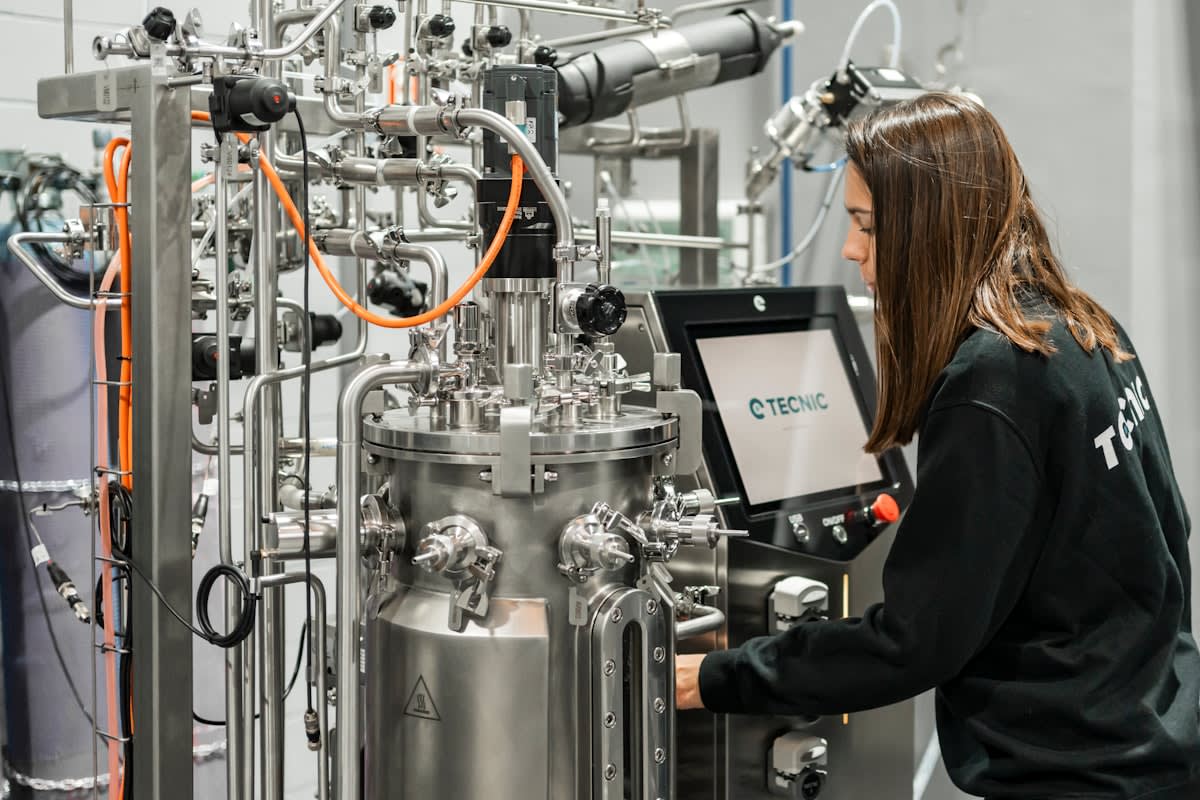
The core mechanism relies on hydrogenotrophic bacteria—microbes that don't need organic carbon or sunlight to grow. Instead, they feed on hydrogen, oxygen, and carbon dioxide. By using an electrolyzer to split water into hydrogen and oxygen using renewable electricity, these companies create a nutrient-rich environment where bacteria multiply at an exponential rate. The result is a protein-rich powder, often called 'Solein' by its pioneers, that contains all essential amino acids (Source: Solar Foods, 2023).
"We are decoupling food production from the constraints of nature. By removing the need for arable land and massive water inputs, we can produce protein anywhere—from the middle of a desert to the heart of a megacity."— Solar Foods Executive Team, Official Position Paper
This isn't just a European or North American phenomenon. In Singapore, the government's '30 by 30' goal—to produce 30% of its nutritional needs locally by 2030—has turned the city-state into a global testbed for these technologies (Source: Singapore Food Agency, 2023). When you have zero land but abundant capital and a desperate need for food sovereignty, 'air-protein' ceases to be a luxury and becomes a strategic imperative. The geography of power is shifting from those who own the most fertile land to those who own the most efficient energy grids.
On the factory floor, the debate isn't about whether the science works—it's about the heat. Engineers are currently locked in a struggle over thermal management in large-scale bioreactors. When you scale from a 10-liter lab flask to a 10,000-liter industrial tank, the metabolic heat generated by these bacteria can cook the culture if the cooling jackets aren't perfectly calibrated. This is the invisible friction of the air-protein revolution: the transition from biology to heavy industrial engineering. It is a world of stainless steel, pressure valves, and precise gas-flow dynamics.
The resource efficiency claims are staggering. Traditional soy production requires vast tracts of land and significant water, often leading to deforestation in regions like the Amazon. In contrast, air-to-protein systems can reduce land use by up to 99% and water use by over 90% compared to traditional animal-based proteins (Source: Air Protein, 2022). This isn't a marginal improvement; it is a total systemic reset. We are talking about producing the same amount of protein in a building the size of a warehouse that would otherwise require thousands of hectares of farmland.
| Metric | Traditional Soy | Air-to-Protein |
|---|---|---|
| Land Requirement | High (Hectares/ton) | Negligible (Sq meters/ton) |
| Water Footprint | High (Liters/kg) | Ultra-Low (Closed Loop) |
| Production Time | Seasonal (Months) | Continuous (Hours) |
| Climate Dependence | Total | None |
Despite the promise, the 'Achilles heel' of this revolution is energy. The process is electricity-intensive because the hydrogen must be produced via electrolysis. If that electricity comes from a coal-fired plant, the carbon footprint vanishes the benefit. The viability of air-protein is therefore inextricably linked to the rollout of cheap, green hydrogen and renewable energy grids. The industry is betting on a future where the plummeting cost of solar and wind power makes 'electricity-to-protein' cheaper than 'soil-to-protein.'
Regulatory frameworks are struggling to keep pace. Is this a 'food' or a 'novel ingredient'? In the EU, the Novel Food Regulation creates a high barrier to entry, requiring extensive safety dossiers that can take years to approve. Meanwhile, in regions with more agile regulatory sandboxes, we are seeing faster integration into the supply chain. The friction here is cultural as much as legal; convincing a consumer that protein made from air is 'natural' requires a fundamental rewrite of the human relationship with food.
Projected Resource Efficiency Gain
Executive Insight
+18.4%
YTD Growth
Looking ahead, the integration of these proteins into existing food systems will be gradual. We won't see 'air-steaks' overnight. Instead, expect to see air-protein as a functional additive in pasta, bread, and meat alternatives, blending in to enhance nutritional profiles while lowering costs. The goal is a hybrid food system where the baseline protein needs of the global population are met by industrial bioreactors, leaving traditional farming for high-value, artisanal, and regenerative agriculture.
The transition is inevitable because the alternative is failure. As climate volatility makes crop yields unpredictable, the ability to produce food in a controlled, indoor environment—completely independent of weather patterns—becomes the ultimate insurance policy for civilization. We are no longer just farming the earth; we are farming the atmosphere.
Fact-Check & Accuracy Note
Key claims regarding land and water reduction are sourced from Air Protein (2022) and Solar Foods (2023). Regulatory context regarding Singapore is attributed to the Singapore Food Agency (2023). The primary area of ongoing debate in the field remains the net energy balance and the total lifecycle carbon footprint when accounting for electricity sourcing.
Editorial Note
This report focuses on the 'trend' delta, highlighting the shift from lab-scale to pilot-scale production over the last 12 months. The author notes that while the biology is proven, the economic scalability depends entirely on the cost of green hydrogen.