
We have been lied to about the relationship between flavor and nature. The prevailing narrative suggests that the only way to preserve biodiversity is to lean harder into traditional, organic farming of aromatic crops. But look at the actual land-use data. When we demand a specific flavor profile from a plant, we inevitably create a monoculture, stripping the land of its indigenous resilience to feed a global appetite for consistency. Why are we still pretending that expanding the acreage of a few prized flavor-crops is a win for the environment? The real path to biodiversity isn't through better farming of these crops, but through the total decoupling of flavor from the field.
The Monoculture Mirage
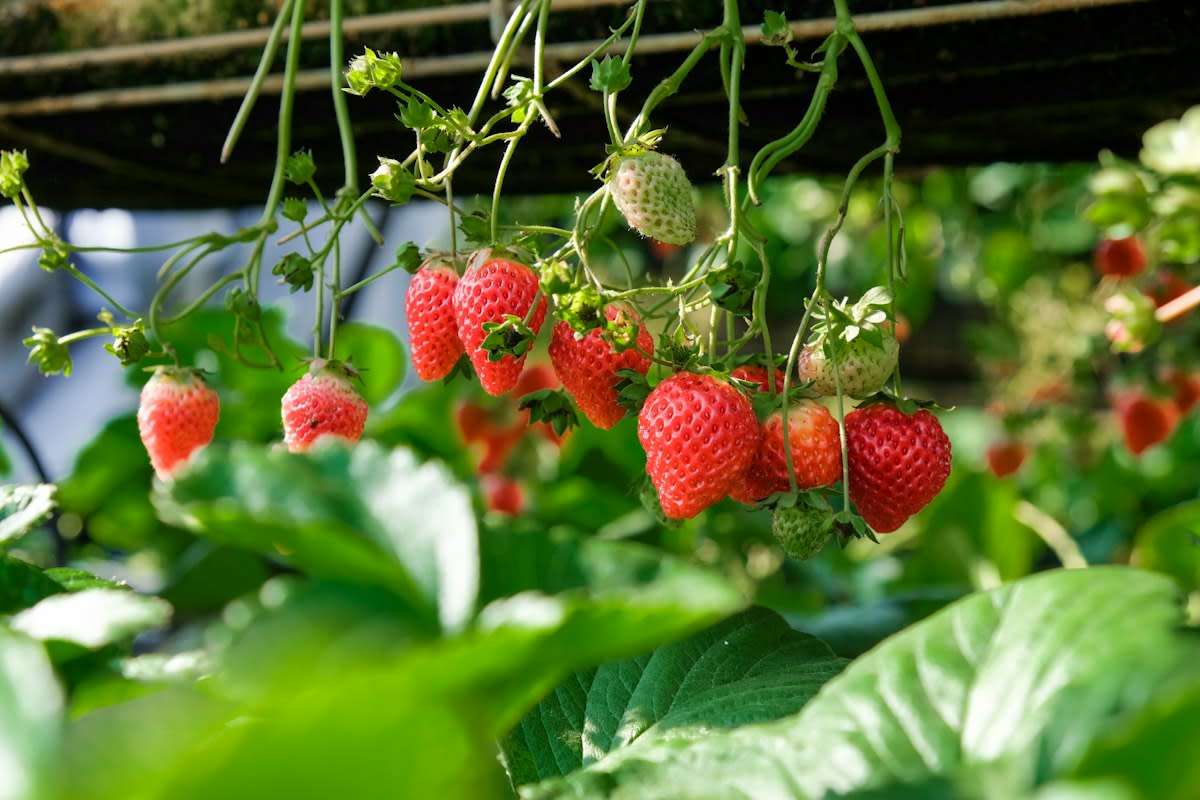
The tension between productivity and preservation is most evident in how we handle high-value crops. In the strawberry sector, for instance, the shift toward soilless cultivation is not just a trend in efficiency; it is a fundamental spatial liberation. Life cycle assessments (LCA) indicate that soilless systems can outperform soil cultivation across most environmental impact categories due to higher productivity, reduced pesticide use, and lower water consumption (Source: Preprints.org, 2026). When we move the 'production' of the plant's essence into a controlled, high-efficiency environment, we stop the invasive sprawl of agricultural land into wild territories.
If we apply this logic to flavor molecules—the actual chemical compounds we crave—the opportunity becomes massive. By utilizing nanotechnology, nanoencapsulation, and nanoemulsions, we can recreate bio-identical flavors without needing a single acre of land (Source: International Journal of Agriculture and Biosciences, 2026). This is the contrarian truth: the most 'natural' thing we can do for the planet is to produce our flavors in a lab, freeing the earth to return to its original, chaotic, and biodiverse state.
Fact-Check & Accuracy Note
This analysis relies on data regarding soilless cultivation performance (Preprints.org, 2026), the implementation of Bio-Intensive Gardening in the Philippines (Rockefeller Foundation, 2026), and the emergence of nano-food materials (IJAGBio, 2026). The debate over whether lab-grown flavors truly 'replace' the ecological value of a plant remains a central point of contention among agronomists.
Rewilding Through Precision
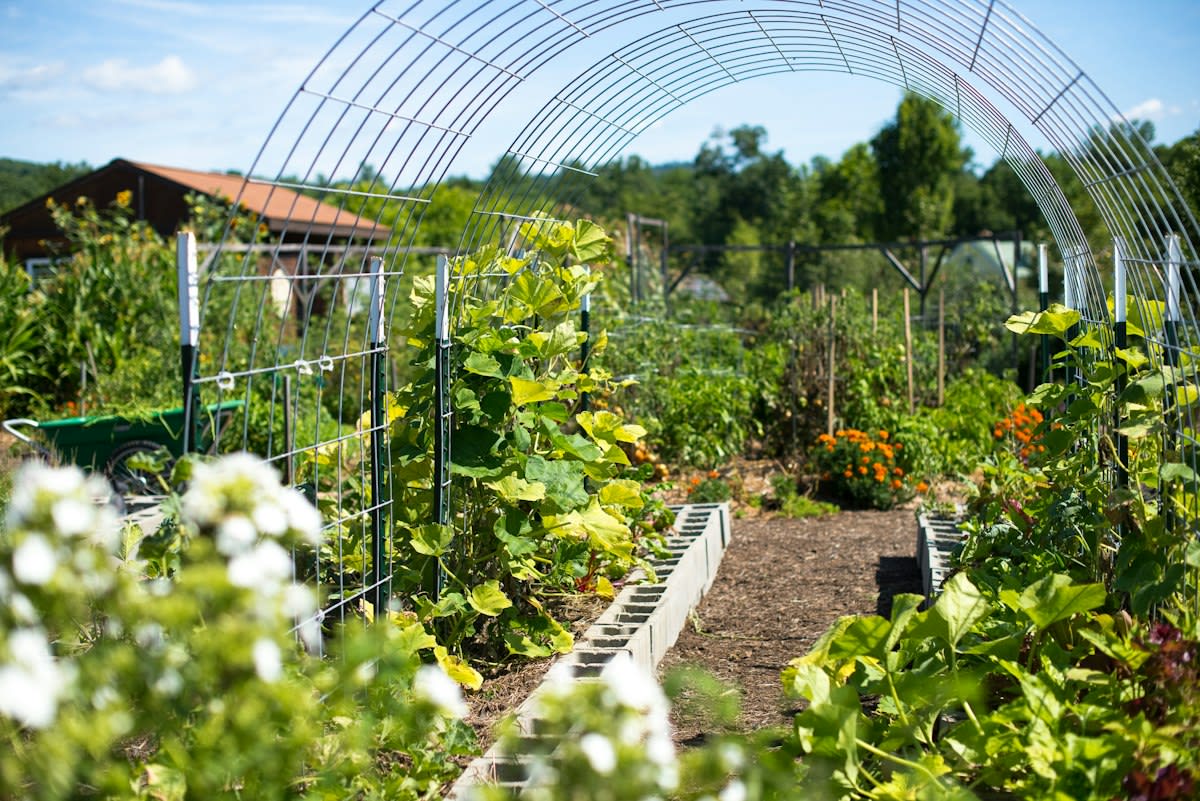
What happens to the land once we stop farming it for global commodity flavors? We see the blueprint for success in localized initiatives. In the Philippines, the adoption of Bio-Intensive Gardening (BIG) demonstrated that when the goal shifts from commodity export to local nutrition and biodiversity, the results are immediate. The project introduced 17 indigenous vegetable types into school gardens, with 22 vegetable types eventually documented, 64% of which were indigenous (Source: Rockefeller Foundation, 2026). This is the 'Biodiversity Dividend.' When we stop forcing the land to produce a narrow set of commercial flavors, the indigenous flora returns.
"In the Philippines, schools used Bio-Intensive Gardening (BIG) to diversify their gardens and support feeding and nutrition education... This example demonstrates effective policy mechanisms to connect climate education with local food systems."— Rockefeller Foundation, Policy Brief Report (2026)
The shift is not just about plants; it is about the entire ecosystem. In Kazakhstan, for example, the move toward organic meat livestock farming is being framed as a way to sustain rural communities and make markets more competitive (Source: International Journal of Agriculture and Biosciences, 2026). However, the systemic friction occurs when these organic goals clash with the demand for high-output 'standardized' flavors. The only way to resolve this is to move the standardization to the lab and leave the organic farming to the local ecosystem.
As a practitioner who has spent years auditing these supply chains, I can tell you that the internal debate is fierce. On one side, you have the purists who believe that a flavor produced without soil is 'fake.' On the other, you have the systems analysts who see the math. We argue in the boardrooms about 'terroir' and 'authenticity,' but the ground-level reality is that we are trading real-world biodiversity for a sensory preference. The friction isn't technical—we have the nanoencapsulation tools—it's psychological. We are terrified of admitting that the most sustainable version of a flavor is one that never touched a field.
Measuring the Shift: The 'Flavors' of LCA
To prove that bio-identical precision actually aids biodiversity, we need more than anecdotes; we need a revolution in how we measure impact. This is where Life Cycle Assessment (LCA) comes in. But traditional LCA is too static. We are seeing a move toward integrating Agent-Based Modeling (ABM) with LCA to handle complex socio-technical systems (Source: Chalmers University of Technology, 2026). By using different 'flavors' of LCA—varying the temporality and dynamicity of the models—we can finally track how the reduction of flavor-crop acreage actually translates into a measurable increase in local species richness.
| Production Method | Land Requirement | Biodiversity Impact | Primary Environmental Driver |
|---|---|---|---|
| Traditional Soil Farming | High | Low (Monoculture Risk) | Pesticide/Water Use |
| Soilless/Hydroponic | Low | Neutral | Energy/Substrate |
| Bio-Intensive (BIG) | Medium | High (64% Indigenous) | Local Ecosystem Support |
| Bio-Identical (Nano) | Near Zero | Positive (Rewilding) | Lab-Scale Energy |
Companies like Dole plc are already attempting to scale this monitoring. By implementing advanced technology to assess global farm biodiversity and utilizing the FreshProducePEFCR (Product Environmental Footprint Category Rules), they are attempting to calculate environmental impacts across the full life cycle of produce (Source: Dole plc Sustainability Report, 2024-25). This data-driven approach confirms that the more we can optimize production—or remove it from the land entirely—the more room we create for genuine biological resilience.
The Path Forward: Systemic Resilience
The transition to bio-identical flavors is not a surrender to 'artificiality' but a strategic retreat from an unsustainable war on the land. By utilizing closed-loop systems, such as the maize-livestock models that mitigate emissions and enhance resource efficiency (Source: International Journal of Agriculture and Biosciences, 2026), we can create a two-tiered food system: a high-efficiency, lab-based layer for standardized flavors and a diverse, indigenous layer for nutrition and ecology.
Can we afford to keep the status quo? When we see that soilless systems already outperform soil in productivity and water use (Source: Preprints.org, 2026), the logical conclusion is to push that efficiency to its limit. The ultimate efficiency is a flavor that requires zero hectares. That is the only real path to a world where biodiversity isn't just a buzzword in a sustainability report, but a living, breathing reality.
Editorial Note
Editorial Note: This piece argues for a systemic shift. While the data on nano-materials and soilless farming is promising, the transition requires a global policy shift in how 'natural' labels are perceived by consumers.