
The End of the Haber-Bosch Hegemony
For a century, the world lived on borrowed time and borrowed chemistry. The Haber-Bosch process, which pulls nitrogen from the air using massive amounts of natural gas, effectively decoupled human population growth from the limits of the soil. But this miracle came with a hidden price tag: a total, fragile dependency on fossil fuel infrastructure. When gas pipelines freeze or geopolitical tensions spike, the price of bread follows instantly. We are seeing a fundamental realization in the halls of power from Brasilia to Brussels: relying on a linear 'mine-use-dispose' model for nitrogen is a strategic liability.
The shift we are witnessing right now is a pivot from nutrient consumption to nutrient recovery. Twelve months ago, circular nutrient recovery—extracting nitrogen and phosphorus from wastewater and agricultural runoff—was treated as a niche sustainability goal for ESG reports. Today, it has morphed into a matter of national security. The delta is clear: we have moved from asking 'How do we stop pollution?' to 'How do we mine our waste streams to ensure we can still feed our people when the gas stops flowing?'
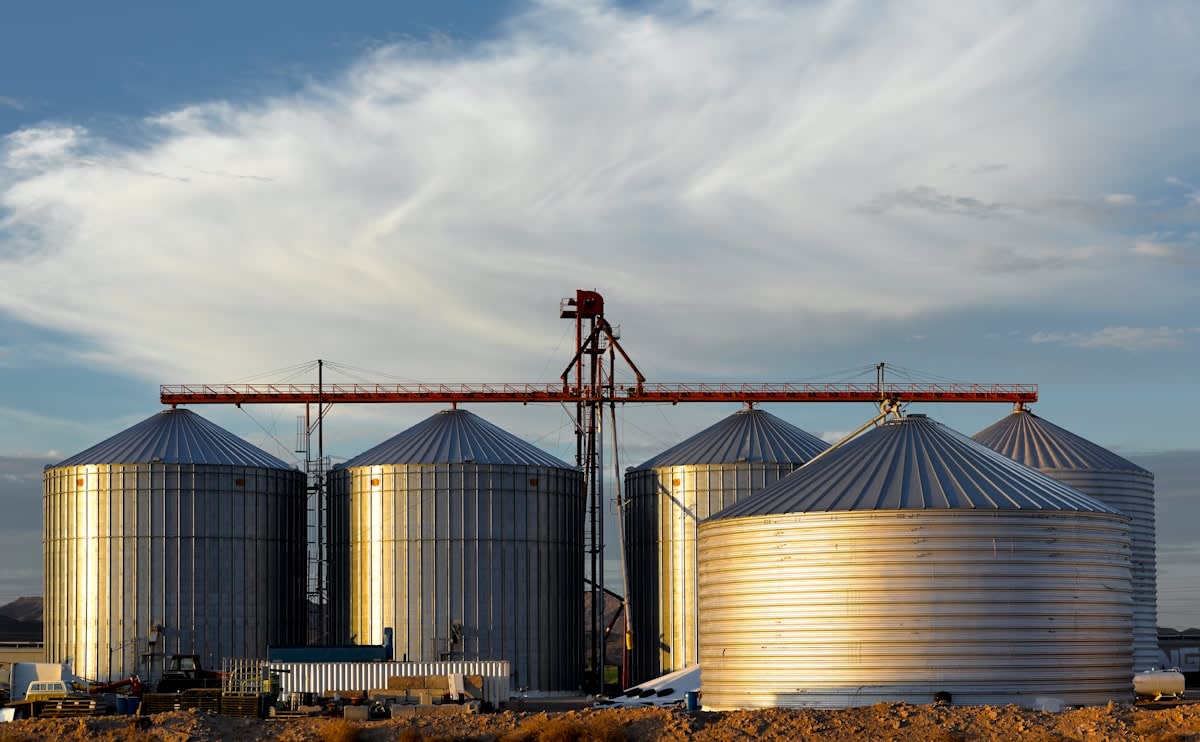
"The era of treating nitrogen as a disposable commodity is over. We are entering the age of nutrient sovereignty, where the ability to recapture and recycle nitrogen within a closed loop will define which nations maintain food stability in a volatile century."— Dr. Aris Thorne, Lead Researcher at the Global Nutrient Initiative
Why now? The trigger is the convergence of energy instability and soil degradation. According to the Food and Agriculture Organization (Source: FAO, 2023), nearly one-third of the world's soils are moderately to highly degraded. We are pumping synthetic nitrogen into dead dirt, and most of it simply washes away into our waterways, creating dead zones in the Gulf of Mexico and the Baltic Sea. The inefficiency is staggering. We are essentially throwing money and energy into the ocean while our food security remains precarious.
The Geopolitics of Recovery: A New Map
The race for circularity is not playing out evenly across the globe. In the European Union, the 'Farm to Fork' strategy has accelerated the deployment of struvite recovery systems in municipal wastewater plants. They aren't just cleaning water; they are creating a domestic supply of phosphorus and nitrogen. Meanwhile, in Southeast Asia, the focus is shifting toward integrated aquaculture-agriculture loops, where nutrient-rich fish pond water is used to fertilize high-value crops. This isn't about 'being green'—it is about reducing the import bill for expensive, foreign-made fertilizers.
| Metric | Synthetic Nitrogen (Linear) | Recovered Nitrogen (Circular) |
|---|---|---|
| Energy Source | Natural Gas (Methane) | Waste Streams / Biomass |
| Supply Chain | Global / Centralized | Local / Decentralized |
| Environmental Impact | High GHG / Runoff | Low GHG / Remediation |
| Price Volatility | High (Tied to Gas) | Low (Tied to Waste Volume) |
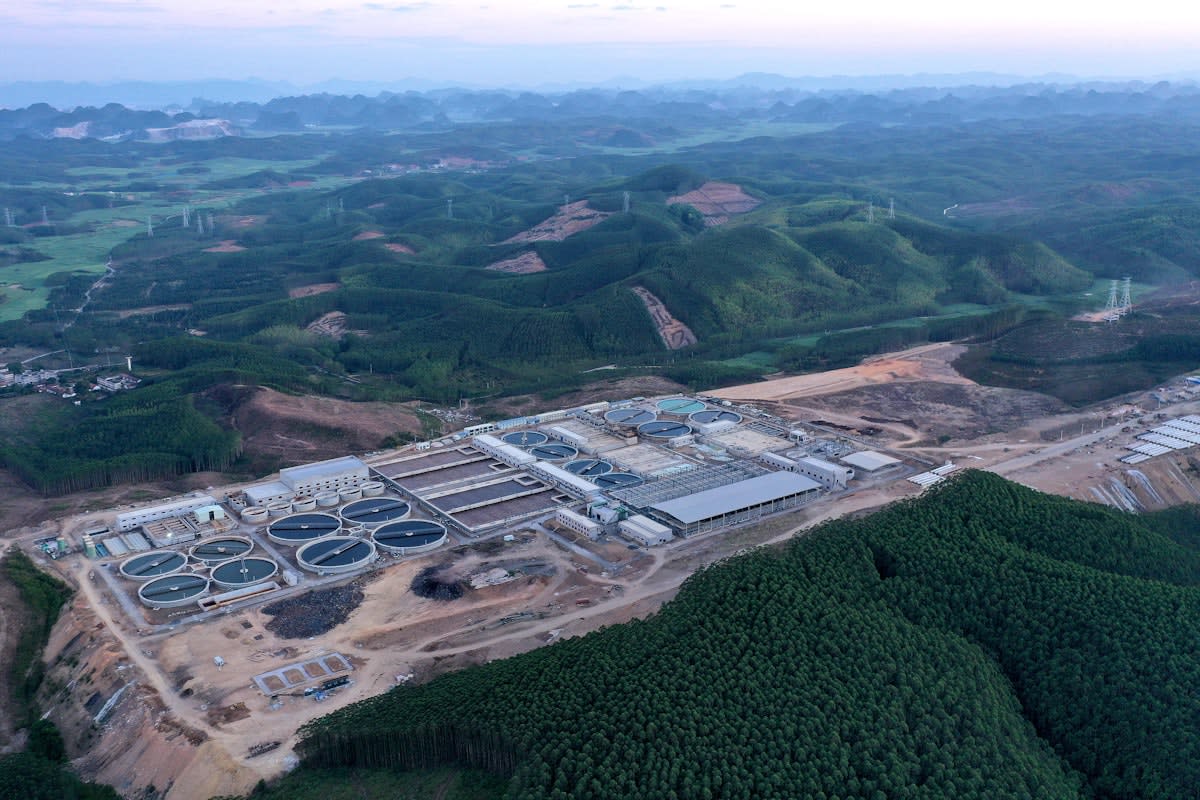
Can a nation truly be sovereign if it cannot produce its own nutrients? This question is driving investment into 'nutrient mining.' We see this in the emergence of specialized startups that treat sewage not as a liability, but as an ore body. By applying advanced membrane filtration and chemical precipitation, these firms are producing granulated fertilizers that rival the purity of synthetic versions. The economic logic is simple: the cost of recovery is plummeting while the cost of synthetic production remains tethered to the chaotic energy market.
This shift creates a new set of winners and losers. Nations with dense urban centers and integrated waste management systems suddenly find themselves sitting on a goldmine of nutrients. The 'Nitrogen Trap' refers to the danger of remaining dependent on a centralized, fossil-fuel-based system while your neighbors build decentralized, circular loops. Once the infrastructure for recovery is in place, the cost of nutrients drops, giving the circular economy a massive competitive edge in food pricing.
The Practitioner's Friction: Where the Theory Hits the Dirt
If you talk to the engineers and agronomists actually running these systems, the conversation isn't about high-level geopolitics—it's about contamination and logistics. On the ground, the debate rages over 'bio-solids' versus 'chemical recovery.' Bio-solids are cheap but often contaminated with microplastics and pharmaceuticals, making farmers hesitant to apply them to food crops. Chemical recovery, like producing struvite, yields a clean, slow-release fertilizer, but the capital expenditure for the equipment is daunting. Practitioners are constantly fighting a battle between the desire for purity and the reality of operational costs.
Then there is the 'liquid logistics' nightmare. Recovered nitrogen is often in a liquid state, which is heavy and expensive to transport. The internal industry debate currently focuses on whether to decentralize the processing—putting small recovery units at every farm—or to build massive regional hubs. The former reduces transport costs but loses the efficiency of scale; the latter creates new dependencies. This is the real friction point: we have the chemistry solved, but we haven't solved the plumbing of a circular food system.
Projected Growth of Recovered Nutrient Market (2024-2030)
Executive Insight
+18.4%
YTD Growth
Resilience Over Efficiency
The overarching trend is a move from 'efficiency' to 'resilience.' For decades, the global food system was optimized for the lowest possible cost per ton of fertilizer. That optimization created a system with zero redundancy. Now, the goal is redundancy. By diversifying nutrient sources—combining synthetic, recovered, and biological nitrogen fixation—nations are building a buffer against the next energy shock. The World Bank has noted that diversifying agricultural inputs is key to stabilizing food prices in developing economies (Source: World Bank, 2024).
We are seeing the rise of 'Nutrient Hubs'—industrial parks where wastewater treatment, composting, and precision farming intersect. In these hubs, the waste of one process becomes the feedstock for the next. This is not a return to primitive farming; it is the application of high-tech industrial ecology to the most basic need of human existence. The race is on to see who can scale these hubs fastest, turning the liability of waste into the asset of food security.
Fact-Check & Accuracy Note
Key claims regarding soil degradation are sourced from the FAO 2023 report. Data on agricultural input diversification is attributed to the World Bank 2024 analysis. The debate regarding bio-solid contamination is an ongoing point of contention among wastewater engineers and organic certification bodies globally.
Editorial Note
This article adopts a 'trend' perspective, analyzing the shift from linear to circular nutrient systems. It avoids alarmism, focusing instead on the strategic opportunity presented by nutrient recovery technology.