
For centuries, the deal was simple: the rural breadbasket produced the calories, and the city provided the capital. This symbiotic relationship defined the growth of civilizations, creating a rigid divide between the producer and the consumer. But the pipeline is leaking. We are witnessing the emergence of the City-State Diet, a systemic pivot where urban centers are no longer passive recipients of agricultural shipments but active, sovereign producers. Why maintain a thousand-mile supply chain when the farm can exist within the city limits?
The Geopolitics of Caloric Autonomy
This is not a trend in boutique gardening; it is a calculated move toward national security. China provides the most aggressive example of this shift. By insulating its cities from global grain and vegetable price shocks, Beijing is treating food sovereignty as a strategic shield. The goal is clear: ensure that even in the event of a global crisis, the urban population remains fed without relying on the volatility of international markets. This is agriculture as defense.
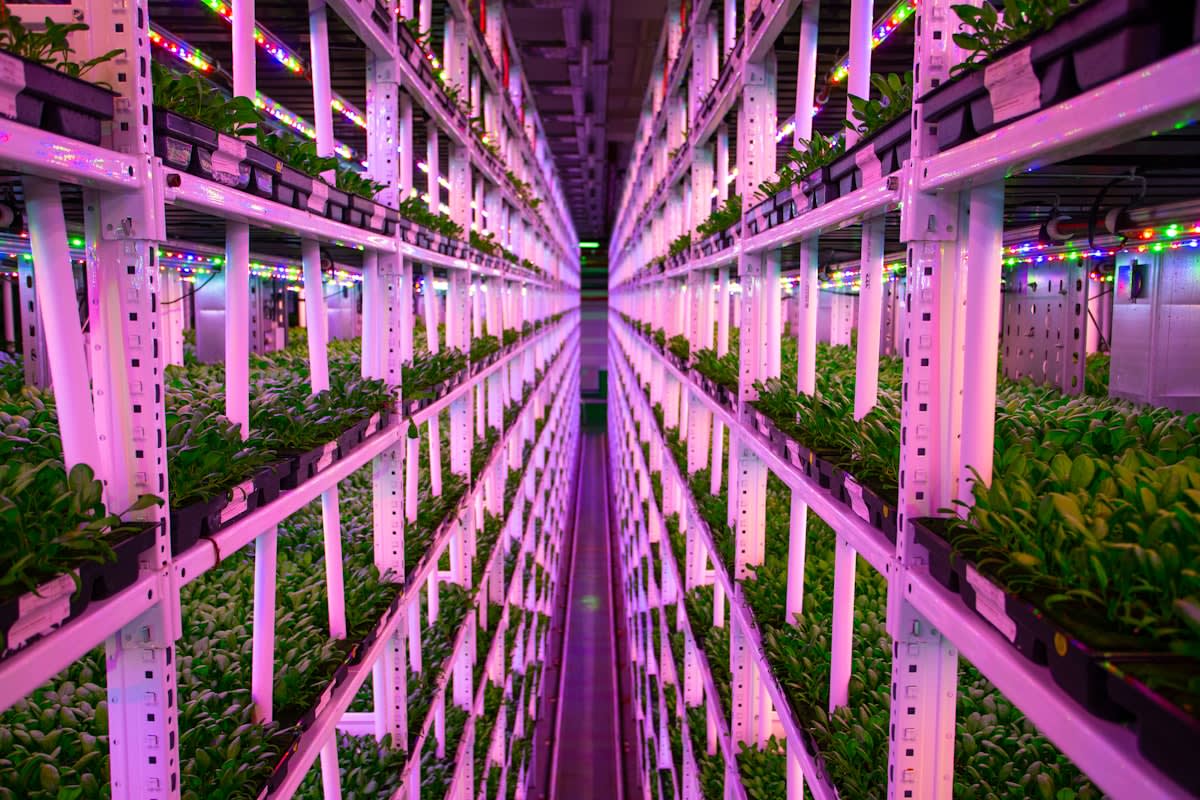
Israel has taken a different, tech-centric path. The nation has evolved its flagship drip irrigation innovations into closed-loop hydroponic and aeroponic systems. Companies like Vertical Field are now deploying green walls in urban centers, integrating food production directly into the architecture of hospitals, hotels, and military bases. By utilizing nutrient mists, these systems reduce water use by up to 90% compared to traditional hydroponics. They aren't just saving water; they are deleting the distance between the seed and the plate.
The New Mantra
The paradigm shift is summed up in one phrase: Move the farm, not the food. This eliminates the carbon cost of transport and the risk of supply chain rupture.
Is the rural farmer obsolete? Not yet, but their role is being redefined. The systemic shift we are seeing moves away from the 'single archetype' of vertical farming toward a mosaic of hyper-local strategies. Whether it is AI-driven robotics in the Netherlands or precision irrigation in Brazil, the objective is the same: maximize yield while minimizing the footprint. The city is becoming a biological engine.
The Architecture of Urban Sovereignty
The scale of this transition varies from industrial complexes to community-led insurgencies. In Arlington, innovators like Oren Falkowitz are pushing indoor farming into the heart of the metropolis, proving that the urban environment is a viable substrate for large-scale production. Meanwhile, smaller-scale initiatives are demonstrating that sovereignty can be achieved on a fraction of the land. Valerie Herrmann, founder of First Coast Urban Ag, has shown that a mere two-acre space can provide fresh produce to over 2,000 households.
This represents a fundamental challenge to the status quo food systems regimes. When a community controls its own food source, it gains more than just nutrition; it gains agency. These initiatives are not merely about hunger relief but about challenging the democratic contradictions of food security. By devolving governance—as seen in food rescue case studies in Los Angeles—cities are beginning to manage their own waste and production loops internally.
| Region | Strategic Driver | Primary Technology | Systemic Goal |
|---|---|---|---|
| China | Market Insulation | Vertical Farming/AI | National Security/Price Stability |
| Israel | Resource Scarcity | Aeroponics/Closed-Loop | Water Efficiency/Urban Integration |
| USA | Logistical Efficiency | Indoor Farming | Supply Chain Reduction |
| EU/Netherlands | Precision Yield | Robotics/Hydroponics | Value-Chain Collaboration |
The financial engine driving this is shifting from speculative venture capital to validated performance. Funding bodies are now prioritizing operational demonstrations over early-stage promises. For instance, grants are being targeted toward Israeli industrial companies with mature AgTech products that can prove their value in the field. The era of the 'concept farm' is over; the era of the 'performance farm' has arrived.
Beyond the Leaf: The Biological Frontier
If vertical farming handles the greens, what happens to the proteins and the waste? This is where the city-state diet gets truly radical. Stanford bioengineer Vayu Hill-Maini is looking toward fungi—nature's own recyclers—to solve the caloric needs of a global population projected to hit 10 billion by 2050. By utilizing mushrooms that thrive on waste other organisms cannot break down, cities can turn their own trash into high-protein food sources.
"Can we reduce waste and produce more nutritious and delicious food to feed the growing world population?"— Vayu Hill-Maini, Stanford Bioengineer
This creates a circular metabolic system. The city consumes, the city wastes, and the city recaptures that waste via fungal bioreactors to feed itself. This closes the loop entirely, removing the need for external inputs that traditionally required massive rural acreage and chemical runoff. It is a transition from extractive agriculture to regenerative urbanism.

The implications for global trade are staggering. As cities in the Middle East, Asia, and North America decouple from the rural breadbasket, the traditional power dynamics of agricultural exports will shift. We are moving toward a world of fragmented, sovereign food hubs. This isn't a crisis for the rural world, but an opportunity for it to pivot toward high-value, regenerative ecology rather than low-margin commodity production.
The New Agricultural Value Chain
The current transition is being accelerated by a shift in how we measure success. Organizations like EIT Food are no longer interested in one-off trials. Instead, they are demanding measurement and value-chain collaboration over three-year periods, recruiting growers and reporting on actual soil and yield results. This signals a move toward durable change rather than temporary innovation.
- Precision agriculture and robotics to minimize human labor in urban settings.
- Closed-loop aeroponics reducing water consumption by 90%.
- Waste-to-protein pipelines using fungal bioreactors.
- Community-led food sovereignty plots feeding thousands from a few acres.
Ultimately, the rise of urban sovereignty is an adaptation to a volatile world. Whether the trigger is climate instability, geopolitical tension, or simple logistical inefficiency, the result is the same: the city is reclaiming its right to feed itself. The breadbasket is not disappearing; it is simply being redistributed into the walls, basements, and rooftops of our cities.