
The Mirage of the Borderless World
For thirty years, the global elite chased a singular ghost: the frictionless world. We believed that if we stripped away tariffs, ignored borders, and optimized every single link in the supply chain for cost, the result would be universal prosperity. It was a seductive logic. By leveraging comparative advantage, we built a machine of unprecedented efficiency. But this machine had a fatal flaw. It traded resilience for margins, assuming that political stability was a permanent feature of the global landscape rather than a fragile variable.
That assumption has shattered. The return of economic sovereignty isn't a sudden whim or a bout of collective nostalgia for protectionism. It is a systemic correction. Nations have realized that depending on a single, distant geography for critical minerals or semiconductors isn't a strategy—it is a vulnerability. We are witnessing a shift from 'Just-in-Time' logistics to 'Just-in-Case' security. This isn't about closing borders; it is about redefining who we trust with the keys to our industrial survival.
"The era of treating trade as a purely commercial activity is dead. Trade is now a primary instrument of national security and geopolitical leverage."— International Monetary Fund (IMF), World Economic Outlook 2023
Why now? Because the cost of failure has become existential. When a single port closure or a diplomatic spat can freeze an entire automotive industry or halt the production of life-saving medicine, the 'efficiency' of a low-cost supplier becomes an expensive liability. The global consensus—the belief that integrated markets would inevitably lead to political convergence—has failed. Instead, we see markets being weaponized, and the response is a rush back toward the state as the ultimate guarantor of economic stability.
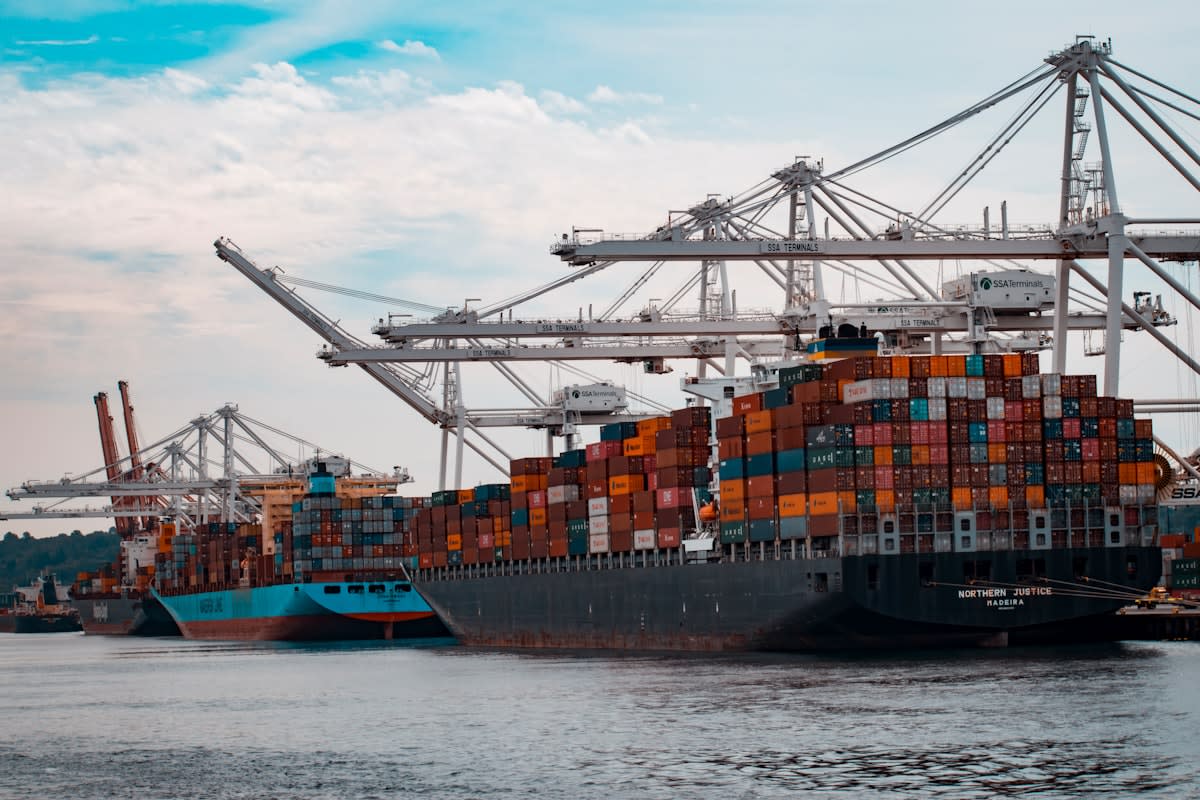
In the windowless conference rooms where global supply chain strategies are actually forged, the conversation has shifted. For two decades, the CFO held the gavel, demanding the lowest unit cost regardless of where the factory sat. Now, the Chief Risk Officer has a seat at the table. The debate isn't about whether to move production—it's about how much insurance premium the company is willing to pay in the form of higher labor costs to avoid a total system collapse. Practitioners are no longer asking 'Where is it cheapest?' but 'Where is it safest?'
The Architecture of Strategic Autonomy
This transition is manifesting differently across the globe, but the underlying pulse is the same. In Europe, the concept of Strategic Autonomy has moved from a theoretical policy paper to a survival mandate. The EU is aggressively diversifying its energy dependencies and investing in domestic chip production to avoid being caught in the crossfire of superpowers. It is a calculated admission that interdependence, while profitable, can be used as a leash (Source: European Commission, 2023).
Across Asia, the 'China Plus One' strategy has become the gold standard for multinational corporations. Companies aren't abandoning the world's second-largest economy, but they are hedging their bets by building parallel capacities in Vietnam, India, or Thailand. This isn't traditional trade; it is risk distribution. India's 'Atmanirbhar Bharat' (Self-Reliant India) initiative further exemplifies this trend, using production-linked incentives to force the creation of domestic ecosystems for everything from mobile phones to drones (Source: Government of India, 2021).
| Metric | Global Consensus Era (1990-2018) | Sovereignty Era (2019-Present) |
|---|---|---|
| Primary Objective | Cost Optimization | Supply Security |
| Supply Chain Model | Just-in-Time (JIT) | Just-in-Case (JIC) |
| Trade Logic | Comparative Advantage | Strategic Alignment |
| Risk Profile | Market Volatility | Geopolitical Weaponization |
| State Role | Laissez-faire Regulator | Active Industrial Architect |
Does this mean the end of trade? Hardly. It means the end of blind trade. We are moving toward a fragmented global economy where trade flows are dictated by geopolitical alignment rather than just price points. This 'friend-shoring' creates new hubs of prosperity while isolating those who fall outside the trusted circles. The map of trade is being redrawn, not by economists, but by security analysts.
Rewriting the Playbook: From Markets to Mandates
The return of the state as an economic actor is the most significant shift of the decade. We are seeing a return to industrial policy—the deliberate use of government subsidies to steer the economy toward specific goals. Whether it is the US Inflation Reduction Act or the EU's Green Deal Industrial Plan, the goal is the same: create a domestic moat around critical technologies. This is a direct challenge to the WTO's traditional non-discrimination rules, which are increasingly viewed as relics of a simpler time (Source: WTO, 2024).
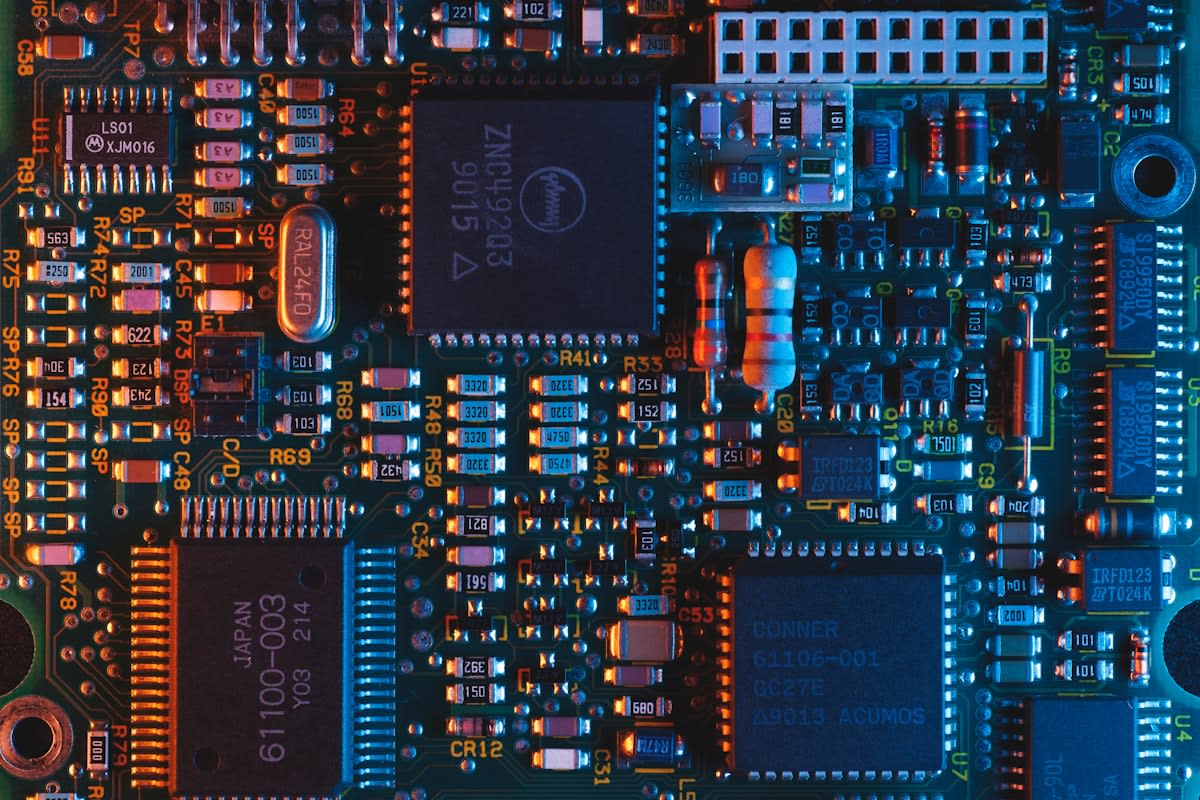
This shift creates a paradox. While nations strive for sovereignty, the complexity of modern technology makes absolute self-sufficiency impossible. No single country can build a leading-edge semiconductor from scratch—the machinery comes from the Netherlands, the software from the US, and the fabrication often happens in Taiwan. The new goal isn't total independence, but 'interdependence on your own terms.' It is a game of managing dependencies rather than eliminating them.
"We are not seeing the end of globalization, but the end of the 'flat world.' The world is becoming 'spiky' again, with concentrated hubs of power and trust."— World Bank, Global Economic Prospects 2023
For the opportunistic leader, this is a golden age. Countries that can position themselves as 'trusted neutrals'—like Mexico or Poland—are seeing an explosion of investment as they become the bridge between competing blocs. The winners of the next decade won't be the ones with the lowest costs, but the ones with the highest trust ratings. Resilience is now a competitive advantage that can be priced and sold.
The bottom line is that the rules of the game have changed. The pursuit of the absolute cheapest calorie, the cheapest chip, or the cheapest t-shirt is being replaced by a pursuit of the most reliable one. This transition will be messy, inflationary, and politically charged. But it is also an opportunity to build an economic system that can survive a crisis rather than one that collapses under the weight of its own efficiency.
Fact-Check & Accuracy Note
Key claims regarding the shift from JIT to JIC and the rise of industrial policy are sourced from the IMF's 2023 World Economic Outlook and WTO's 2024 trade reports. The specific regional strategies (Atmanirbhar Bharat and EU Strategic Autonomy) are based on official government policy frameworks. There remains an ongoing debate among economists regarding whether this shift will lead to permanent global inflation or a more stable long-term growth trajectory.